Species Database
Wildlife of Britain & Beyond
Browse species profiles, conservation statuses, and seasonal information. Spot something not in the database? Submit a new species for review.
727 species
Submit a new speciesAcorn Barnacle
LCSemibalanus balanoides
The most familiar barnacle on British rocky shores, carpeting exposed surfaces in the upper intertidal zone. A barnacle is a crustacean that lives cemented to a rock and extends feathery legs (cirri) to sweep plankton from the water.
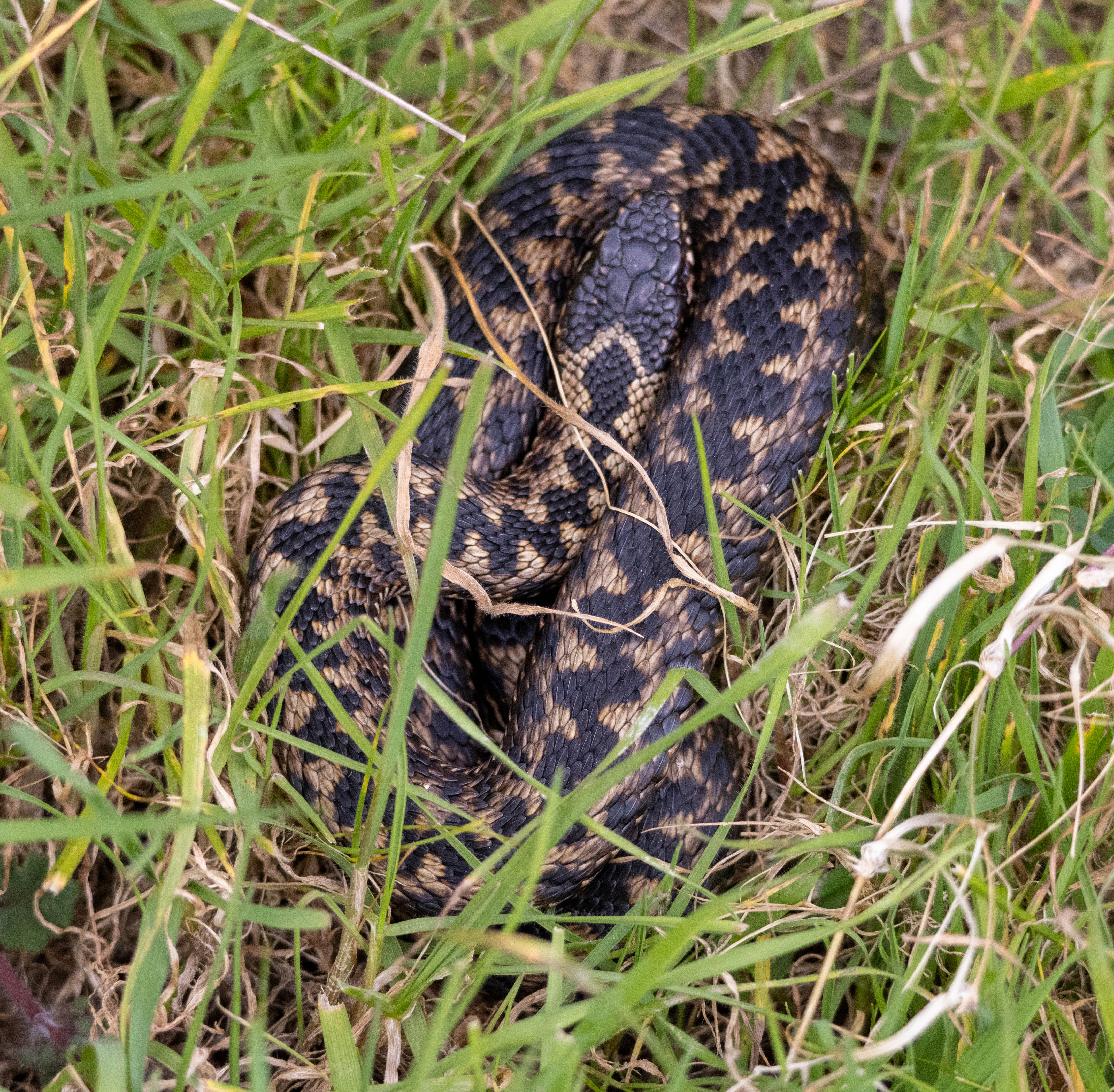
Adder
VUVipera berus
Britain's only venomous snake and one of the most northerly distributed snakes in the world. It is a protected species, declining significantly due to habitat loss and persecution. The zigzag dorsal pattern is distinctive.
Adonis Blue
LCPolyommatus bellargus
The Adonis blue male is arguably the most intensely blue butterfly in Britain, restricted to short chalk turf. It has recovered well following targeted conservation.
Alder
LCAlnus glutinosa
Britain's wetland tree par excellence, growing along riversides, in fens and wet woodland. Its roots fix nitrogen and its waterlogged wood resists decay — Venice is built on alder piles. It is the primary food plant of the alder kitten moth.
American Mink
LCNeogale vison
Escaped from fur farms across the UK, the American mink is now naturalised nationwide. It has had devastating impacts on water vole populations and ground-nesting birds on riverbanks and coastal islands.
Amethyst Deceiver
LCLaccaria amethystina
A small but striking violet mushroom of deciduous and mixed woodland, the amethyst deceiver fades to buff with age, explaining its common name. It is edible but easily confused with the poisonous violet webcap. A mycorrhizal species.
Angle Shades
LCPhlogophora meticulosa
The angle shades has beautifully complex patterning and distinctive crinkled wings, making it look exactly like a withered leaf when at rest.
Arctic Charr
LCSalvelinus alpinus
A relic of the last ice age, the Arctic charr survives in deep, cold glacial lakes in Scotland, Wales, the Lake District and Ireland. Different populations have evolved in isolation and some are genetically unique. Highly sensitive to warming.
Arctic Skua
LCStercorarius parasiticus
The Arctic skua is a piratical seabird that chases terns and gulls to steal their food, breeding on northern Scottish moorland.
Arctic Tern
LCSterna paradisaea
The Arctic tern makes the longest migration of any animal, travelling up to 90,000 km from its UK breeding grounds to Antarctica each year.
Ashy Mining Bee
LCAndrena cineraria
The ashy mining bee is a striking early spring bee with ashy-grey and black banding, found on coastal cliffs, quarries and garden paths where it nests in the ground.
Aspen
LCPopulus tremula
The aspen's leaves tremble in even the lightest breeze due to their flattened leaf stalks, giving rise to its common name. An ancient, native tree that spreads through root suckers, forming clonal thickets that support rare lichens and insects.
Atlantic Cod
VUGadus morhua
Once the backbone of British fishing, Atlantic cod has been catastrophically overfished. Once common in UK inshore waters, it now requires management plans and recovery zones. A cold-water fish sensitive to ocean warming.
Atlantic Halibut
ENHippoglossus hippoglossus
The world's largest flatfish, reaching 4.7 metres. The Atlantic halibut was severely overfished and is now endangered; Scottish aquaculture produces most consumed halibut. Wild individuals are occasionally caught off Scotland.
Atlantic Herring
LCClupea harengus
The herring drove the development of British coastal communities for centuries. Vast shoals aggregate in UK waters to spawn on gravel banks. It is the primary food source for puffins, gannets, dolphins and minke whales.
Atlantic Mackerel
LCScomber scombrus
One of Britain's most important commercial and recreational fish, mackerel arrive in inshore waters in summer in enormous shoals. They can be caught from many UK piers and headlands and are an important food for seabirds and cetaceans.
Atlantic Pollock
LCPollachius pollachius
A sleek, fast-swimming member of the cod family, the pollock is a popular target for boat and shore anglers in UK coastal waters. It hunts in mid-water over reefs and wrecks, chasing sand eels and small fish.
Atlantic Puffin
VUFratercula arctica
The Atlantic puffin is a seabird with a brightly coloured bill, spending most of its life on the open ocean.
Atlantic Salmon
LCSalmo salar
The king of fish undertakes remarkable migrations from the ocean to spawn in the same upland rivers where it was born. UK populations have declined severely due to marine survival issues, overfishing and barriers to migration.
Atlantic Sprat
LCSprattus sprattus
A small, shoaling fish of enormous ecological importance in UK seas, forming a critical link in the food web between plankton and larger predators including puffins, dolphins, gannets and commercially important fish.
Avocet
LCRecurvirostra avosetta
The pied avocet, the RSPB's emblem, returned to breed in Britain in 1947 and now has a strong population in coastal wetlands.
Azure Damselfly
LCCoenagrion puella
The azure damselfly is very similar to the common blue and equally widespread, distinguished by a wine-glass marking on the male's second abdominal segment.
Ballan Wrasse
LCLabrus bergylta
Britain's largest wrasse, found on rocky reefs around the UK coast. Highly variable in colour, it uses its strong teeth to crush shellfish. It is increasingly used in salmon aquaculture as a 'cleaner fish' to control sea lice.
Banded Demoiselle
LCCalopteryx splendens
The banded demoiselle is an exquisitely beautiful damselfly of slow, muddy rivers. Males have a distinctive dark band across the wing and flutter like butterflies.
Bank Vole
LCClethrionomys glareolus
A small, chestnut-furred rodent of hedgerows, woodland edges and bramble patches. It caches food for winter and is an important prey species for tawny owls, kestrels and weasels year-round.
Barbastelle
VUBarbastella barbastellus
One of Europe's rarest bats, with a restricted distribution in southern England and Wales. It roosts behind loose bark of ancient veteran trees and has specialised echolocation that some moths may be unable to detect.
Barbel
LCBarbus barbus
A powerful, streamlined fish of clean, fast-flowing rivers with gravel beds. The barbel has four distinctive chin barbels used to find food in strong currents. It is a prize catch for river anglers, fighting strongly when hooked.
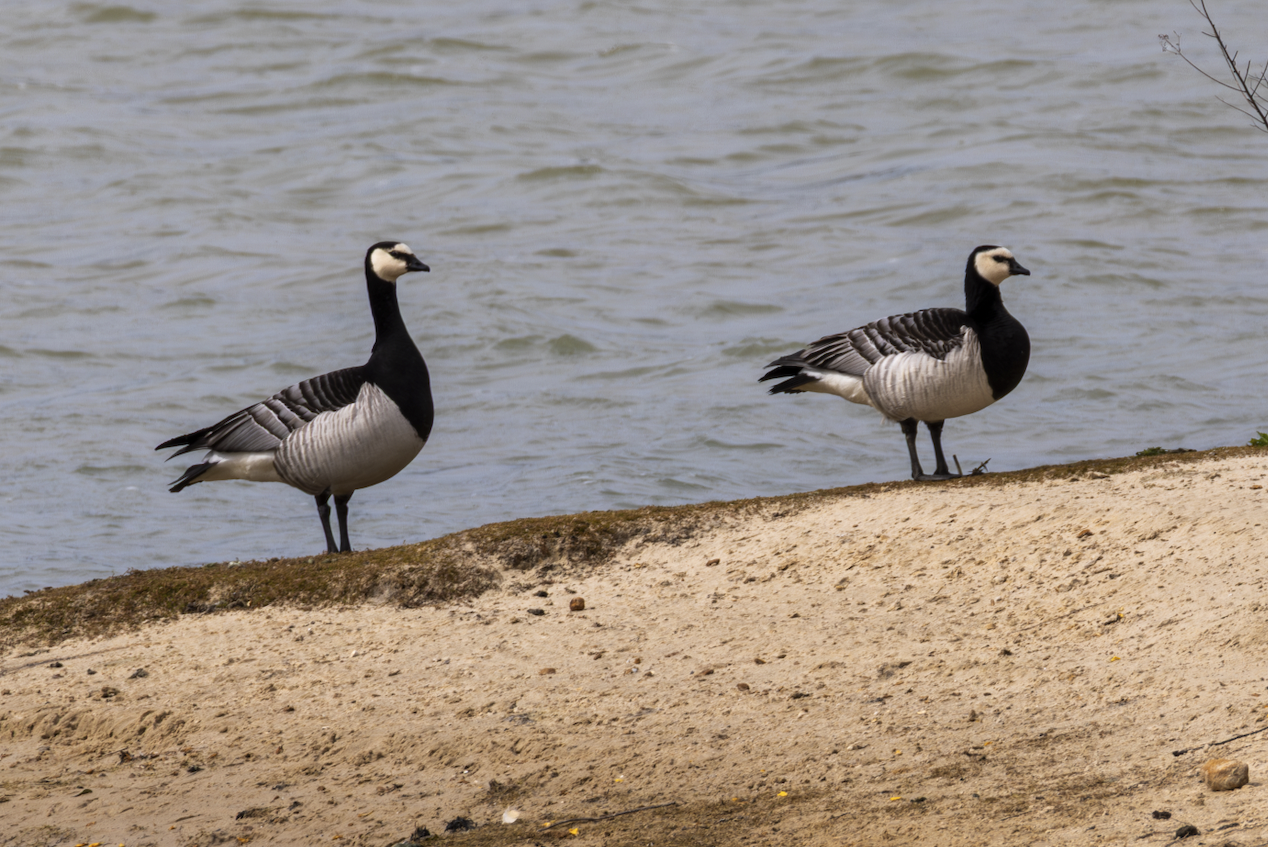
Barnacle Goose
LCBranta leucopsis
The barnacle goose winters in the UK in large flocks on western coasts, breeding on Arctic islands.
Barn Owl
LCTyto alba
The barn owl is one of the most widely distributed birds in the world, recognisable by its heart-shaped white face and silent flight.
Bar-tailed Godwit
NTLimosa lapponica
The bar-tailed godwit makes the longest non-stop migration of any bird, flying up to 13,000 km from Alaska. Large numbers winter on UK coasts.
Basking Shark
ENCetorhinus maximus
The world's second largest fish, reaching 12 metres. Basking sharks filter-feed on plankton at the surface in summer off western coasts, particularly Cornwall, Wales and the Hebrides. Fully protected in UK waters.
Batman Hoverfly
LCMyathropa florea
The batman hoverfly has a distinctive batman-like marking on its thorax. It breeds in water-filled rot holes in trees and is a regular garden visitor.
Bay Bolete
LCImleria badia
One of Britain's most abundant and reliable edible fungi, the bay bolete has a chestnut-brown cap and yellows when cut. Widely found under conifers and broadleaves, it is an excellent substitute for penny bun and dries very well.
Beadlet Anemone
LCActinia equina
The most abundant sea anemone in Britain, the beadlet is familiar in rock pools as a smooth, dark-red blob when the tide is out. When submerged it extends up to 192 tentacles to catch passing prey, including small fish and crustaceans.
Bean Goose
LCAnser fabalis
The bean goose is a scarce winter visitor from Scandinavia to a handful of traditional sites in England and Scotland.
Bearded Tit
LCPanurus biarmicus
The bearded tit (or bearded reedling) is a reedbed specialist with a ping call; it irrupts to new sites in autumn to form new colonies.
Beautiful Demoiselle
LCCalopteryx virgo
The beautiful demoiselle favours fast, clear, stony streams, the male with an entirely dark wing contrasting with his iridescent blue-green body.
Bechstein's Bat
ENMyotis bechsteinii
Among Europe's rarest bats, Bechstein's bat in Britain is mainly confined to ancient broadleaved woodland in southern England. It relies almost entirely on trees for all roost types and is a priority species for woodland conservation.
Bee-eater
LCMerops apiaster
The European bee-eater is an increasingly regular summer visitor to Britain, occasionally attempting to breed in sandpits in southern England.
Bee-fly
LCBombylius major
The large bee-fly is one of spring's most charming insects, hovering over early flowers and feeding with a long proboscis. It parasitises mining bee nests, flicking its eggs at burrow entrances.
Beefsteak Fungus
LCFistulina hepatica
Aptly named — this remarkable bracket fungus resembles a raw steak in colour, texture and even bleeds red juice when cut. It grows on oak and sweet chestnut, slightly acidifying the wood and producing highly prized, brown 'brown oak' timber.
Bee Orchid
LCOphrys apifera
One of Britain's most extraordinary wildflowers. The lip of each flower mimics a female bee in shape and scent to attract male bees for pollination. In Britain, however, it usually self-pollinates and appears magically on calcareous grassland, old quarries and road verges.
Bee Wolf
LCPhilanthus triangulum
The bee wolf is a solitary wasp that hunts honeybees to provision underground nest burrows. It has spread northwards from southern England and is now found as far as Yorkshire.
Bell Heather
LCErica cinerea
Bell heather flowers earlier than ling, from July, with vivid purple-red bell-shaped flowers. It grows on drier, more acidic ground within heathlands and is an important nectar source for bees. Historically used for brooms, thatching and dyes.
Bewick's Swan
LCCygnus columbianus
The smallest swan to visit Britain, Bewick's swans migrate from Siberia to winter at traditional UK wetland sites.
Bilberry Bumblebee
NTBombus monticola
The bilberry bumblebee is a mountain bumblebee of Scottish moorland and northern England, feeding heavily on bilberry. It has declined as upland habitats have changed.
Birch Polypore
LCFomitopsis betulina
One of Britain's most ancient medicinal fungi, the birch polypore was found on Ötzi the Iceman (preserved for 5,300 years). It grows exclusively on birch trees, producing large, white, smooth brackets that provide habitat for rare invertebrates.
Bird's-foot Trefoil
LCLotus corniculatus
One of Britain's most important wildflowers for insects, with over 130 species of invertebrates associated with it. Its butter-yellow and red-streaked flowers earned it nicknames including 'eggs and bacon'. The seed pods resemble a bird's claw.
Bittern
LCBotaurus stellaris
The Eurasian bittern is a secretive reedbed dweller, far more often heard than seen; its deep booming call carries up to five kilometres.
Blackbird
LCTurdus merula
The common blackbird is one of the most familiar birds in Britain, the male's mellow fluting song a quintessential sound of spring mornings.
Blackcap
LCSylvia atricapilla
The Eurasian blackcap is often called the 'northern nightingale' for its rich and varied song; many now overwinter in British gardens.
Black Darter
LCSympetrum danae
The black darter is the only entirely black darter in Britain, found on acid bogs and moorland in the north and west. Males turn black at maturity.
Black Garden Ant
LCLasius niger
The black garden ant is the species behind 'Flying Ant Day', when winged males and queens emerge for their nuptial flight on warm summer days, often simultaneously across a region.
Black Grouse
LCLyrurus tetrix
The black grouse is a striking moorland bird; males gather at traditional display grounds called leks to compete for females in spring.
Black Guillemot
LCCepphus grylle
The black guillemot is a small auk of rocky shores in northern Scotland and Ireland, entirely black with white wing patches in summer.
Black Hairstreak
NTSatyrium pruni
The black hairstreak has one of the most restricted ranges of any UK butterfly, confined to ancient blackthorn scrub in the East Midlands between Oxford and Peterborough.
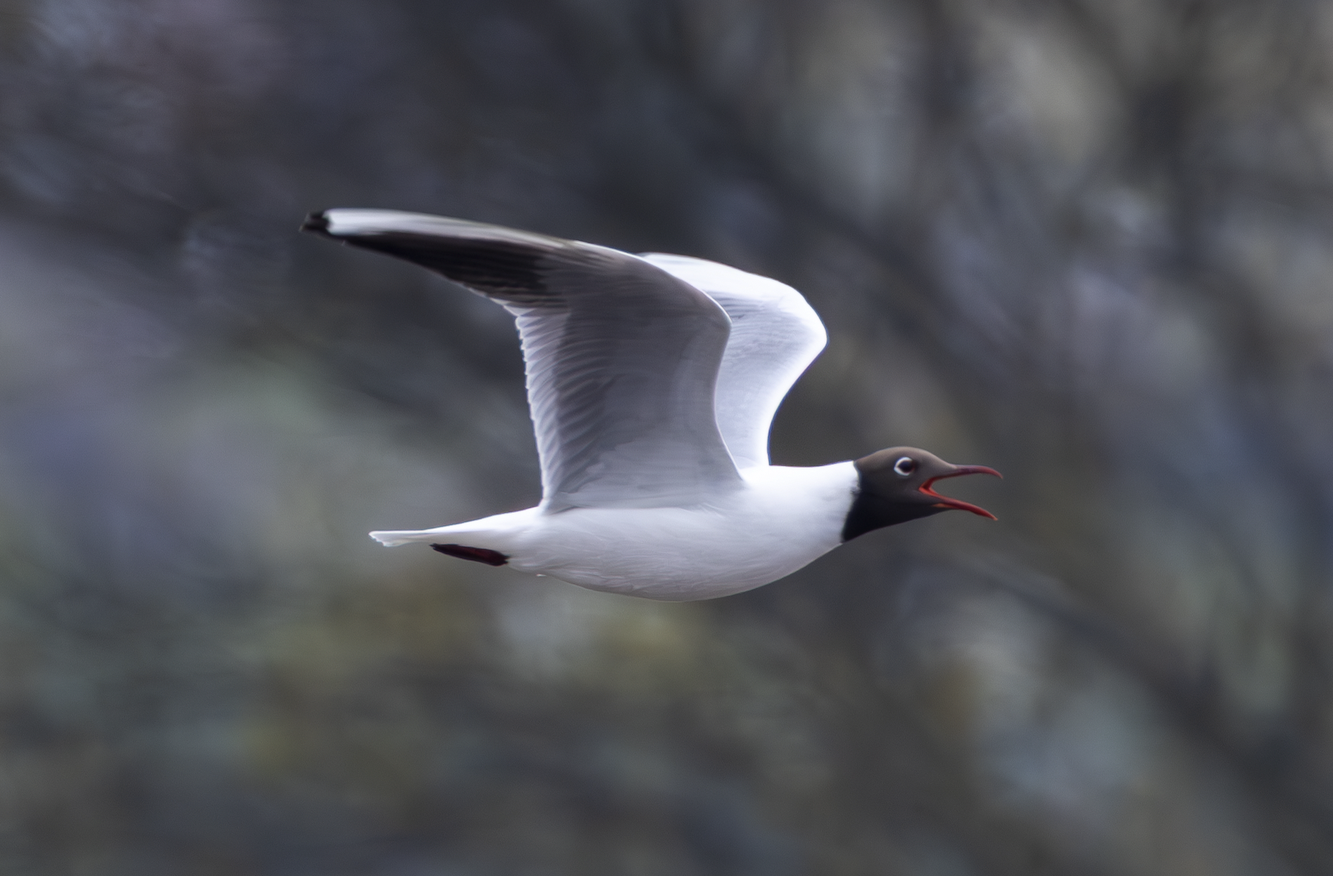
Black-headed Gull
LCChroicocephalus ridibundus
The black-headed gull is the UK's most familiar small gull, with a chocolate-brown (not black) hood in summer and found far inland.
Black-necked Grebe
LCPodiceps nigricollis
A rare breeder and winter visitor to UK waters, the black-necked grebe has upturned bill and golden fan-shaped ear tufts in summer.
Black Redstart
LCPhoenicurus ochruros
The black redstart is a very rare breeder in urban Britain and a scarce passage migrant, the male sooty grey with a red tail.
Black-tailed Godwit
NTLimosa limosa
The black-tailed godwit is a large wading bird; the Icelandic race winters on UK estuaries while the continental race breeds in small numbers.
Black-tailed Skimmer
LCOrthetrum cancellatum
The black-tailed skimmer is a dragonfly of open water with bare margins, the male blue with a black tail. It perches flat on the ground rather than on vegetation.
Black Tern
LCChlidonias niger
The black tern is a regular spring and autumn passage migrant over UK inland waters, dipping low to pluck insects from the surface.
Blackthorn
LCPrunus spinosa
Blackthorn blooms early — white flowers before the leaves open in March — making it a key early nectar source. The sloe berries are used for sloe gin. Its sharp thorns make it excellent for stock-proof hedging and nesting cover for birds.
Black-throated Diver
LCGavia arctica
A scarce breeder in Scotland and winter visitor to UK coasts, with elegantly patterned plumage in summer.
Bleak
LCAlburnus alburnus
A small, slender, silver fish of slow lowland rivers. Bleak are constantly in motion near the surface, feeding on insects and plankton. Their silvery scales (nacre) were once harvested to manufacture artificial pearls.
Bloody-nosed Beetle
LCTimarcha tenebricosa
The bloody-nosed beetle is a large, flightless beetle named for its remarkable defence: when threatened it produces droplets of foul-tasting red fluid from its mouth.
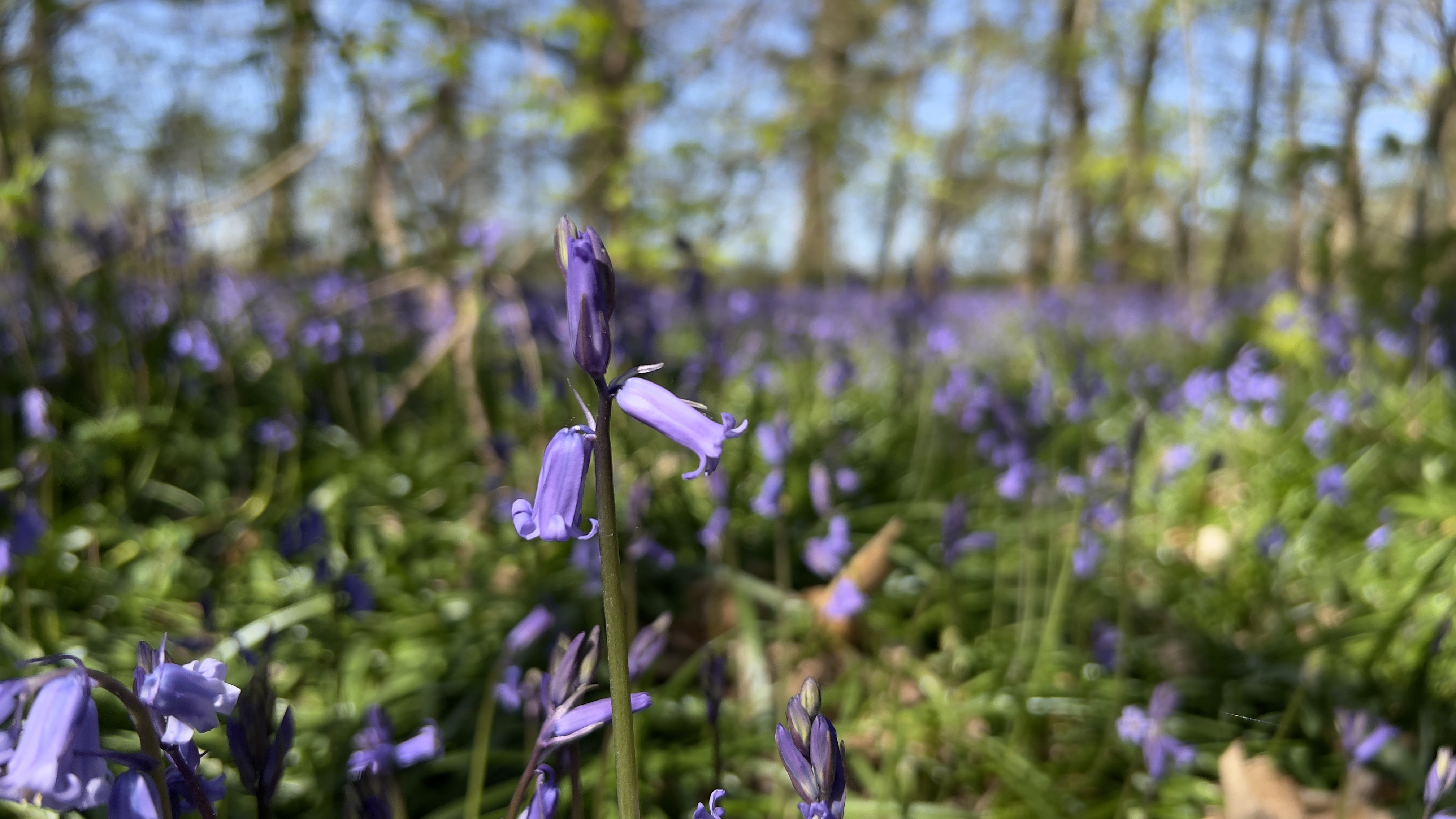
Bluebell
LCHyacinthoides non-scripta
Britain holds half the world's population of native bluebells. The blue carpet of an ancient oak wood in late April is one of Britain's most celebrated wildlife sights. It is protected by law as native specimens are under threat from the Spanish bluebell hybrid.
Blue Shark
NTPrionace glauca
A sleek, electric-blue oceanic shark that visits UK waters in summer, most commonly off the south-west coast. Blue sharks are the world's most heavily fished shark species but are successfully targeted by boat anglers off Looe and Penzance.
Blue-tailed Damselfly
LCIschnura elegans
The blue-tailed damselfly is one of the most tolerant of all damselflies, breeding in brackish water, urban ponds and even mildly polluted water.
Blue Tit
LCCyanistes caeruleus
The Eurasian blue tit is one of the most familiar garden birds in Britain, acrobatic at feeders and nesting in boxes.
Bogbean
LCMenyanthes trifoliata
A beautiful aquatic plant of shallow peat bogs, fens and shallow lakes, with distinctive fringed white flowers above three-parted leaves. An important indicator of good quality wetland. Once used as a hop substitute in brewing bitter beer.
Bonaparts Gull
Chroicocephalus philadelphia
Bonaparte’s Gulls are sleek, small gulls that breed in the boreal forest and winter farther south on ocean coasts, lakes, and rivers. Adults have black heads and red legs in the summer; in winter they have a neat gray smudge near the ear. They fly with ternlike agility, flashing bright white primaries that form a distinctive white wedge in the upperwing. Bonaparte’s Gulls capture flying insects and pluck tiny fish from the water with equal ease. They are unusual among gulls in their use of trees for nesting.
Bottlenose Dolphin
LCTursiops truncatus
One of the most commonly seen cetaceans in UK waters, with resident populations in Cardigan Bay and the Moray Firth that are among the best-studied dolphin communities in the world.
Bracken
LCPteridium aquilinum
Britain's most widespread fern and the country's only native plant that forms monocultures over large areas. Its deep litter provides shelter for adders and lizards. Bracken encroachment is a major management issue on heathlands and moorland.
Brambling
LCFringilla montifringilla
The brambling is a winter visitor from Scandinavia, often joining chaffinch flocks in beech woodland, the male with a striking orange shoulder.
Brent Goose
LCBranta bernicla
The brent goose is a small, dark goose that winters in large flocks on UK estuaries, feeding on eelgrass and saltmarsh plants.
Brilliant Emerald
LCSomatochlora metallica
The brilliant emerald is a fast, wary dragonfly of shaded lakes and rivers in southern England and Scotland, its metallic green body glittering in sunlight.
Brimstone
LCGonepteryx rhamni
One of the first butterflies to appear in spring, the brimstone overwinters as an adult and is thought to be the origin of the word 'butterfly'. The male's sulphur-yellow wings are unmistakeable.
Broad-bodied Chaser
LCLibellula depressa
The broad-bodied chaser is often the first dragonfly to colonise new garden ponds. Males are a vivid powder-blue; females and immature males are golden-yellow.
Brown Argus
LCAricia agestis
The brown argus is a small butterfly often mistaken for a female common blue, but it is chocolate brown with vivid orange spots. It has expanded northwards in recent years.
Brown-banded Carder Bee
VUBombus humilis
The brown-banded carder bee is one of Britain's rarer bumblebees, needing flower-rich grassland and declining with agricultural intensification across its limited UK range.
Brown Hairstreak
NTThecla betulae
The brown hairstreak is the largest hairstreak in the UK, a late-summer species that lays its eggs on blackthorn. Hedge trimming has greatly reduced its numbers.
Brown Hare
LCLepus europaeus
Famous for its 'mad March' boxing displays where females rebuff over-eager males, the brown hare can reach 70 km/h. It has declined significantly since the 1960s due to agricultural change and increased predation.
Brown Hawker
LCAeshna grandis
The brown hawker is unmistakeable with its all-brown body and amber-tinted wings. It is a powerful flier often seen well away from water along hedgerows and woodland edges.
Brown Long-eared Bat
LCPlecotus auritus
Has enormous ears almost as long as its body, used to detect resting moths and other insects from their sounds on foliage. It often hunts by gleaning — silently plucking prey from leaves — and is a regular attic roosting bat.
Brown Rat
LCRattus norvegicus
Arriving in Britain in the early 18th century, the brown rat is now one of the most widespread mammals, found wherever humans live. An intelligent, resourceful omnivore capable of swimming, climbing and burrowing.
Brown Trout
LCSalmo trutta
The brown trout is one of Britain's most prized fish, varying enormously in size and colouration across different river systems. Sea-run populations (sea trout) make ocean migrations before returning to fresh water to spawn.
Buff-tailed Bumblebee
LCBombus terrestris
The buff-tailed bumblebee is one of the UK's commonest and largest bumblebees, with queens often emerging in mild winters as early as January. A vital pollinator of crops and wildflowers.
Buff-tip Moth
LCPhalera bucephala
The buff-tip moth is one of Britain's most convincing mimics, resembling a broken birch twig so closely that it is almost impossible to see at rest.
Bullfinch
LCPyrrhula pyrrhula
The Eurasian bullfinch is one of Britain's most striking birds, the male with an intense rose-red breast; it has declined in farmland areas.
Bullhead
LCCottus perifretum
A small, bottom-dwelling fish of clean, stony streams, the bullhead hides under stones by day and hunts invertebrates at night. It is a key indicator of good river water quality and a protected priority species.
Bulrush
LCTypha latifolia
The classic wetland plant, with brown sausage-shaped seed heads that explode to release thousands of seeds on the wind. Its dense stands provide cover for reed buntings, warblers and bitterns and its stems and roots are eaten by water voles.
Burnet Companion
LCEuclidia glyphica
The burnet companion is a small day-flying moth often seen alongside burnet moths on chalk grassland, its orange and dark brown hindwings flashing in flight.
Burnished Brass
LCDiachrysia chrysitis
The burnished brass is named for the striking metallic gold patches on its forewings, which glisten in light. It is common in gardens, hedgerows and roadside verges.
Buzzard
LCButeo buteo
The common buzzard is now Britain's most numerous raptor, often seen soaring overhead or perched on roadside posts.
Camberwell Beauty
LCNymphalis antiopa
The Camberwell beauty is a spectacular vagrant from Scandinavia, the deep maroon wings edged with a broad cream-yellow border making it unmistakeable.
Canada Goose
LCBranta canadensis
The Canada goose is now the UK's most numerous goose, introduced from North America and resident across parks, lakes and rivers.
Capercaillie
LCTetrao urogallus
The capercaillie, Britain's largest grouse, inhabits ancient Caledonian pinewoods in Scotland and has a dramatic lekking display.
Carrion Crow
LCCorvus corone
The carrion crow is one of Britain's most widespread birds, highly intelligent and adaptable, usually seen alone or in pairs.
Cauliflower Fungus
LCSparassis crispa
A remarkable fungus resembling a pale, frilly cauliflower up to 40 cm across. It grows at the base of pine trees (and occasionally other conifers) and is parasitic on the roots. An excellent edible, sometimes called the hen-of-the-woods of the pine forest.
Cetti's Warbler
LCCettia cetti
Cetti's warbler colonised Britain in the 1970s and is a resident in reedbeds, exploding into a surprisingly loud burst of song before disappearing.
Chaffinch
LCFringilla coelebs
The chaffinch is one of Britain's most abundant birds; the male's bright plumage and rattling song are familiar in almost every wood and garden.
Chalkhill Blue
LCPolyommatus coridon
The chalkhill blue is restricted to chalk and limestone grasslands in southern England where its foodplant horseshoe vetch grows. The male is a beautiful pale silvery-blue.
Chanterelle
LCCantharellus cibarius
One of Britain's finest edible fungi, the chanterelle's golden-yellow funnel shape and apricot scent make it hard to mistake. It grows in mycorrhizal association with oak and beech in ancient woodland. Highly prized by chefs across Europe.
Chicken of the Woods
LCLaetiporus sulphureus
An unmistakeable bracket fungus with vivid yellow and orange concentric shelves growing on oaks, sweet chestnuts and willows. An excellent edible with a texture said to resemble chicken. It can grow to enormous size — individual fruiting bodies may weigh 45 kg.
Chiffchaff
LCPhylloscopus collybita
The common chiffchaff is one of the first summer migrants to arrive in Britain, its onomatopoeic chiff-chaff song a welcome sign of spring.
Chinese Water Deer
VUHydropotes inermis
Unlike other deer, the Chinese water deer has no antlers; males carry prominent tusks instead. Britain holds a significant proportion of the world population following escapes from Woburn Abbey.
Chough
LCPyrrhocorax pyrrhocorax
The red-billed chough is a cliff-nesting crow of western coasts in Wales, Scotland and Ireland, with acrobatic flight and a ringing call.
Chub
LCSqualius cephalus
A robust, large-scaled fish of rivers and streams, the chub is a generalist feeder taking insects, fish, crayfish, berries and even small mammals. It is wary and quick to bolt for cover when alarmed from the surface.
Cinnabar Moth
LCTyria jacobaeae
The cinnabar moth is one of Britain's most recognisable moths, flying by day with striking black and red wings. Its yellow and black caterpillars feed openly on ragwort.
Cirl Bunting
LCEmberiza cirlus
The cirl bunting is restricted to the south Devon coast in the UK, where targeted conservation has helped it recover from near-extinction.
Clouded Yellow
LCColias croceus
The clouded yellow is a strong-flying migratory butterfly arriving from southern Europe each year. Numbers vary hugely; in good 'clouded yellow years' thousands are seen.
Club-tailed Dragonfly
NTGomphus vulgatissimus
The club-tailed dragonfly breeds in clean, fast-flowing rivers such as the Thames and Severn. It has a distinctive bulbous tail tip and separated green eyes.
Coal Tit
LCPeriparus ater
The coal tit is the smallest UK tit, preferring conifer trees; it habitually caches food seeds for retrieval in winter.
Cockchafer
LCMelolontha melolontha
The cockchafer or maybug is a large, bumbling beetle that emerges in May and blunders noisily around at dusk. Its larvae can take three to four years to develop in the soil.
Collared Dove
LCStreptopelia decaocto
The Eurasian collared dove colonised Britain from the 1950s in one of the fastest natural range expansions ever recorded, now a familiar garden bird.
Comma
LCPolygonia c-album
The comma has a distinctive ragged outline and a small white comma-shaped mark on its underwing. It has expanded northwards in recent decades, now reaching Scotland.
Common Ash
CRFraxinus excelsior
Once one of Britain's most abundant trees, ash is now critically threatened by ash dieback (Hymenoscyphus fraxineus), a fungal disease that could kill 80% of ash trees in the UK. Ancient ash woodlands on limestone are particularly at risk.
Common Blue
LCPolyommatus icarus
The common blue is the most widespread blue butterfly in Britain, found on grasslands, heathlands and coastal dunes wherever its foodplant bird's-foot trefoil grows.
Common Blue Damselfly
LCEnallagma cyathigerum
The common blue damselfly is Britain's most abundant damselfly, found at almost any standing or slow-flowing water across the country.
Common Bream
LCAbramis brama
A large, deep-bodied, bronze fish of slow lowland rivers and lakes. Bream form large shoals and feed by tilting almost vertically to vacuum up invertebrates from soft bottom sediment, creating visible rolling disturbance on the surface.
Common Brittlestar
LCOphiothrix fragilis
Brittlestars form dense beds — sometimes millions per hectare — on coarse seabeds across the UK continental shelf. Unlike starfish, they move by lashing their slender arms rather than using tube feet. Arms break off easily to confuse predators.
Common Carder Bee
LCBombus pascuorum
The common carder bee is a gingery-brown bumblebee, one of the most widespread UK species, found in gardens, farmland and woodland rides well into autumn.
Common Carp
VUCyprinus carpio
Introduced to Britain in medieval times as a food fish, the common carp is now one of the most popular angling species. It can exceed 20 kg and live for 40 years. Wild-strain carp are globally vulnerable due to hybridisation.
Common Centipede
LCLithobius forficatus
The most familiar UK centipede, a fast-moving predator with 15 pairs of legs and powerful venom claws. Found under stones and bark throughout the UK, it hunts earthworms, slugs and insects, and is in turn eaten by shrews and hedgehogs.
Common Cockle
LCCerastoderma edule
Found in enormous numbers on sandy estuaries and sheltered bays around the UK. Cockles are harvested commercially by hand-raking and mechanically, and are ecologically critical as food for wading birds and flatfish.
Common Crane
LCGrus grus
The common crane became extinct in Britain in the 16th century but naturally recolonised Norfolk in the 1980s and is now slowly spreading.
Common Cuttlefish
LCSepia officinalis
A highly intelligent mollusc with excellent eyesight and the ability to change colour instantly for camouflage. Cuttlefish visit UK inshore waters in spring to breed and lay black eggs among kelp. Their internal shell washes up as cuttlebone.
Common Darter
LCSympetrum striolatum
The common darter is Britain's most widespread and abundant darter, flying from June through to November and even December in mild years.
Common Dog-violet
LCViola riviniana
The most widespread violet in Britain, found in woodland edges, hedgebanks and grassland. Unlike sweet violet it has no scent. It is the larval food plant of pearl-bordered, small pearl-bordered and dark green fritillary butterflies.
Common Dolphin
LCDelphinus delphis
The most abundant cetacean in UK waters off the south-west and west coasts. Large groups of hundreds regularly bow-ride vessels in the Celtic Sea and are frequently seen on whale-watching trips off Cornwall and west Wales.
Common Earthball
LCScleroderma citrinum
The most common of the earthball fungi, often confused with truffles or puffballs. Its thick, warty, yellowish skin encloses dark purple-black spore mass. It is poisonous and should not be confused with edible puffballs. Common under birch and oak.
Common Earthworm
LCLumbricus terrestris
The most important invertebrate in British soil, dragging organic matter underground and aerating the soil with its tunnels. Charles Darwin described it as one of the most important animals in the world. A key food source for blackbirds and robins.
Common Earwig
LCForficula auricularia
The common earwig is an unusual insect in that mothers guard their eggs and tend their young. The curved rear pincers are used in defence and in folding the wings.
Common Field Grasshopper
LCChorthippus brunneus
The common field grasshopper is one of Britain's most familiar grasshoppers, found on dry, short grassland and sunny banks, its chirping song a sound of summer.
Common Frog
LCRana temporaria
One of the most familiar amphibians in the UK, the common frog is often the first sign of spring when it migrates to ponds to spawn in February. Spawn can survive light frosts and tadpoles take 3 months to metamorphose.
Common Green Grasshopper
LCOmocestus viridulus
The common green grasshopper is a grasshopper of longer, rougher grassland, its song a continuous sewing-machine trill. It is often the dominant species on moorland edges.
Common Green Lacewing
LCChrysoperla carnea
The common green lacewing is a delicate insect with transparent, veined wings. Its larvae are ferocious predators of aphids. Adults overwinter indoors and turn pink-brown.
Common Green Shieldbug
LCPalomena prasina
The common green shieldbug is widespread in hedgerows and gardens, turning bronze in autumn before it overwinters under bark and leaf litter.
Common Guillemot
LCUria aalge
The common guillemot breeds in huge, noisy colonies on UK cliff ledges, incubating a single pear-shaped egg on a bare rock.
Common Gull
LCLarus canus
Despite its name, the common gull is less numerous than herring or black-headed gulls; it breeds in Scotland and winters across the UK.
Common Hawker
LCAeshna juncea
The common hawker is the predominant large hawker of northern and western Britain, flying over acid bogs and moorland from July to October.
Common Hermit Crab
LCPagurus bernhardus
One of Britain's most familiar shore creatures, the hermit crab protects its soft abdomen by inhabiting the empty shells of whelks and other molluscs. It upgrades to a new shell as it grows, sometimes fighting for the best ones.
Common Jellyfish
LCAurelia aurita
The most familiar jellyfish in UK waters, the moon jellyfish washes up on beaches in summer. It has four distinctive pink rings (the gonads) visible through its translucent bell and feeds on plankton using short, frilly tentacles.
Common Juniper
NTJuniperus communis
Britain's only native juniper, once widespread on chalk downland and limestone, now in steep decline. Its berries (used to flavour gin) are eaten by birds and it provides dense cover for nesting birds. Native to a wider range than any other tree.
Common Knapweed
LCCentaurea nigra
One of Britain's most valuable late-summer wildflowers for insects, knapweed's purple thistle-like flowers attract over 40 species of butterfly and over 100 species of bee and hoverfly. It is a key species for wildflower meadow restoration mixes.
Common Limpet
LCPatella vulgata
One of Britain's most familiar shore creatures, clinging to rocks with a grip strong enough to withstand waves in a severe storm. Each limpet grazes a territory of algae and returns to exactly the same spot when the tide comes in.
Common Lizard
LCZootoca vivipara
Britain's most widespread reptile and the only one found in Ireland. Unusually for a lizard, it gives birth to live young rather than laying eggs — an adaptation to the cool British climate. It basks on sunny banks and path edges.
Common Lobster
VUHomarus gammarus
Britain's most valuable commercial shellfish species, found on rocky reefs around the entire coast. Blue-black when alive, it turns red when cooked. Lobsters are long-lived and slow-growing, making them vulnerable to overfishing.
Common Morel
LCMorchella esculenta
One of Britain's most prized edible fungi, the morel appears in spring — April and May — in old orchards, chalk woodland and disturbed ground. Its honeycomb cap is unmistakeable. It must be cooked before eating as raw morels are mildly toxic.
Common Mussel
LCMytilus edulis
One of Britain's most important filter-feeding bivalves, forming dense beds on exposed rocky shores and estuaries. Mussel beds provide habitat for dozens of other species and are farmed commercially around the UK coast.
Common Octopus
LCOctopus vulgaris
The most intelligent invertebrate, capable of learning, problem-solving and changing colour and texture instantly. Occasionally encountered by UK divers in the south-west, it has become more frequent in recent years as seas warm.
Common Periwinkle
LCLittorina littorea
The most abundant mollusc on British rocky shores, found from the splash zone to the low water mark. Periwinkles are the dominant grazer of rocky shores, keeping surfaces clear of algae. They have been eaten as seafood for centuries.
Common Pipistrelle
LCPipistrellus pipistrellus
Britain's most abundant bat at just 3-8g. A single individual can eat 3,000 midges in a night, foraging along hedgerows and woodland edges from dusk. It roosts in houses and is the bat most likely to be seen in gardens.
Common Poppy
LCPapaver rhoeas
The field poppy flourishes in disturbed soil and arable field margins, becoming an iconic symbol of remembrance. It declined dramatically with herbicide use but is recovering with agri-environment schemes. Its seeds can remain viable in soil for over 80 years.
Common Prawn
LCPalaemon serratus
The common prawn is found in rock pools and shallow coastal waters around the UK, its transparent body with brownish banding making it surprisingly well camouflaged. It scavenges detritus and hunts small invertebrates.
Common Puffball
LCLycoperdon perlatum
The most familiar puffball in British woodland, covered in small spiny warts that leave a patterned scar as they fall. When mature it puffs out a cloud of brown spores from a pore at the top when struck by rain. Edible when young and white inside.
Common Redpoll
LCAcanthis flammea
The common or mealy redpoll is a winter visitor from Scandinavia, slightly larger and paler than the resident lesser redpoll.
Common Reed
LCPhragmites australis
Britain's tallest grass forms extensive reedbed habitats that are home to some of our rarest birds including bittern, marsh harrier and bearded tit. Reed is still harvested for thatching, with Norfolk reed considered the finest quality available.
Common Sandpiper
LCActitis hypoleucos
The common sandpiper bobs incessantly on riverside rocks and boulders, breeding along UK upland rivers and wintering in small numbers.
Common Scoter
NTMelanitta nigra
The common scoter is a seaduck that winters in large flocks off UK coasts and breeds on a few Scottish and Irish moorland lochs.
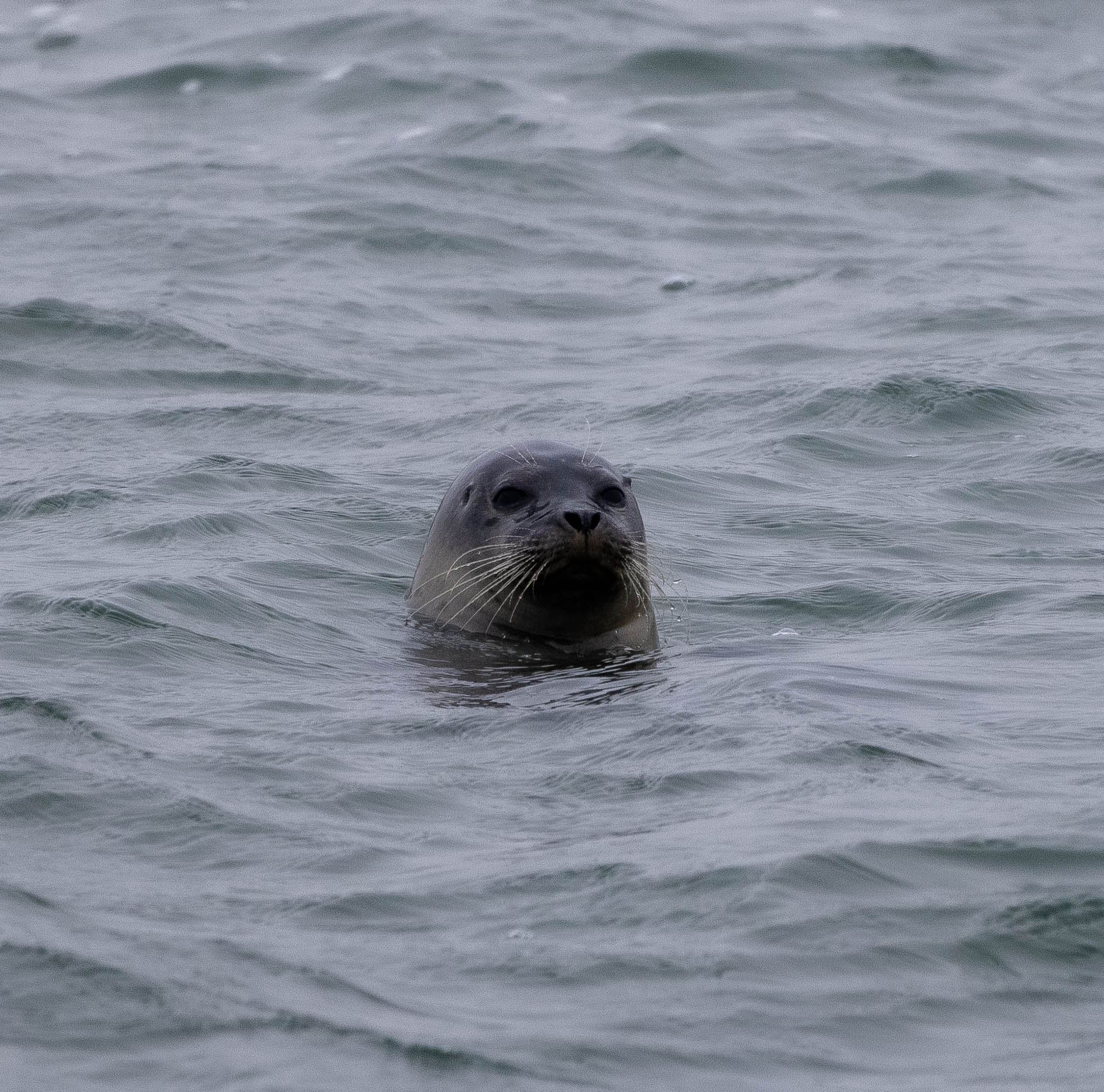
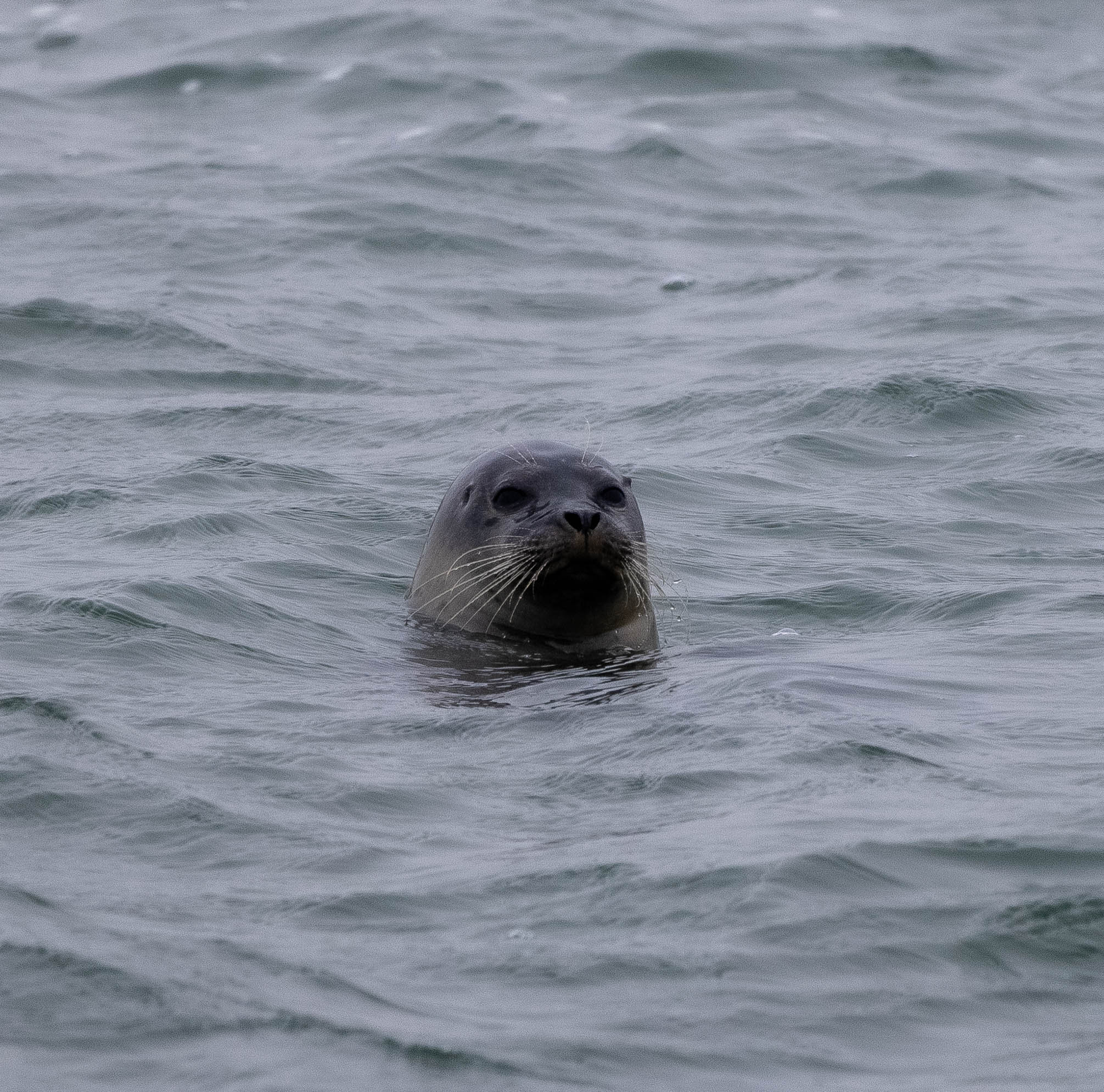
Common Seal
LCPhoca vitulina
The harbour seal has a rounded, dog-like head and can be seen hauled out on sandbanks and rocks around UK coasts. Unlike grey seals, pups can swim from birth. Populations have declined significantly in Scotland and Orkney.
Common Shore Crab
LCCarcinus maenas
The most familiar crab in Britain, found on rocky shores and in estuaries around the entire coastline. A ferocious predator and scavenger, it has spread globally as one of the world's most invasive marine species.
Common Shrew
LCSorex araneus
A tiny, voracious insectivore with a distinctively pointed snout. It must eat its own bodyweight daily to survive, communicates with high-pitched squeaks, and lives for little more than a year.
Common Skate
CRDipturus batis
Formerly the largest flatfish in the world's seas, the common skate was fished almost to extinction. It survives in a few deep-water strongholds around Scotland and Ireland and is now a priority conservation species.
Common Spotted Orchid
LCDactylorhiza fuchsii
Britain's most widespread orchid, found in woodland rides, grassland, road verges and old quarries. The pink-mauve flowers have intricate darker markings and the leaves are spotted with purple. It often forms large colonies.
Common Squid
LCLoligo vulgaris
A shoaling, fast-moving predator important in UK marine food webs. Squid are fished commercially and targeted by recreational anglers with lures at night. They spawn in winter, laying clusters of finger-like egg cases on the seabed.
Common Starfish
LCAsterias rubens
The most familiar echinoderm on UK shores, the common starfish is an important predator of mussels and oysters. It can regenerate lost arms and even grow a new body from a single arm. Colours range from purple to orange to brown.
Common Teasel
LCDipsacus fullonum
The teasel's architectural seed heads persist through winter and are one of the most important food sources for goldfinches, which perch acrobatically to extract the seeds. The dried heads were traditionally used to raise the nap on wool cloth.
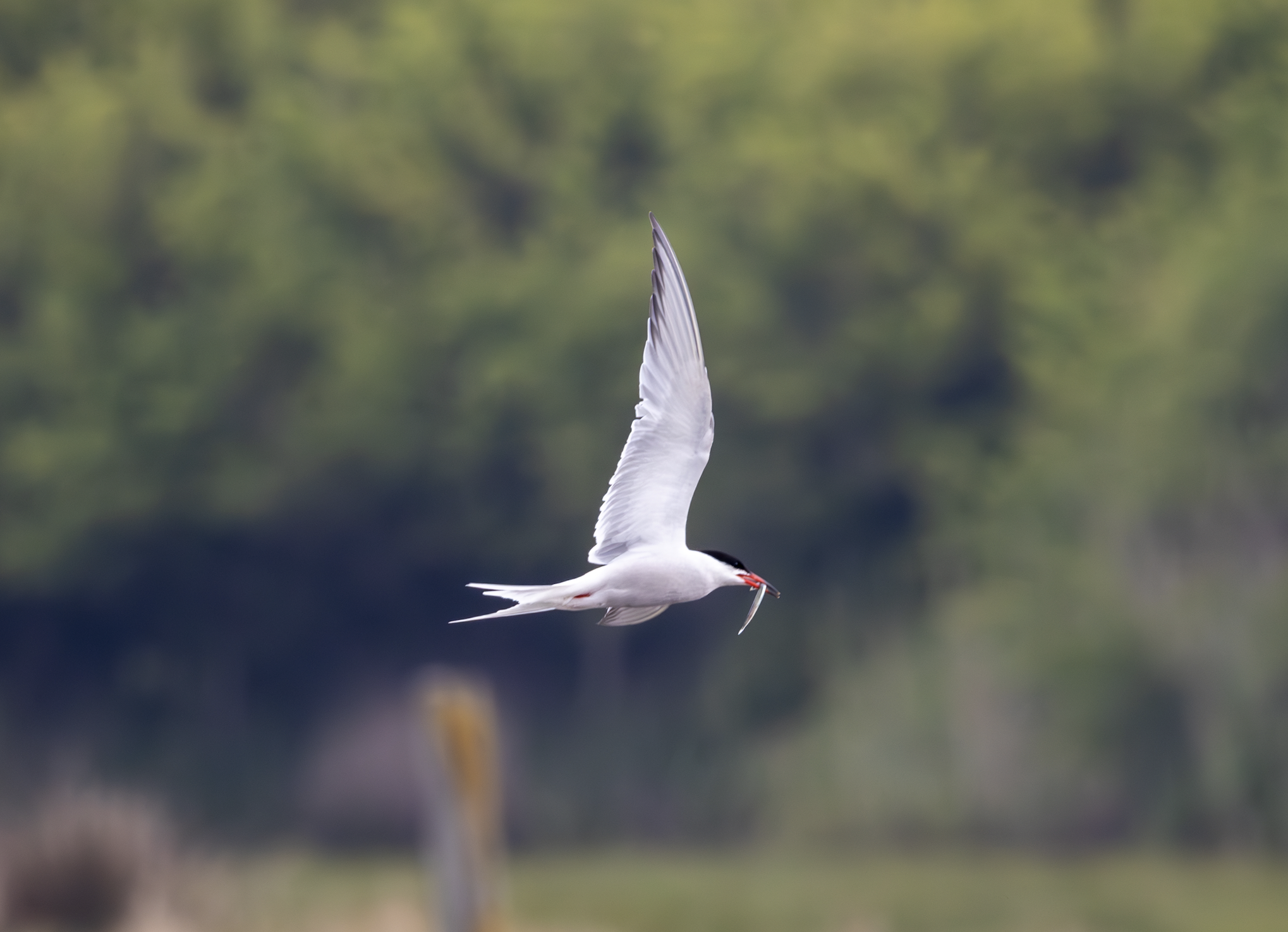
Common Tern
LCSterna hirundo
The common tern is the most widespread tern in Britain, breeding on coasts and inland waters, with a forked tail and fierce dive.
Common Toad
VUBufo bufo
Larger and wartier than the common frog, the toad is now on the Amber conservation list following significant declines. It makes remarkable road migrations to breeding ponds in spring, and many are killed by traffic.
Common Wasp
LCVespula vulgaris
The common wasp builds large papery nests in the ground or in cavities. Though often seen as a pest, it is a significant predator of insects and an important late-summer pollinator.
Common Woodlouse
LCOniscus asellus
The most common woodlouse in Britain, found under bark, stones and in leaf litter. Not an insect but a crustacean, it breathes through gills and must remain moist. It plays a vital role in decomposition and nutrient recycling.
Common Yew
LCTaxus baccata
The longest-lived tree in Britain — ancient churchyard yews may be over 5,000 years old. Almost all parts are highly poisonous except the red aril surrounding the seed. The taxol compound derived from it is used in cancer treatment.
Conger Eel
LCConger conger
The largest eel in the world and a formidable predator of wrecks, rocky reefs and deep-water habitat around UK coasts. It can reach 3 metres and 110 kg. Conger spawn only once, migrating to the Atlantic to breed and then die.
Convolvulus Hawk-moth
LCAgrius convolvuli
The convolvulus hawk-moth is a large migratory hawk-moth from Africa and southern Europe, occasionally arriving in Britain in impressive numbers.
Coot
LCFulica atra
The Eurasian coot is an aggressive, sooty-black waterbird with a distinctive white bill and frontal shield, common on lakes and reservoirs.
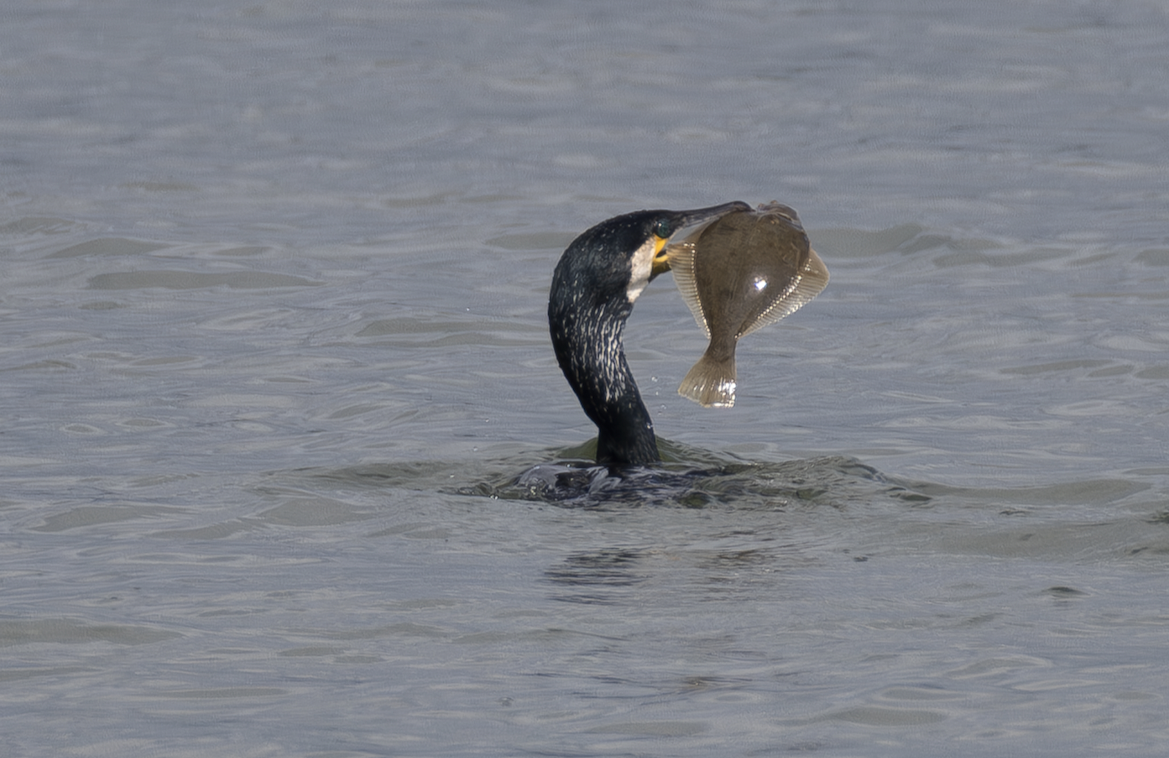
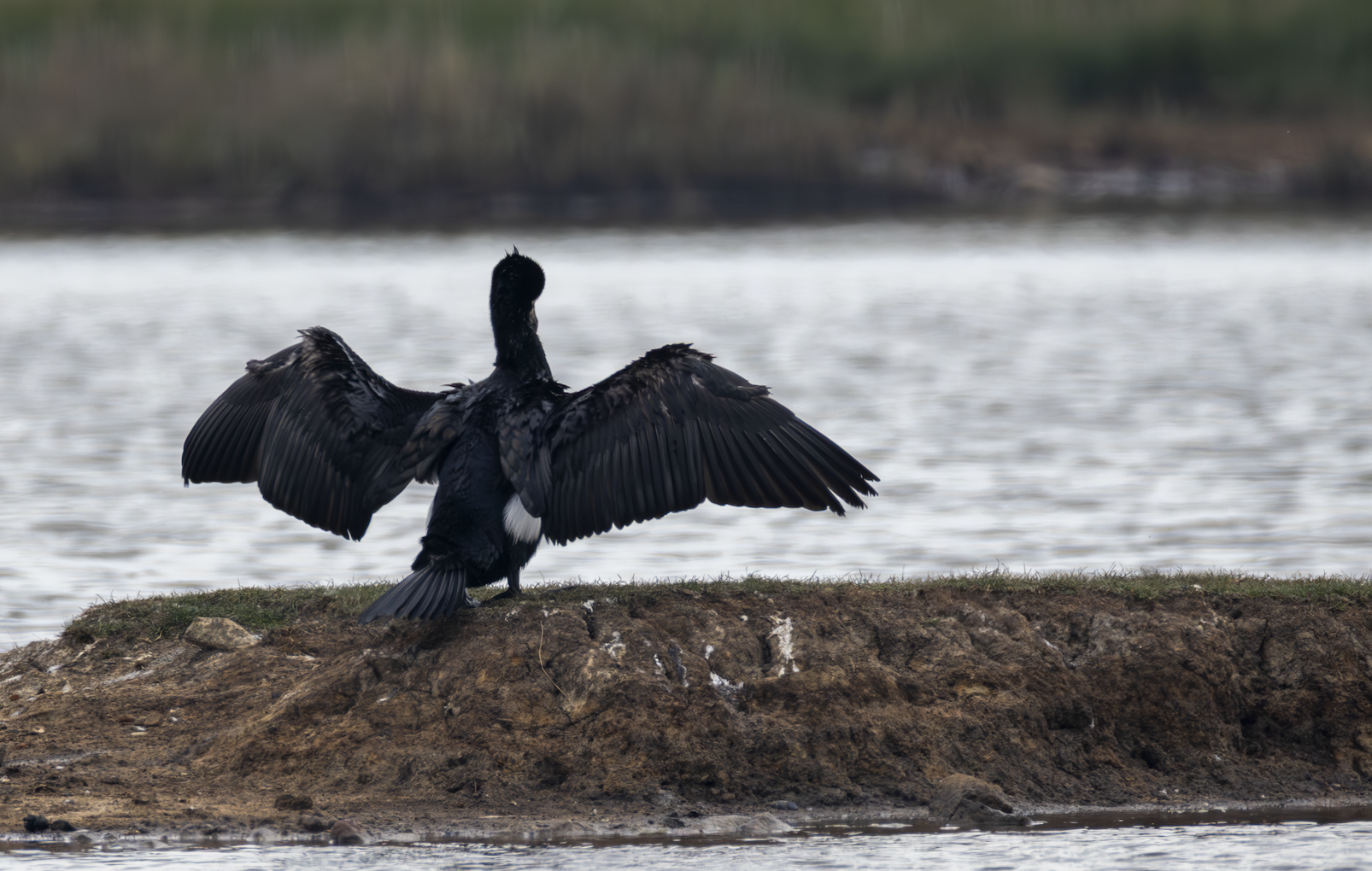
Cormorant
LCPhalacrocorax carbo
The great cormorant is a large, dark waterbird commonly seen drying its wings on posts and rocks at inland and coastal waters.
Corn Bunting
LCEmberiza calandra
The corn bunting is a large, streaky farmland bunting, singing its jangling song from a fence post or telegraph wire on arable land.
Corncrake
LCCrex crex
The corncrake is a rare and secretive summer visitor to traditional hay meadows in Scotland and Ireland, with a rasping crex-crex call.
Cowslip
LCPrimula veris
A plant of unimproved chalk grassland, meadows and road verges, the cowslip has made a comeback following protection from picking and more sympathetic road-verge management. Its nodding yellow flowers are an important nectar source for early butterflies.
Crab Apple
LCMalus sylvestris
The ancestor of all cultivated apple varieties, the crab apple is a small, thorny native tree of hedgerows and woodland edges. Its tart, bitter apples are eaten by fieldfares, foxes and badgers and were traditionally used to make verjuice.
Crested Tit
LCLophophanes cristatus
The crested tit is restricted to the ancient Caledonian pinewoods of the Scottish Highlands in the UK, easily identified by its pointed crest.
Crossbill
LCLoxia curvirostra
The common crossbill has uniquely crossed bill tips for extracting seeds from conifer cones; flocks irrupt into Britain when cone crops fail in Europe.
Cuckoo
LCCuculus canorus
The common cuckoo's call is one of the most celebrated sounds of spring, yet this migratory brood parasite is declining rapidly in the UK.
Cuckoo Wrasse
LCLabrus mixtus
One of Britain's most vividly coloured fish — males are brilliant blue and orange while females are red-pink with black and white spots. It is a protogynous hermaphrodite; older females transform into males as needed.
Curlew
NTNumenius arquata
The Eurasian curlew is the UK's largest wading bird, known for its haunting call and distinctive down-curved bill.
Cushion Star
LCAsterina gibbosa
A small, five-sided starfish found under rocks in south-west Britain. Despite its diminutive size of just 5 cm, it is capable of eating molluscs and worms. It is a sequential hermaphrodite, beginning life as male and becoming female.
Dace
LCLeuciscus leuciscus
A slender, fast-moving fish of clean rivers, the dace is often found in the same clear, gravel-bedded streams as grayling and trout. It is among the first fish to spawn in the UK, gathering in shallow gravel runs in late winter.
Dark Bush-cricket
LCPholidoptera griseoaptera
The dark bush-cricket is Britain's most abundant bush-cricket, found in hedgerows, bramble and woodland edges throughout England and Wales.
Dark Green Fritillary
LCArgynnis aglaja
The dark green fritillary is one of our fastest flying butterflies, soaring over coastal dunes, chalk downland and moorland, difficult to follow with the eye.
Dartford Warbler
LCCurruca undata
The Dartford warbler is a resident heathland specialist, one of the few warblers to overwinter in Britain, vulnerable to cold winters.
Daubenton's Bat
LCMyotis daubentonii
Specialises in hunting insects low over still or slow-moving water, sometimes scooping them from the surface with its large feet or tail membrane. Widespread across the UK wherever clean water is found.
Death Cap
LCAmanita phalloides
The world's most deadly mushroom, responsible for 90% of fatal mushroom poisonings globally. Dangerously similar to edible species, it grows under oak and beech in late summer. A single cap contains enough toxin to kill an adult human.
Death's-head Hawk-moth
LCAcherontia atropos
The death's-head hawk-moth is the largest moth to visit Britain, a migrant from Africa bearing a skull-like marking on its thorax and capable of squeaking when handled.
Destroying Angel
LCAmanita virosa
Pure white and beautiful, the destroying angel is one of Europe's most deadly fungi. Growing in deciduous and mixed woodland, it contains the same deadly amatoxins as the death cap and has caused multiple fatalities across Europe.
Devil's-bit Scabious
LCSuccisa pratensis
The sole food plant of the marsh fritillary butterfly and an important nectar source for many other species. Blue-purple flowers on long stalks appear in late summer in damp meadows, fen edges and woodland rides. The name refers to its bitten-off root.
Devil's Coach Horse
LCOcypus olens
The devil's coach horse is a large rove beetle that raises its tail and opens its jaws when threatened. It is a voracious nocturnal predator found in gardens, hedgerows and woodland.
Dingy Skipper
LCErynnis tages
The dingy skipper is a small brown butterfly of warm grassland, heathland and disused quarries, often resting with wings flat like a moth.
Dipper
LCCinclus cinclus
The white-throated dipper is the UK's only truly aquatic songbird, swimming and walking along the beds of fast upland streams.
Dock Bug
LCCoreus marginatus
The dock bug is a large, brown bug found on docks, sorrels and other plants in rough grassland and hedgerows throughout Britain.
Dog Whelk
LCNucella lapillus
A predatory mollusc that drills through the shells of barnacles and mussels to feed on the soft tissue inside. Dog whelks suffered severe population declines due to tributyltin (TBT) anti-fouling paint on boats but have largely recovered.
Dor Beetle
LCGeotrupes stercorarius
The dor beetle is a large, bluish-black dung beetle that buries dung as food for its larvae. It is an important recycler of nutrients and is often parasitised by mites.
Dotterel
LCCharadrius morinellus
The dotterel breeds on Scottish mountaintops and is a rare passage visitor; unusually, females are brighter and compete for males.
Dover Sole
LCSolea solea
One of Britain's most valuable flatfish, the Dover sole is a nocturnal hunter of sandy and muddy seabeds around UK coasts. It burrows into sediment by day and hunts worms and crustaceans at night using a sensitive underslung mouth.
Downy Birch
LCBetula pubescens
More tolerant of wet and acidic soils than silver birch, the downy birch is the dominant birch in Scotland, Ireland and upland Britain. The twigs have soft hairs (downy) rather than the warty growths of silver birch.
Downy Emerald
LCCordulia aenea
The downy emerald is a scarce but widespread emerald dragonfly with brilliant green eyes, flying fast and low over still water in May and June.
Drone Fly
LCEristalis tenax
The drone fly mimics a honeybee drone convincingly in appearance and behaviour. Its rat-tailed maggot breathes through a long tail tube while feeding in polluted water.
Dryad's Saddle
LCCerioporus squamosus
A large, handsome bracket fungus with scaly, fan-shaped fruitbodies growing on dead and dying elm, ash and sycamore. It has a pleasant cucumber or watermelon scent when fresh. Edible when very young, later becoming fibrous and tough.
Duke of Burgundy
ENHamearis lucina
Despite its regal name, the duke of Burgundy is a small butterfly of chalk downland and woodland rides, now one of Britain's fastest declining species.
Dunlin
LCCalidris alpina
The dunlin is the most abundant wader on UK estuaries in winter, forming dense, aerobatic flocks that wheel and turn in unison.
Dunnock
LCPrunella modularis
The dunnock or hedge sparrow is a familiar but often overlooked garden bird with a remarkably complex mating system.
Early Bumblebee
LCBombus pratorum
The early bumblebee is one of the smallest UK bumblebees and among the first to appear in spring, with a yellow band and red tail. Colonies are short-lived, finishing by midsummer.
Early Mining Bee
LCAndrena haemorrhoa
The early mining bee is a widespread spring solitary bee with a reddish-brown thorax, often one of the first bees of the year and an important pollinator of fruit trees.
Early Purple Orchid
LCOrchis mascula
One of Britain's earliest orchids to flower, appearing in April and May in ancient woodland, chalk downland and limestone pavement. The dark purple flowers have a strong, somewhat unpleasant scent that attracts queen bumblebees.
Edible Crab
LCCancer pagurus
One of Britain's most commercially important shellfish, recognised by its characteristic pie-crust shell edge and black-tipped claws. It is fished around the entire UK coast, with the largest catches from Devon, Cornwall and Scotland.
Edible Dormouse
LCGlis glis
Introduced to Britain in 1902 and established around the Chilterns. Much larger than the hazel dormouse, it emerges noisily at night and hibernates deeply in winter, potentially living up to 13 years.
Edible Sea Urchin
LCEchinus esculentus
Britain's largest sea urchin, with a beautiful pink-purple spiny test and white-tipped spines. It grazes on encrusting algae on rocky reefs. The roe (gonads) is a gourmet delicacy known as uni and is harvested commercially in Scotland.
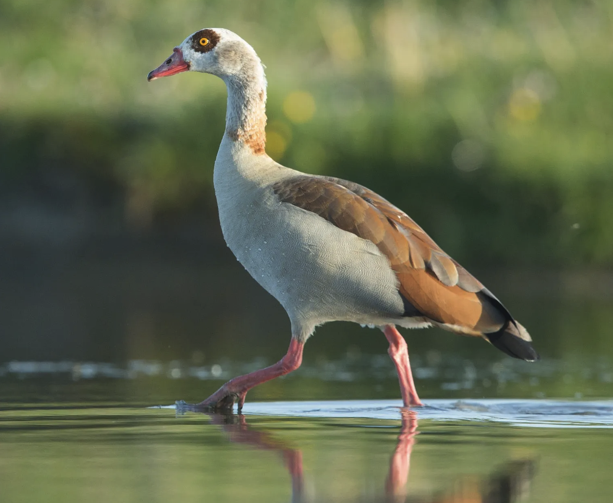
Egyptian Goose
LCAlopochen aegyptiaca
Originally from Africa and introduced to Britain, the Egyptian goose is now an established feral breeder across England.
Eider
VUSomateria mollissima
The common eider is the UK's largest sea duck and heaviest duck, a coastal bird of northern Britain famed for its soft down feathers.
Elder
LCSambucus nigra
A fast-growing, short-lived tree of hedgerows, woodland edges and disturbed ground. Elderflowers are used for cordials and elderberries for wine and syrup. Its berries are vital for migrant birds and it supports over 90 insect species.
Elephant Hawk-moth
LCDeilephila elpenor
The elephant hawk-moth is one of Britain's most beautiful moths, its pink and olive-green body a striking sight at dusk visiting honeysuckle and garden flowers.
Emerald Damselfly
LCLestes sponsa
The emerald damselfly is the only UK damselfly to rest with wings partially spread. It is found at well-vegetated ponds and lakes, favouring acidic boggy habitats.
Emperor Dragonfly
LCAnax imperator
The emperor dragonfly is Britain's largest resident dragonfly, the male an impressive blue with a black dorsal stripe. It patrols large ponds and lakes with extraordinary energy.
Emperor Moth
LCSaturnia pavonia
The emperor moth is Britain's only wild silk moth. Males fly by day across heathland in April; females can detect a male's scent from over a kilometre away.
English Oak
LCQuercus robur
Britain's most ecologically important tree, supporting over 2,300 species of invertebrates, lichens, birds and mammals — more than any other native species. It can live for over 1,000 years and acorns were a staple food for pigs for centuries.
Essex Skipper
LCThymelicus lineola
The Essex skipper is very similar to the small skipper but has jet-black tips beneath its antennae. It has spread northwards significantly in recent decades.
Eurasian Otter
NTLutra lutra
A semi-aquatic mustelid that returned to UK waterways after near extinction in the 1970s. Now found on most British river systems, it remains elusive and mainly nocturnal — spraints on rocks are the most frequent sign.
European Badger
LCMeles meles
A stocky, social mustelid living in underground sett systems that may be used for generations. Badger-watching at dusk is one of Britain's finest wildlife experiences, as families emerge to groom and play.
European Beech
LCFagus sylvatica
Britain's most stately broadleaved tree, forming cathedral-like ancient woodlands on chalk and limestone downland. Beech mast (nuts) in mast years provides vital food for wood mice, squirrels, jays and woodland finches.
European Eel
CRAnguilla anguilla
One of Britain's most remarkable and mysterious fish. The eel spawns in the Sargasso Sea, and glass eels migrate thousands of miles to British rivers. UK populations have declined by over 95% since the 1980s — critically endangered.
European Hedgehog
VUErinaceus europaeus
Britain's only spiny mammal, declining rapidly due to habitat loss, road casualties and agricultural intensification. It hibernates from November to March and is one of Britain's most loved garden visitors.
European Hornet
LCVespa crabro
Britain's largest social wasp, the European hornet is far less aggressive than its reputation suggests. It hunts insects including wasps and flies at dusk to feed its colony.
European Mole
LCTalpa europaea
The mole spends almost its entire life underground, creating extensive tunnel systems to trap earthworms. It detects prey with extraordinarily sensitive nasal receptors and can consume its own bodyweight in worms daily.
European Plaice
LCPleuronectes platessa
One of Europe's most commercially important flatfish, recognised by the distinctive orange-red spots on its brown upper side. It lies camouflaged on sandy seabeds in UK coastal waters and has a sweet, delicate flavour.
European Rabbit
NTOryctolagus cuniculus
Introduced by the Normans, the rabbit transformed British landscapes; its warrens create habitat for many other species. Populations have crashed due to repeated myxomatosis epidemics and rabbit haemorrhagic disease.
European Sea Bass
LCDicentrarchus labrax
A prized sport and table fish, the sea bass has been subject to significant stock recovery measures after overfishing. It is found around UK coasts, particularly in the south and west, hunting in surf zones and estuaries.
Eyed Hawk-moth
LCSmerinthus ocellata
The eyed hawk-moth reveals striking blue and red eyespots on its hindwings when disturbed, startling would-be predators.
Fairy Ring Champignon
LCMarasmius oreades
The cause of the classic fairy rings that appear in lawns and pastures, the fairy ring champignon grows in expanding circles, killing the grass ahead of it and leaving a dark green zone where the mycelium has released nitrogen. Excellent edible.
Fallow Deer
LCDama dama
Introduced by the Normans, the fallow deer is the most numerous deer in England. Bucks have distinctive palmate antlers and gather in rutting stands each autumn, groaning loudly to attract does.
Feral Pigeon
LCColumba livia
The rock dove, ancestor of all feral pigeons, exists in pure form only on remote Scottish cliffs; feral populations are ubiquitous in cities.
Field Cricket
ENGryllus campestris
The field cricket is one of Britain's rarest insects, now restricted to one wild site in West Sussex after near-extinction. Its loud, penetrating song was once widespread on southern downland.
Fieldfare
LCTurdus pilaris
The fieldfare is a large, handsome winter visitor from Scandinavia and Russia, arriving in October in large flocks to strip berries.
Field Maple
LCAcer campestre
Britain's only native maple, common in hedgerows and woodland edges on chalky soils. The leaves turn brilliant gold and orange in autumn. It is an important nectar source for insects and its winged seeds spin like helicopters when falling.
Field Mushroom
LCAgaricus campestris
The classic edible mushroom of old, unimproved grassland, the wild ancestor of the cultivated button mushroom. It has declined greatly with agricultural intensification and the loss of traditionally managed pasture. Now rarely encountered in the wild.
Field Vole
LCMicrotus agrestis
Probably Britain's most numerous mammal, with populations cycling every 3-4 years in dramatic boom-bust patterns. It creates runways through grass and is the primary food source for barn owls, short-eared owls and kestrels.
Fin Whale
VUBalaenoptera physalus
The world's second largest animal at up to 27 metres. Regularly recorded in the deep waters off the Hebrides and south-west approaches, and showing encouraging signs of recovery since the moratorium on commercial whaling.
Firecrest
LCRegulus ignicapilla
The firecrest is slightly larger than the goldcrest with a bold face pattern; it is a scarce breeder and common passage migrant to Britain.
Five-spot Burnet
LCZygaena trifolii
The five-spot burnet is a day-flying moth of damp meadows and coastal dunes in western Britain, closely related to the six-spot burnet.
Flat-backed Millipede
LCPolydesmus angustus
A common millipede of woodland leaf litter across the UK. Unlike centipedes, millipedes are herbivores or detritivores, feeding on dead plant material. This species has flattened body segments and two pairs of legs per segment.
Fly Agaric
LCAmanita muscaria
Britain's most iconic mushroom — the classic red cap with white spots of fairy tales. It forms a mycorrhizal partnership with birch and pine. Poisonous but rarely deadly, it has been used as a hallucinogen in shamanic rituals for centuries.
Footballer Hoverfly
LCHelophilus pendulus
The footballer hoverfly, named for its black and yellow stripes, is a common and widespread species of ponds and wet areas, often resting on flowers.
Forest Shieldbug
LCPentatoma rufipes
The forest shieldbug is a large, brown shieldbug of woodland, feeding on the developing fruits of oak, alder and other trees.
Four-spotted Chaser
LCLibellula quadrimaculata
The four-spotted chaser is a widespread and sometimes migratory dragonfly, the four wing spots distinctive. It aggressively defends perches from all comers.
Foxglove
LCDigitalis purpurea
A tall, stately plant of woodland clearings, hedgebanks and acid grassland, the foxglove's pink-purple tubular flowers are perfectly shaped for bumblebees to enter and gather nectar. The heart medicine digitalis is derived from it.
Fox Moth
LCMacrothylacia rubi
The fox moth is a medium-sized moth of heathland and moorland, the male a rich russet-red flying by day in May. The hairy caterpillar is often seen crossing roads in spring.
Freshwater Pearl Mussel
CRMargaritifera margaritifera
One of the longest-lived invertebrates in the world (up to 130 years) and one of the rarest. UK populations have declined by over 90%. It requires clean, fast-flowing rivers with salmon and trout as juvenile host fish.
Fulmar
LCFulmarus glacialis
The fulmar is a stocky seabird of cliff-ledge colonies around the entire UK coast, gliding effortlessly on stiff wings.
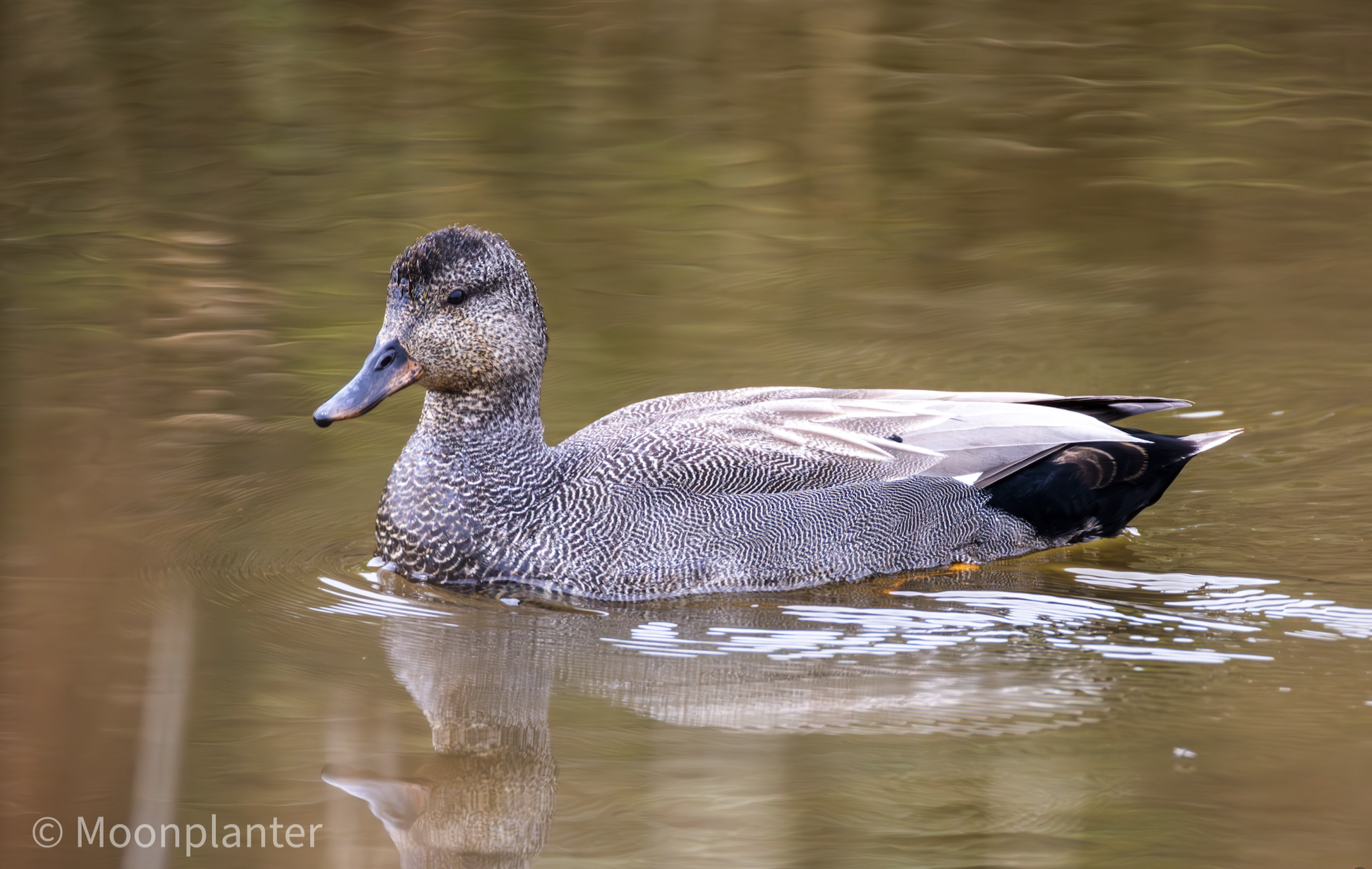
Gadwall
LCMareca strepera
The gadwall is a subtly beautiful dabbling duck, now an increasing breeder and winter visitor across UK lowland wetlands.
Gannet
LCMorus bassanus
The northern gannet is the UK's largest seabird, plunging from 30 metres to catch fish and nesting in spectacular cliff-top colonies.
Garden Bumblebee
LCBombus hortorum
The garden bumblebee has the longest tongue of any UK bumblebee, enabling it to reach nectar in deep flowers like foxglove and red clover. It has two yellow bands and a white tail.
Garden Snail
LCCornu aspersum
The most familiar land snail in Britain, beloved by gardeners for its shell but less welcome for its appetite for young plants. Snails are an important food source for song thrushes, which smash shells on stone anvils.
Garden Spider
LCAraneus diadematus
The most familiar UK spider, building a perfect orb web each morning, often destroyed and rebuilt overnight. Recognised by the distinctive white cross on the abdomen. Females eat the smaller males after mating in autumn.
Garden Tiger Moth
NTArctia caja
The garden tiger is one of Britain's most spectacular moths, with chocolate-brown and white forewings concealing vivid orange-red hindwings. Its woolly bear caterpillar is familiar.
Garden Warbler
LCSylvia borin
The garden warbler is a summer visitor with a sustained, mellow song similar to the blackcap's, but with no distinguishing plumage features.
Garganey
LCSpatula querquedula
The garganey is Britain's only duck that is a summer visitor, arriving from Africa in spring to breed at a handful of wetland sites.
Gatekeeper
LCPyronia tithonus
The gatekeeper, or hedge brown, is a butterfly of bramble-rich hedgerows and woodland edges in southern Britain, often basking with wings spread.
German Wasp
LCVespula germanica
The German wasp is very similar to the common wasp and equally familiar at picnics. It can be distinguished by three tiny black dots on the face where the common wasp has one.
Giant Lacewing
LCOsmylus fulvicephalus
The giant lacewing is Britain's largest neuropteran with a wingspan up to 5 cm, found near clean, swift streams in Wales and western England.
Giant Puffball
LCCalvatia gigantea
A spectacular fungus that can reach the size of a football or larger. It produces up to 7 trillion spores from a single fruiting body. Excellent edible when the interior is pure white throughout. Found in grassland and woodland edges.
Glaucous Gull
LCLarus hyperboreus
The glaucous gull is a large, pale winter visitor from the Arctic to UK harbours and fishing ports, larger than the Iceland gull.
Glow-worm
NTLampyris noctiluca
The glow-worm is neither a worm nor a firefly but a beetle. The wingless female glows green on summer nights to attract flying males. It has declined due to habitat loss and light pollution.
Goat Willow
LCSalix caprea
Also known as pussy willow or sallow, the goat willow's fat yellow catkins are one of the most important early pollen sources for queen bumblebees and other bees emerging from hibernation in March. Caterpillars of purple emperor butterflies feed on it.
Goldcrest
LCRegulus regulus
The goldcrest is Britain's smallest bird, a tiny jewel of conifer woodland with a needle-thin call at the edge of human hearing.
Golden Eagle
LCAquila chrysaetos
The golden eagle is Scotland's most iconic bird of prey, soaring over mountain ranges on wings spanning up to 2.2 metres.
Goldeneye
LCBucephala clangula
The common goldeneye is a compact diving duck, a winter visitor to UK reservoirs and coasts that breeds in a small Scottish population.
Golden Plover
LCPluvialis apricaria
The European golden plover breeds on upland moors and moves to lowland fields in winter; flocks in flight are a spectacular sight.
Golden-ringed Dragonfly
LCCordulegaster boltonii
Britain's longest dragonfly, the golden-ringed has vivid yellow rings on a black body. It breeds in upland streams and its larvae take up to five years to mature.
Goldfinch
LCCarduelis carduelis
The European goldfinch is a delightful finch of weedy fields and gardens; flocks (called charms) feed on teasel and thistle heads.
Goosander
LCMergus merganser
The goosander is Britain's largest sawbill duck, a fish-eater with serrated bill that breeds on upland rivers and winters at reservoirs.
Goose Barnacle
LCLepas anatifera
Goose barnacles attach to floating objects — logs, buoys, sea beans — and are regularly washed ashore on UK Atlantic-facing beaches after westerly gales. Medieval naturalists believed geese hatched from them, giving both their names.
Gorse
LCUlex europaeus
Gorse is said to smell like coconut and there is a saying that 'when gorse is out of bloom, kissing is out of fashion' — it flowers in some measure year-round. It provides dense nesting cover for stonechats, linnets and yellowhammers.
Goshawk
LCAccipiter gentilis
The northern goshawk is a large, powerful forest hawk that was persecuted to extinction in Britain and has naturally recolonised.
Grasshopper Warbler
LCLocustella naevia
The common grasshopper warbler produces a remarkable continuous reeling song like a fishing reel, projected from dense low vegetation.
Grass Snake
LCNatrix helvetica
Britain's largest native reptile and the only egg-laying snake, often found near water where it hunts frogs and toads. Identified by its yellow and black collar and olive-green colouring. It can feign death when threatened.
Grayling
LCThymallus thymallus
The 'lady of the stream', the grayling is a beautiful, sail-finned fish of clean, swift rivers. It has a distinctive thyme-like scent which gave rise to its Latin name, and is a prized fly-fishing target in autumn and winter.
Grayling
NTHipparchia semele
The grayling is a master of camouflage, landing on bare ground and tilting towards the sun to minimise its shadow. It favours warm, dry heathland and coastal cliffs.
Great Black-backed Gull
LCLarus marinus
The great black-backed gull is the world's largest gull, a powerful predator of other seabirds and mammals on UK coasts.
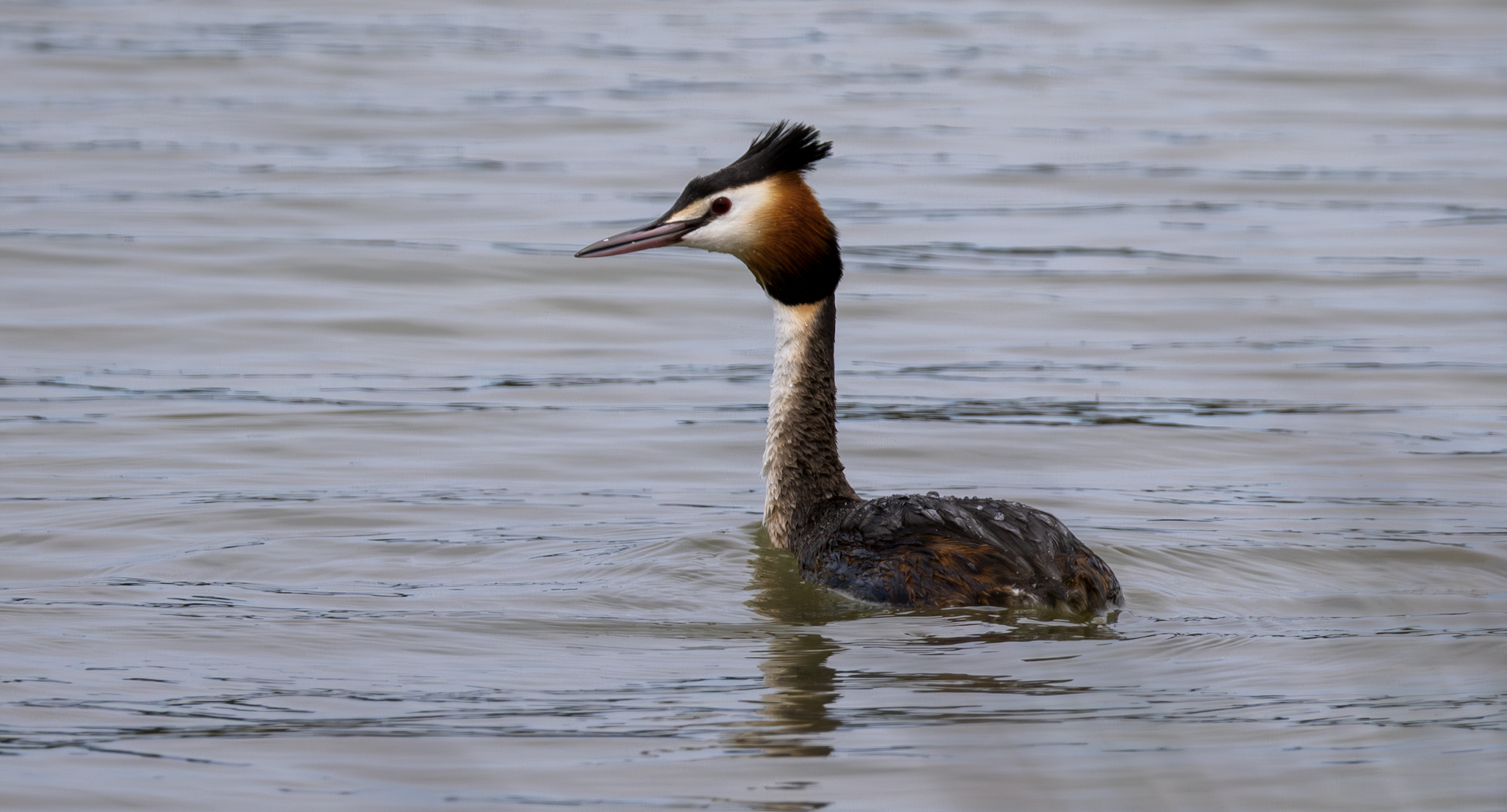
Great Crested Grebe
LCPodiceps cristatus
The great crested grebe is famous for its elaborate courtship display in which pairs mirror each other's movements and present waterweed.
Great Crested Newt
LCTriturus cristatus
Britain's largest newt and one of Europe's most protected animals. The male develops a dramatic jagged crest in the breeding season. It requires networks of clean ponds and rough grassland, and has declined dramatically with pond loss.
Great Diving Beetle
LCDytiscus marginalis
The great diving beetle is a powerful, predatory aquatic beetle found in ponds and slow rivers. It can tackle prey as large as small fish and tadpoles.
Greater Horseshoe Bat
VURhinolophus ferrumequinum
One of Britain's rarest bats, restricted to Wales and south-west England. It hangs free-hanging like a cocoon in hibernation caves, wrapping its wings around itself, and requires large areas of insect-rich pastoral countryside.
Greater Pipefish
LCSyngnathus acus
Britain's most commonly encountered pipefish, a slender, rigid fish closely related to seahorses. It is found amongst seagrass and algae in sheltered coastal areas and is camouflaged by its elongated, brownish body.
Greater Stitchwort
LCStellaria holostea
A delicate plant of hedgebanks and woodland edges, its white star-like flowers are one of the most characteristic sights of spring roadsides. The weak, brittle stems lean on surrounding vegetation for support.
Great Green Bush-cricket
LCTettigonia viridissima
The great green bush-cricket is Britain's largest cricket, an impressive insect with a deafeningly loud song. It is found on bramble, nettles and bracken in southern England.
Great Grey Shrike
LCLanius excubitor
The great grey shrike is a scarce winter visitor from Scandinavia, perching prominently on exposed branches to watch for prey.
Great Grey Slug
LCLimax maximus
Britain's largest slug at up to 20 cm, with a keel at the tail. It is largely carnivorous, feeding on other slugs and fungi rather than living plants. It mates acrobatically, intertwining while suspended from a mucus thread.
Great Northern Diver
LCGavia immer
The great northern diver is a winter visitor from Iceland and Greenland, seen around UK coasts and on large inland waters.
Great Pond Snail
LCLymnaea stagnalis
Britain's largest freshwater snail, reaching 6 cm, found in ponds, lakes and slow rivers with abundant aquatic vegetation. It is an important indicator of water quality and a prey species for diving beetles and water birds.
Great Scallop
LCPecten maximus
Britain's largest bivalve, with a fan-shaped shell reaching 15 cm. Scallops can swim by clapping their shells to escape predators. They are among the UK's most valuable shellfish, fished by dredge and hand-diving around Scotland.
Great Silver Water Beetle
VUHydrophilus piceus
Britain's largest aquatic insect at 5 cm, the great silver water beetle is a rare inhabitant of fen ditches and ponds in south-east England. Adults and larvae are predators of aquatic invertebrates, tadpoles and small fish.
Great Skua
LCCatharacta skua
The great skua or 'bonxie' is a powerful, aggressive seabird breeding in Shetland and Orkney, able to subdue seabirds as large as gannets.
Great Spotted Woodpecker
LCDendrocopos major
The great spotted woodpecker is the most familiar woodpecker in Britain, drumming loudly on trees and increasingly visiting garden feeders.
Great Tit
LCParus major
The great tit is the largest UK tit, a bold visitor to garden feeders with a repertoire of over 40 different calls.
Great White Egret
LCArdea alba
A recent and rapidly expanding breeder in the UK, the great white egret is now regularly seen at wetlands across England.
Great Yellow Bumblebee
ENBombus distinguendus
The great yellow bumblebee is one of Britain's rarest insects, now confined to machair grasslands and coastal crofting areas of the Hebrides and northern Scotland.
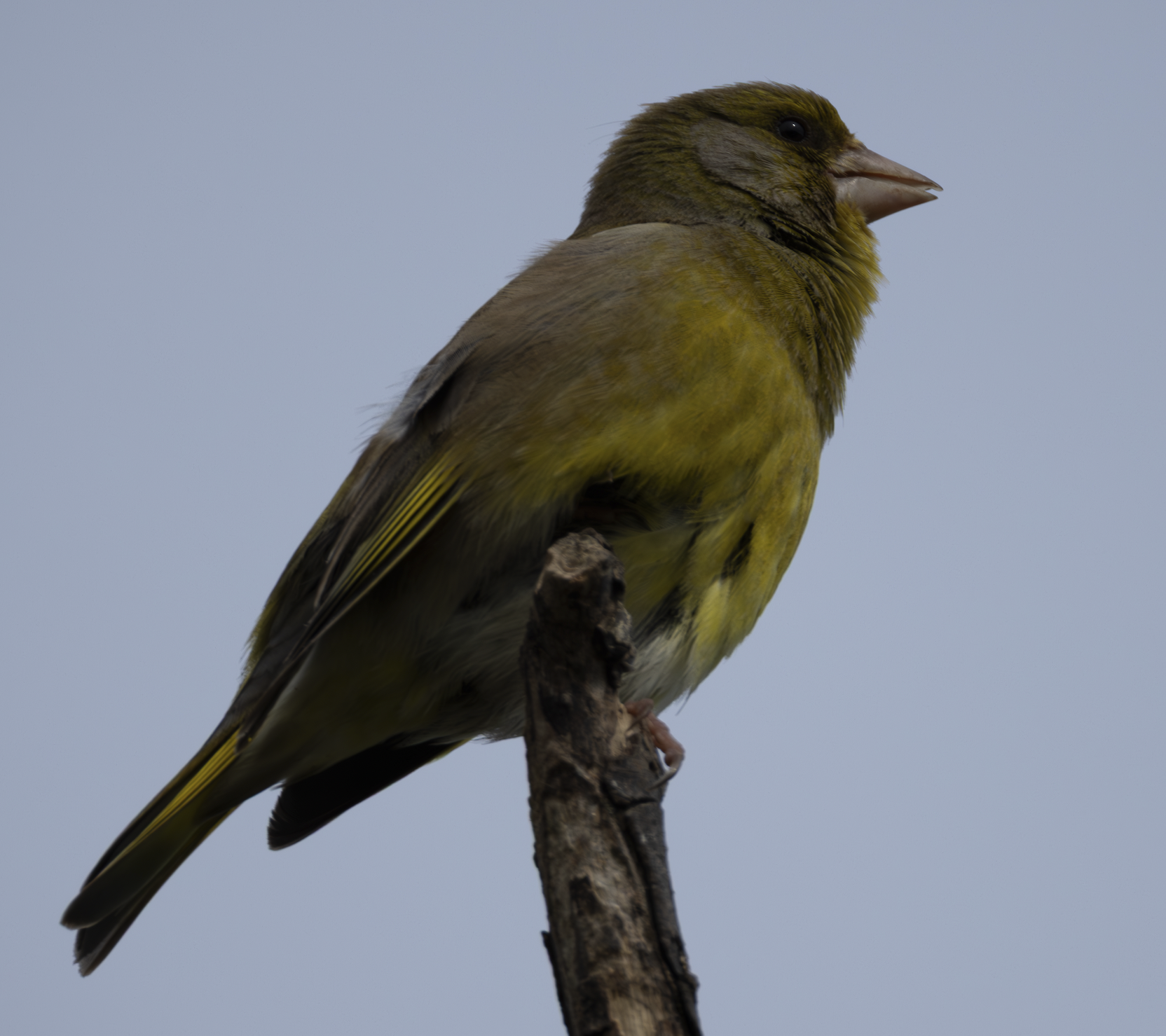
Greenfinch
LCChloris chloris
The European greenfinch is a chunky finch of gardens and woodland edges, declining due to trichomonosis disease.
Green Hairstreak
LCCallophrys rubi
Britain's only green butterfly, the green hairstreak is well camouflaged on vegetation and found on heathland, downland and woodland edges from April to June.
Green Sandpiper
LCTringa ochropus
The green sandpiper is a solitary wader of ditches and stream margins, often seen in small numbers at UK wetlands year-round.
Greenshank
LCTringa nebularia
The common greenshank breeds on Scottish moorland and is a regular passage migrant and winter visitor at UK wetlands.
Green Tiger Beetle
LCCicindela campestris
The green tiger beetle is a fast-running, fast-flying predator of heathland and sandy paths. It is one of Britain's fastest running insects, covering 2.5 metres per second.
Green-veined White
LCPieris napi
The green-veined white is a common butterfly of damp meadows and woodland rides, its underwing veins strongly marked with greenish scales.
Green Woodpecker
LCPicus viridis
The green woodpecker is the largest UK woodpecker, more often heard — its laughing yaffle call — than seen as it feeds on ants on lawns.
Grey Heron
LCArdea cinerea
The grey heron is the UK's tallest bird, a patient hunter of fish and frogs standing motionless beside water.
Greylag Goose
LCAnser anser
The greylag goose is the ancestor of most domestic geese and has a feral/resident population across the UK alongside migratory birds from Iceland.
Grey Partridge
NTPerdix perdix
The grey partridge has declined dramatically in Britain due to agricultural intensification and is now a conservation priority.
Grey Plover
LCPluvialis squatarola
The grey plover is a wader of UK estuaries in winter, standing more upright and alone than golden plovers.
Grey Seal
LCHalichoerus grypus
Britain's largest native land mammal, with the UK holding around 40% of the world population. Breeding colonies gather on remote beaches in autumn; white-coated pups are born in October and November.
Grey Squirrel
LCSciurus carolinensis
Introduced from North America in the 1870s and now ubiquitous across Britain. It outcompetes the native red squirrel and causes significant damage to forestry through bark-stripping of broadleaved trees.
Grey Wagtail
LCMotacilla cinerea
Despite its name, the grey wagtail has bright yellow underparts; it is always found near fast-flowing water in upland and lowland Britain.
Grizzled Skipper
NTPyrgus malvae
The grizzled skipper is a small, fast-flying butterfly of chalk downland and woodland rides in southern England, its chequered brown and white pattern distinctive.
Gudgeon
LCGobio gobio
A small, bottom-dwelling fish of rivers and lakes with a pair of distinctive chin barbels. The gudgeon typically lies close to the riverbed on sand or gravel, feeding on invertebrates and detritus.
Haddock
LCMelanogrammus aeglefinus
One of the UK's most economically important fish, particularly in Scotland. Distinguished by a distinctive dark blotch above the pectoral fin (St Peter's thumbprint of legend) and a black lateral line on its silvery body.
Hairy-footed Flower Bee
LCAnthophora plumipes
The hairy-footed flower bee is a fast-flying, bumblebee-like solitary bee, one of the first bees to emerge in spring. Males are ginger, females black — they look like different species.
Harbour Porpoise
LCPhocoena phocoena
Britain's smallest and most common cetacean. Shy and rarely leaping, it can often be seen as a brief rolling motion near headlands and in sheltered bays, especially around the Pembrokeshire and Scottish coasts.
Harebell
LCCampanula rotundifolia
The Scottish bluebell and one of Britain's most delicate wildflowers, with nodding pale blue bells on thread-like stems. It grows on dry, calcareous grassland and heathland, and is pollinated by bumblebees which vibrate the flowers to release pollen.
Harlequin Ladybird
LCHarmonia axyridis
The harlequin ladybird, introduced from Asia as a biocontrol agent, arrived in Britain in 2004 and has spread throughout the country, competing with and eating native ladybird species.
Hart's Tongue Fern
LCAsplenium scolopendrium
Unlike most ferns, the hart's tongue has undivided, strap-shaped fronds. It is common in shaded, lime-rich habitats — old walls, limestone pavement and damp woodland — and is evergreen, providing winter greenery on dark woodland floors.
Harvest Mouse
LCMicromys minutus
Britain's smallest rodent at under 6g, it weaves a ball-shaped nest of woven grass stems above the ground. It uses its prehensile tail to climb and is declining with the loss of rough grassland and cereal margins.
Hawfinch
LCCoccothraustes coccothraustes
The hawfinch is Britain's largest finch, with a massive bill capable of cracking olive and cherry stones; it is secretive and declining.
Hawthorn
LCCrataegus monogyna
One of Britain's most important hedgerow trees, providing dense, thorny cover for nesting birds and abundant red berries (haws) for winter thrushes and fieldfares. The May blossom is one of the most characteristic sights of the British countryside.
Hawthorn Shieldbug
LCAcanthosoma haemorrhoidale
The hawthorn shieldbug is Britain's largest shieldbug, found on hawthorn, oak and other trees. Its metallic green and red patterning makes it unmistakeable.
Hazel
LCCorylus avellana
A versatile tree of hedgerows and woodland understorey, traditionally coppiced on rotation to produce poles and hurdles. Catkins provide early pollen for bumblebees in February, and hazelnuts are a vital autumn food for dormice and squirrels.
Hazel Dormouse
VUMuscardinus avellanarius
A tiny, nocturnal mammal that hibernates for up to six months in a nest of woven grass. It depends on connected, species-rich woodland and coppice; populations have declined by over 70% since 2000.
Heart Urchin
LCEchinocardium cordatum
The heart urchin or sea potato lives buried in sand below the tide line, feeding on organic particles. Its pale, heart-shaped empty test is commonly found on UK beaches and is instantly recognisable with its furry surface texture.
Heath Bumblebee
NTBombus jonellus
The heath bumblebee is a small bumblebee of heathland, bogs and moorland, found mainly in Scotland and western Britain. It has declined with the loss of heathland habitat.
Heather
LCCalluna vulgaris
Ling heather defines the British moorland landscape, turning upland hills purple from August. It is the primary food source for red grouse and supports a suite of specialist invertebrates. In Norse mythology, heather grew where no other plant would.
Heath Fritillary
ENMelitaea athalia
Once known as the 'woodman's follower', the heath fritillary is restricted to a few managed coppice woodlands in Kent and south-west England.
Hedgehog Mushroom
LCHydnum repandum
An excellent edible with a pleasant, mild, nutty flavour. It is easily identified by the cream-coloured spines under the cap rather than gills. A mycorrhizal fungus of ancient woodland, it appears in autumn and is sometimes called the wood hedgehog.
Hen Harrier
LCCircus cyaneus
The hen harrier is a ground-nesting moorland raptor, the grey male and brown female ringtail strikingly different in plumage.
Herring Gull
LCLarus argentatus
The European herring gull is the quintessential seaside bird, declining in the UK but still familiar with its mewing call and pink legs.
High Brown Fritillary
ENArgynnis adippe
The high brown fritillary is Britain's most endangered resident butterfly, restricted to bracken-covered hillsides in a handful of sites in Wales and south-west England.
Hobby
LCFalco subbuteo
The Eurasian hobby is an elegant summer visitor to Britain, catching dragonflies and small birds on the wing with great agility.
Holly
LCIlex aquifolium
Britain's most familiar evergreen tree, with glossy, spiny leaves and bright red winter berries beloved by mistle thrushes and blackbirds. Only female trees bear berries. Holly was a sacred tree to the druids and features heavily in winter festivals.
Holly Blue
LCCelastrina argiolus
The holly blue is the blue butterfly most likely to be seen in gardens, flying higher than most blues around holly and ivy. Its populations fluctuate with a parasitoid wasp.
Honeybee
LCApis mellifera
The western honeybee lives in large colonies managed by beekeepers but also exists in wild and feral colonies. It is one of the world's most important pollinators.
Honey Fungus
LCArmillaria mellea
Britain's most destructive fungal pathogen, killing woody plants by spreading through soil on black, bootlace-like rhizomorphs. Some colonies are among the largest organisms on Earth. The fruiting bodies are edible when well cooked, though many disagree on taste.
Hooded Crow
LCCorvus cornix
The hooded crow replaces the carrion crow in Scotland and Ireland; the two hybridise where their ranges meet.
Hoopoe
LCUpupa epops
The hoopoe is a stunning exotic-looking bird that appears as a scarce spring visitor to Britain, occasionally breeding in southern counties.
Hornbeam
LCCarpinus betulus
A native tree of south-east England, the hornbeam has some of the hardest wood of any British tree. Pollarded hornbeams in Epping Forest are among Britain's most ancient managed trees, some dating back 500 years or more.
Hornet Hoverfly
LCVolucella zonaria
The hornet hoverfly is Britain's largest hoverfly and a convincing hornet mimic. It has spread northwards in recent decades and now breeds regularly in southern England.
House Cricket
LCAcheta domesticus
The house cricket is familiar as the chirping insect that sheltered in hearths and bakeries. It can no longer survive UK winters outdoors and is now mainly found in warm buildings.
House Martin
LCDelichon urbicum
The common house martin is a summer visitor that builds its distinctive mud cup nest under the eaves of houses across Britain.
House Sparrow
LCPasser domesticus
The house sparrow has declined dramatically in UK towns and cities since the 1970s, yet remains one of the most familiar garden birds.
Hummingbird Hawk-moth
LCMacroglossum stellatarum
The hummingbird hawk-moth is a day-flying migrant from southern Europe, hovering at flowers like a hummingbird to feed. Numbers reaching Britain vary with warm summer winds.
Humpback Whale
LCMegaptera novaeangliae
An increasingly regular sight off UK coasts following global recovery from commercial whaling. Famous for complex songs, spectacular breaching and tail-slapping, humpbacks are recorded annually around Scotland and the south-west.
Iceland Gull
LCLarus glaucoides
The Iceland gull is a pale winter visitor from Greenland and Iceland, often found at harbours and fishing ports in northern Britain.
Irish Damselfly
VUCoenagrion lunulatum
The Irish damselfly is found only in the UK in Ireland and a small area of Scotland, restricted to boggy loughs and pools with abundant emergent vegetation.
Ivy Bee
LCColletes hederae
The ivy bee colonised Britain in 2001 and has spread rapidly northwards. It emerges in September to coincide with ivy flowering and can form enormous nesting aggregations.
Jackdaw
LCColoeus monedula
The western jackdaw is the smallest member of the crow family in Britain, nesting in chimneys and church towers.
Jay
LCGarrulus glandarius
The Eurasian jay is the most colourful member of the crow family in Britain, hiding thousands of acorns each autumn for winter food.
Jelly Ear
LCAuricularia auricula-judae
Named for Judas Iscariot, who supposedly hanged himself from an elder tree. The jelly ear grows almost exclusively on elder, its ear-shaped, gelatinous fruitbodies persisting through winter. Used in Chinese medicine and cuisine for centuries.
Jersey Tiger
LCEuplagia quadripunctaria
The Jersey tiger is a large, striking day-flying moth that has spread from south Devon across southern England. It sometimes appears in gardens feeding at buddleia.
Jet Black Ant
LCLasius fuliginosus
The jet black ant builds its nest in hollow trees and rotten wood, producing a distinctive acidic smell. It is glossy black and found in mature woodland throughout Britain.
Keeled Skimmer
NTOrthetrum coerulescens
The keeled skimmer is a small, slender blue dragonfly of boggy heathland and moorland, found mainly in southern and western Britain.
Kestrel
LCFalco tinnunculus
The common kestrel is the most familiar falcon in Britain, hovering over motorway verges and rough grassland hunting for small mammals.
Killer Whale
LCOrcinus orca
The world's largest dolphin and the UK's most powerful predator. The west coast of Scotland pod (West Coast Community) numbers only eight individuals and is functionally extinct due to PCB contamination preventing reproduction.
King Alfred's Cakes
LCDaldinia concentrica
A common bracket fungus of dead ash and beech, forming hard, round, shiny black fruitbodies resembling lumps of coal or burnt cakes. The concentric rings inside resemble tree rings. It was used as a tinder fungus and to carry fire by ancient peoples.
Kingfisher
LCAlcedo atthis
The common kingfisher is one of the most colourful of all British birds, often seen as a flash of blue along rivers.
King Ragworm
LCAlitta virens
Britain's largest marine worm, reaching 90 cm. It burrows in estuarine mud and sand and emerges to swim for reproduction in mass spawning events called swarming. A key prey item for wading birds and fished extensively for bait.
Kittiwake
VURissa tridactyla
The black-legged kittiwake is a true oceanic gull that only comes to cliff ledge colonies to breed, with a distinctive kitti-waak call.
Knot
NTCalidris canutus
The red knot gathers in vast, spectacular flocks on UK estuaries in winter, sometimes numbering hundreds of thousands of birds.
Lady's Smock
LCCardamine pratensis
Also known as cuckooflower, lady's smock flowers when the cuckoo arrives and is the primary larval food plant of the orange-tip butterfly. Pale lilac blooms appear in damp meadows and stream margins in April and May.
Lapland Bunting
LCCalcarius lapponicus
The Lapland bunting is a scarce autumn and winter visitor to UK coastal fields and beaches from its Arctic breeding grounds.
Lapwing
NTVanellus vanellus
The northern lapwing is a distinctive wading bird with iridescent green-black plumage and a wispy crest.
Large Heath
NTCoenonympha tullia
The large heath is a butterfly of boggy moorland with sphagnum moss, now restricted to sites in Scotland, northern England and Wales due to peat drainage.
Large Red Damselfly
LCPyrrhosoma nymphula
The large red damselfly is often the first damselfly of the year, appearing in April. Its red body makes it unmistakeable at ponds and slow rivers.
Large Skipper
LCOchlodes sylvanus
The large skipper is a robust, golden-brown butterfly of rough grassland, woodland rides and hedgerows. The male has a distinctive dark sex brand on the forewing.
Large White
LCPieris brassicae
The large white is one of Britain's commonest butterflies and a major pest of brassica crops. Its caterpillars are yellow and black, warning of their unpalatability.
Large Yellow Underwing
LCNoctua pronuba
The large yellow underwing is one of Britain's commonest moths, flashing bright yellow hindwings when disturbed. It is attracted to light in enormous numbers.
Leach's Petrel
VUOceanodroma leucorhoa
Leach's petrel breeds in large colonies on remote Scottish islands, coming ashore only at night to avoid predation.
Leafcutter Bee
LCMegachile centuncularis
The patchwork leafcutter bee cuts neat semicircular pieces from rose leaves to line its nest cells. A common visitor to garden bee hotels.
Leisler's Bat
LCNyctalus leisleri
A fast, high-flying bat resembling a smaller noctule. Much more common in Ireland than in Britain, where it is a scarce species of woodland and parkland, often roosting in mature trees and bat boxes.
Lesser Black-backed Gull
LCLarus fuscus
The lesser black-backed gull breeds in large colonies on UK moorland and coasts, with many wintering in Africa.
Lesser Horseshoe Bat
NTRhinolophus hipposideros
A small bat of old stone buildings and caves in Wales, south-west England and western Ireland. It is strongly associated with grazed pastoral landscapes for foraging on flies, moths and spiders in summer.
Lesser Redpoll
LCAcanthis cabaret
The lesser redpoll is a small finch of birch and alder woodland, with a red forehead and often seen hanging acrobatically from catkins.
Lesser Spotted Dogfish
LCScyliorhinus canicula
The most abundant shark in UK inshore waters, found on sandy and gravel seabeds around the entire coastline. It lays eggs in tough, horny cases — the mermaid's purses commonly found on beaches — and feeds on invertebrates.
Lesser Spotted Woodpecker
LCDryobates minor
The lesser spotted woodpecker is Britain's smallest woodpecker, sparrow-sized and secretive, and has declined dramatically in recent decades.
Lesser Stag Beetle
LCDorcus parallelipipedus
The lesser stag beetle is all black and lacks the enlarged mandibles of its relative. It is found in mature gardens and woodland with decaying wood.
Lesser Whitethroat
LCCurruca curruca
The lesser whitethroat is a summer visitor to tall hedgerows and scrub, with a distinctive rattling song.
Lime Hawk-moth
LCMimas tiliae
The lime hawk-moth is a large, attractively patterned moth that rests by day on tree bark. Its distinctive larva, which feeds on lime and birch, is bright green with yellow stripes.
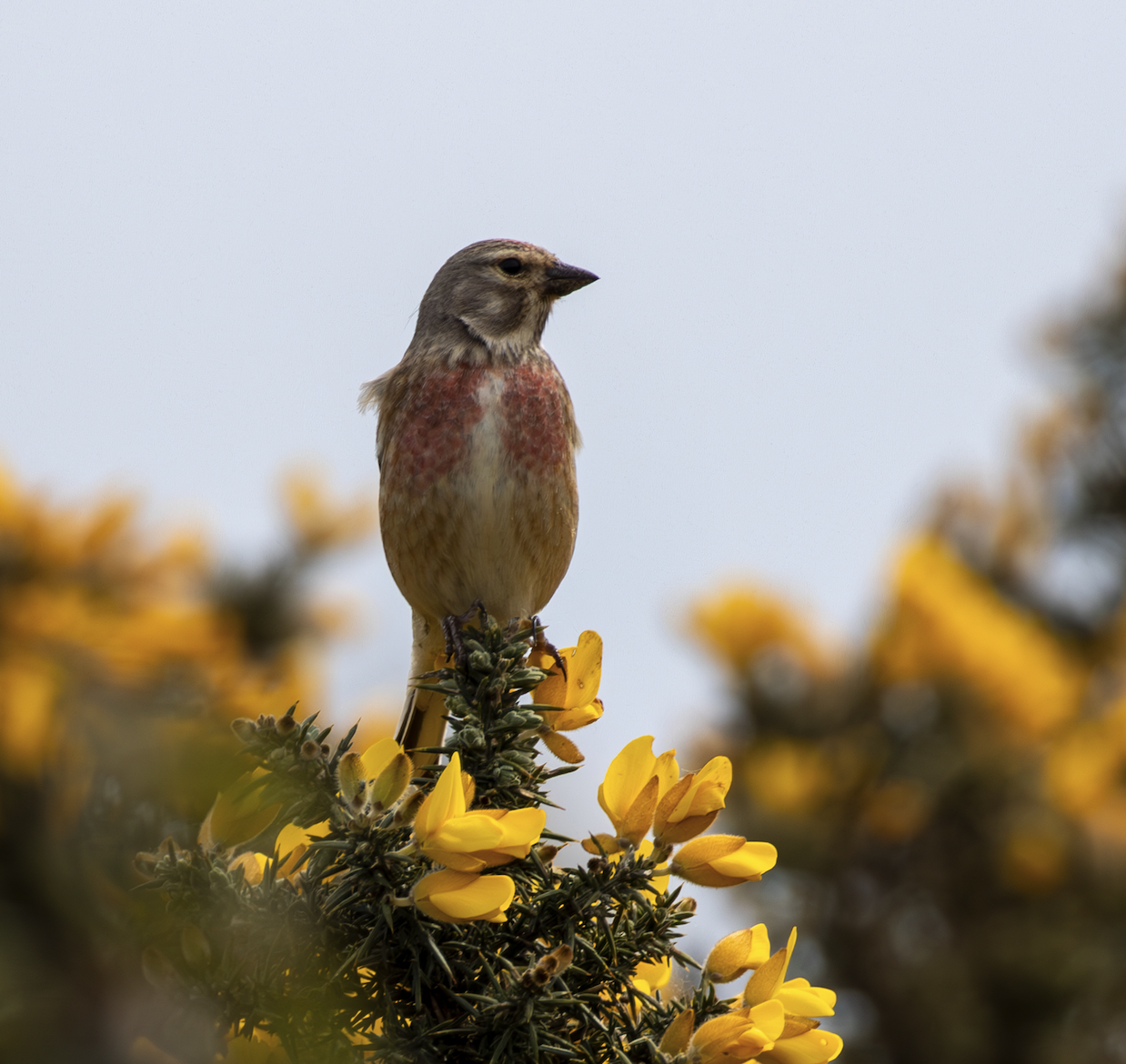
Linnet
LCLinaria cannabina
The common linnet breeds on heathland, farmland and coastal scrub, with the male's rosy red breast and forehead in summer.
Lion's Mane
ENHericium erinaceus
A spectacular and rare fungus of ancient beech woodland, lion's mane produces cascading white icicle-like spines from old wounds on beech trees. Endangered in the UK, it is protected by law. Highly prized medicinally and as a gourmet edible fungus.
Lion's Mane Jellyfish
LCCyanea capillata
The world's largest jellyfish, with a bell exceeding 2 metres and trailing tentacles up to 37 metres. It appears in UK waters in late summer and autumn and can deliver a powerful sting. Photographed memorably around Scotland and Ireland.
Little Auk
LCAlle alle
The little auk is the world's most numerous seabird, wintering in large numbers offshore in the North Sea; storm-driven birds occasionally appear inland.
Little Egret
LCEgretta garzetta
The little egret colonised Britain in the 1990s and is now a common sight at estuaries and wetlands, dazzlingly white with black and yellow feet.
Little Grebe
LCTachybaptus ruficollis
Britain's smallest grebe, the little grebe or dabchick is a compact diving bird of ponds, lakes and slow rivers, known for its trilling call.
Little Gull
LCHydrocoloeus minutus
The little gull is the world's smallest gull, a passage migrant and winter visitor off UK coasts, with smoky-black underwings.
Little Owl
LCAthene noctua
The little owl was introduced to Britain from mainland Europe in the 19th century and is now widespread, often seen perching in daytime.
Little Ringed Plover
LCCharadrius dubius
The little ringed plover is a summer visitor to UK gravel pits and riverbanks, smaller than its cousin with a yellow eye-ring.
Little Stint
LCCalidris minuta
The little stint is a tiny wader that passes through the UK in autumn, often at coastal mudflats and inland reservoirs.
Little Tern
LCSternula albifrons
The little tern is Britain's smallest tern and one of its rarest coastal breeding birds, nesting on shingle beaches exposed to disturbance.
Long-eared Owl
LCAsio otus
The long-eared owl is a secretive owl of woodland and conifer plantations, roosting communally in winter.
Long-tailed Duck
VUClangula hyemalis
The long-tailed duck is an attractive seaduck that winters off northern UK coasts, the male with his long pointed tail feathers.
Long-tailed Skua
LCStercorarius longicaudus
The long-tailed skua is a scarce offshore passage migrant with elegant elongated tail streamers, the smallest and most buoyant of the skuas.
Long-tailed Tit
LCAegithalos caudatus
The long-tailed tit is a charming, fluffy woodland bird that roosts in tight communal huddles in winter for warmth.
Long-winged Cone-head
LCConocephalus fuscus
The long-winged cone-head is a recent colonist that has spread rapidly across England from the south coast, its high-pitched buzz now common in tall grassland and reedbeds.
Lugworm
LCArenicola marina
The lugworm lives beneath intertidal sand and is revealed by its characteristic coiled sand casts at the surface. It is the most important food source for wading birds on UK estuaries and is widely used as fishing bait.
Lulworth Skipper
NTThymelicus acteon
The Lulworth skipper has one of the most restricted ranges of any UK butterfly, found on the Dorset coast and a few other coastal sites where tor-grass grows.
Lumpsucker
LCCyclopterus lumpus
A bizarre, globular fish with a sucker disc on its belly and rows of bony tubercles on its body. The male guards the egg mass in a rock crevice and fans them with his fins for weeks. Found on rocky coasts around Scotland and northern England.
Magpie
LCPica pica
The Eurasian magpie is one of the most intelligent birds, recognising itself in mirrors; its clattering call is a familiar countryside sound.
Magpie Moth
LCAbraxas grossulariata
The magpie moth is a boldly patterned black, white and yellow moth of hedgerows and gardens, whose caterpillars feed on currant and gooseberry bushes.
Male Fern
LCDryopteris filix-mas
One of Britain's most familiar woodland ferns, growing in large, vase-shaped clumps in hedgebanks and woodland. It is semi-evergreen, the fronds unfurling as 'croziers' in spring. The rhizome was once used as a tapeworm remedy.
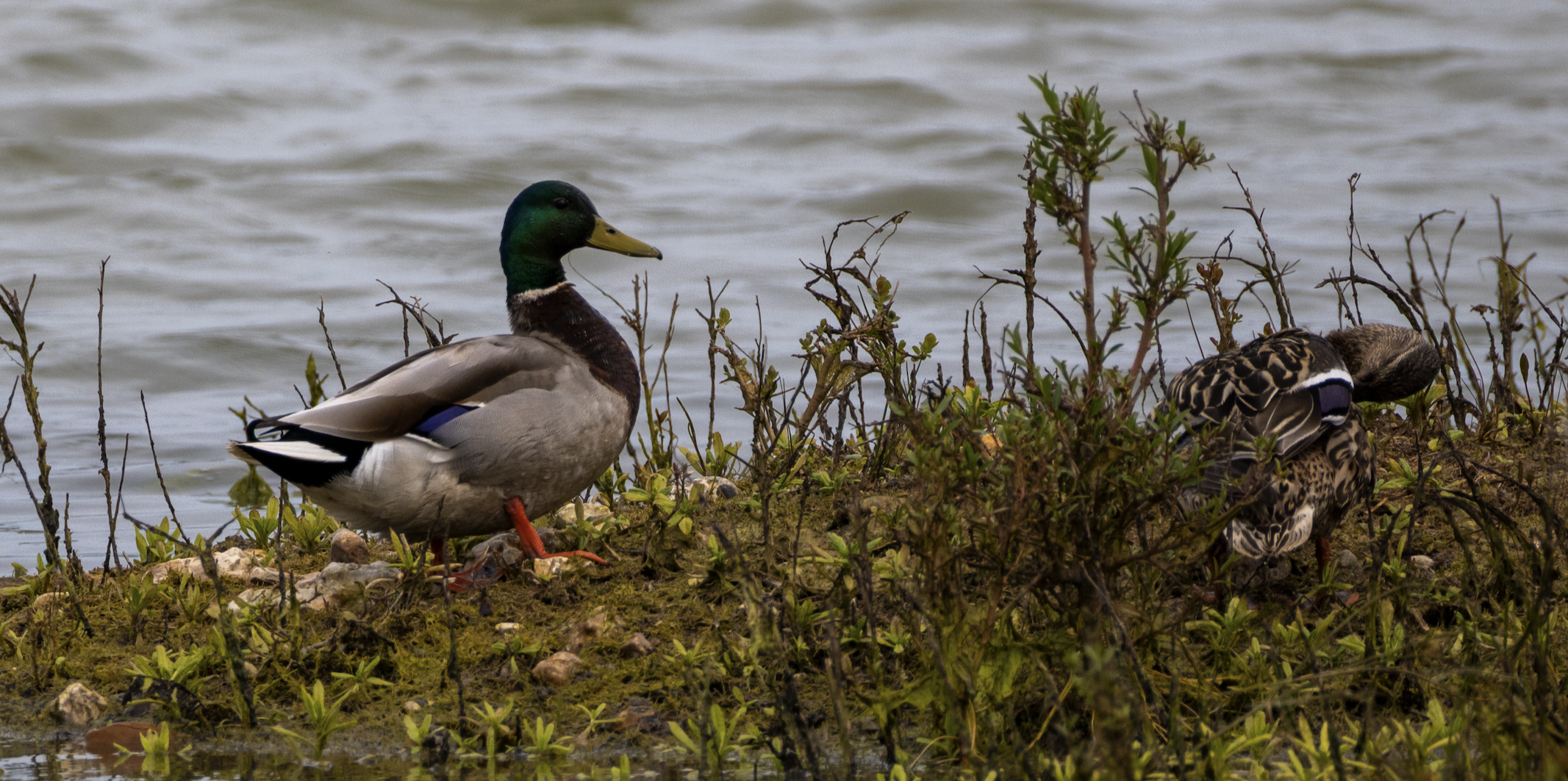
Mallard
LCAnas platyrhynchos
The mallard is the most familiar and widespread duck in Britain, ancestor of almost all domestic ducks.
Mandarin Duck
LCAix galericulata
The strikingly ornate mandarin duck, introduced from East Asia, has established a thriving feral population in British woodland streams.
Manx Shearwater
LCPuffinus puffinus
The Manx shearwater nests in huge colonies on offshore islands and makes one of the longest migrations of any bird.
Marbled White
LCMelanargia galathea
The marbled white is unmistakeable with its bold black and white chessboard pattern. It is found on unimproved chalk and limestone grassland in central and southern England.
Marmalade Hoverfly
LCEpisyrphus balteatus
The marmalade hoverfly is the UK's most recognisable hoverfly, with distinctive double orange and single dark bands. Millions migrate from continental Europe each autumn.
Marsh Fritillary
VUEuphydryas aurinia
The marsh fritillary is one of Europe's most threatened butterflies, needing extensive areas of unimproved damp grassland where devil's bit scabious grows.
Marsh Harrier
LCCircus aeruginosus
The marsh harrier is Britain's largest harrier, quartering reedbeds with wings raised in a distinctive V-shape.
Marsh Marigold
LCCaltha palustris
One of the first and showiest flowers of spring wetlands, the marsh marigold's large, golden blooms appear in March and April along riverbanks, marshes and wet woodland. It is an important early nectar source for queen bumblebees.
Marsh Tit
LCPoecile palustris
The marsh tit is a woodland bird of southern Britain, despite its name more common in deciduous woods than true marsh. It is declining rapidly.
Marsh Warbler
LCAcrocephalus palustris
The marsh warbler is a rare summer visitor to damp vegetation in southern England, famed for its extraordinary mimicry of other birds.
Mayfly
LCEphemera danica
The mayfly has one of the shortest adult lifespans of any insect — less than a day in some species — emerging in large hatches from rivers that drive trout into a feeding frenzy.
Meadow Brown
LCManiola jurtina
The meadow brown is one of Britain's commonest butterflies, found in any rough grassland habitat from June to October. It is remarkably constant in wing pattern across its range.
Meadow Buttercup
LCRanunculus acris
The most familiar buttercup of traditional hay meadows and damp grassland. Its golden flowers in May and June indicate unimproved grassland with good botanical diversity. Children test if their friends like butter by reflecting the shiny petals under the chin.
Meadow Grasshopper
LCPseudochorthippus parallelus
The meadow grasshopper is Britain's commonest grasshopper, found in damp and dry grassland. Unusually, it is flightless — its hindwings are vestigial.
Meadow Pipit
LCAnthus pratensis
The meadow pipit is one of the most abundant birds on British upland moors and grasslands, and the cuckoo's most frequent host.
Meadowsweet
LCFilipendula ulmaria
The queen of meadow plants, meadowsweet fills damp meadows and riverbanks with creamy-white, sweetly scented flower heads from June to September. Aspirin was derived from a compound first isolated from it. It is the food plant of many moth caterpillars.
Median Wasp
LCDolichovespula media
The median wasp is Britain's second largest social wasp after the hornet, building large aerial nests. It has expanded northwards in recent decades.
Mediterranean Gull
LCIchthyaetus melanocephalus
The Mediterranean gull has colonised Britain as a breeder since the 1960s; it has a jet-black hood and pure white wing-tips in summer.
Merlin
LCFalco columbarius
Britain's smallest falcon, the merlin breeds on upland moorland and winters on coastal marshes, hunting small birds in low, fast flight.
Migrant Hawker
LCAeshna mixta
The migrant hawker is the most common late-season hawker in southern Britain, boosted by migrants from continental Europe in September and October.
Minke Whale
LCBalaenoptera acutorostrata
The smallest and most commonly seen baleen whale in UK waters, regularly observed from cliff-top headlands and on whale-watching trips off Scotland, Wales, Cornwall and the Hebrides throughout summer.
Minnow
LCPhoxinus phoxinus
Britain's most familiar small fish, found in clean streams and rivers across the country. Minnows form dense shoals and are a key food source for kingfishers and trout. Males develop a vivid red belly during the spring spawning season.
Minotaur Beetle
LCTyphaeus typhoeus
The minotaur beetle is a dung beetle of sandy heathland, the male bearing three forward-pointing horns. It buries rabbit droppings in deep tunnels for its larvae.
Mistle Thrush
LCTurdus viscivorus
The mistle thrush is the largest UK thrush, singing boldly from treetops in stormy weather, earning the name 'stormcock'.
Monarch Butterfly
ENDanaus plexippus
The monarch butterfly undertakes one of the most remarkable migrations in the animal kingdom, travelling up to 4,800 km. A rare but increasingly recorded vagrant to south-west Britain.
Montagu's Harrier
LCCircus pygargus
Montagu's harrier is Britain's rarest regular breeding raptor, a summer visitor to arable fields in southern England.
Moorhen
LCGallinula chloropus
The common moorhen is one of the most familiar waterbirds in Britain, bobbing along the edges of any pond or river with its red and yellow bill.
Moss Carder Bee
NTBombus muscorum
The moss carder bee is a sandy-ginger bumblebee of coastal grasslands, machair and meadows in northern and western Britain, declining due to agricultural change.
Mother Shipton
LCCallistege mi
The mother Shipton is a day-flying moth named for a pattern on its forewing resembling the profile of a witch. It is found on rough chalk and limestone grassland.
Mottled Grasshopper
LCMyrmeleotettix maculatus
The mottled grasshopper is one of the smallest UK species, found on bare, sandy or rocky ground including coastal dunes, chalk downland and heathland.
Mountain Hare
LCLepus timidus
Britain's native hare, turning white in winter for camouflage in snow. Found on Scottish moorland and in a small Peak District population, it is heavily managed on grouse moors and threatened by climate change reducing snow cover.
Mountain Ringlet
NTErebia epiphron
The mountain ringlet is Britain's only true alpine butterfly, found above 450 metres on the fells of the Lake District and Scottish Highlands.
Muntjac
LCMuntiacus reevesi
Reeves' muntjac, introduced from China, is now Britain's most common deer by number. It breeds year-round and has expanded rapidly across England since escaping from Woburn in the 1920s.
Mute Swan
LCCygnus olor
The mute swan is one of the largest British birds and is the most familiar swan, a resident breeder on lakes, rivers and coasts.
Nathusius' Pipistrelle
LCPipistrellus nathusii
A long-distance migrant arriving in Britain from mainland Europe in autumn. Breeding colonies have recently been confirmed in Northern Ireland and Scotland, and it regularly turns up at coastal migration watchpoints.
Native Oyster
ENOstrea edulis
Once filtered vast quantities of water in British estuaries, the native oyster has declined by over 95% due to overfishing, disease and habitat loss. Extensive reef restoration projects are underway around UK estuaries.
Natterer's Bat
LCMyotis nattereri
A slow-flying bat that gleans insects from vegetation in woodland and pasture. It uses a wide variety of roost sites including caves, buildings and trees, and has a distinctive fringe of hairs on its tail membrane.
Natterjack Toad
VUEpidalea calamita
Britain's rarest amphibian, distinguished by the yellow stripe down its back and its extraordinarily loud chorus. Restricted to sandy heathlands and coastal dune systems, it is fully protected and subject to targeted conservation.
Night Heron
LCNycticorax nycticorax
A rare visitor to the UK, the black-crowned night heron roosts by day in waterside trees and hunts at dusk.
Nightingale
NTLuscinia megarhynchos
The nightingale is famous for its powerful song, heard both day and night. A summer visitor to the UK.
Nightjar
LCCaprimulgus europaeus
The European nightjar is a nocturnal summer visitor to UK heathlands, its mechanical churring song carrying far on summer evenings.
Noctule
LCNyctalus noctula
One of Britain's largest bats, the noctule often emerges before sunset, flying high and fast to pursue large beetles and moths. It roosts in tree holes and is one of few British bats known to make seasonal migrations.
Northern Emerald
NTSomatochlora arctica
The northern emerald is restricted to remote sphagnum bogs in the Scottish Highlands, one of Britain's rarest dragonflies and highly sensitive to climate change.
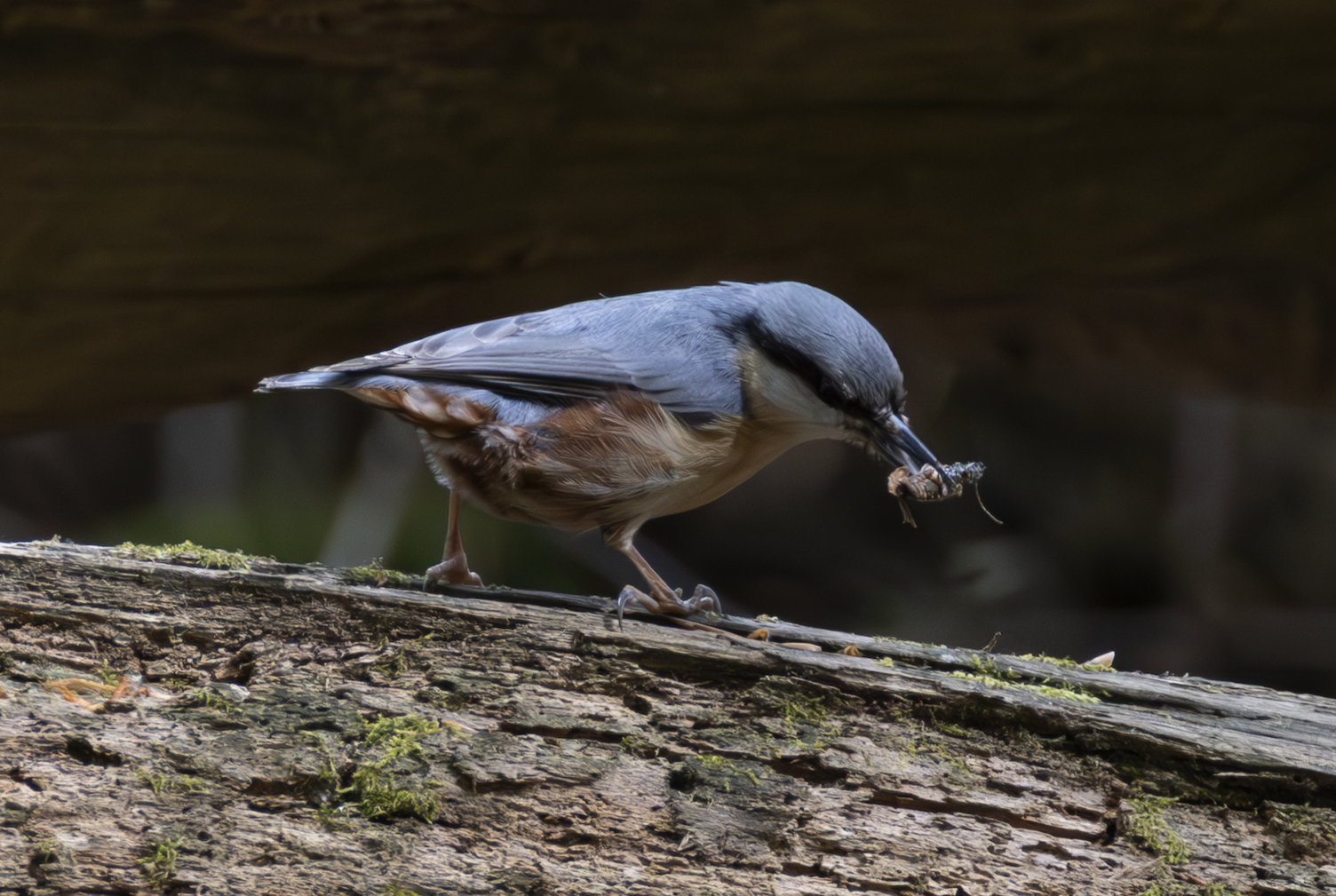
Nuthatch
LCSitta europaea
The Eurasian nuthatch is the only British bird that regularly climbs head-first down tree trunks, with a loud, ringing call.
Oak Bush-cricket
LCMeconema thalassinum
The oak bush-cricket is a delicate, entirely green cricket that lives in the canopy of oaks and other deciduous trees. It has no song and drums on leaves with its hind legs instead.
Oak Eggar
LCLasiocampa quercus
The oak eggar is a large, rich-brown moth of heathland and woodland. The male flies rapidly by day searching for the larger, paler female who flies at night.
Oil Beetle
VUMeloe proscarabaeus
The oil beetle exudes toxic oil from its leg joints when threatened. Its complex life cycle depends entirely on mining bees. It has declined dramatically across Britain.
Orange-tip
LCAnthocharis cardamines
The orange-tip is a herald of spring in Britain. Only the male bears the vivid orange wing-tips; both sexes share a beautiful mottled-green underwing.
Ortolan Bunting
LCEmberiza hortulana
The ortolan bunting is a scarce autumn vagrant to UK coastal headlands, declining across its European range.
Osprey
LCPandion haliaetus
The osprey is a large raptor that feeds almost exclusively on fish, diving feet-first into water to catch them.
Oystercatcher
NTHaematopus ostralegus
The Eurasian oystercatcher is a noisy, pied wader of rocky shores and estuaries, its loud piping calls a familiar coastal sound.
Oyster Mushroom
LCPleurotus ostreatus
Growing in shelf-like clusters on dead and dying broadleaved trees, the oyster mushroom is one of Britain's finest edible species. It is widely cultivated commercially and is the model for the global gourmet mushroom industry. Can decompose even jet fuel.
Painted Lady
LCVanessa cardui
The painted lady undertakes one of the longest butterfly migrations of any species, travelling from sub-Saharan Africa to the UK — a round trip of up to 14,000 km.
Palmate Newt
LCLissotriton helveticus
Britain's smallest newt, distinguished by the male's hind-foot webbing and filament tail-tip in the breeding season. It favours acidic, shallow ponds on heathlands and moorland, and is the most common newt in Scotland and Wales.
Parasol Mushroom
LCMacrolepiota procera
One of Britain's largest and most distinctive mushrooms, reaching 30 cm across with a shaggy brown cap on a tall, scaled stem. The cap, when fully open, resembles a parasol. Excellent edible, best eaten as a fried whole cap.
Parrot Waxcap
LCGliophorus psittacinus
One of Britain's most remarkable fungi, the parrot waxcap is multicoloured — green, yellow, pink and orange — in a single fruiting body. Like all waxcaps, it indicates ancient, unimproved grassland of high conservation value, unfertilised for many decades.
Peacock
LCAglais io
The peacock butterfly is unmistakeable with its four striking eyespots. It overwinters as an adult and is one of the longest-lived UK butterflies, surviving up to 11 months.
Pearl-bordered Fritillary
VUBoloria euphrosyne
The pearl-bordered fritillary is an early spring butterfly of woodland rides and clearings, one of the UK's most rapidly declining species, now largely restricted to Scotland.
Penny Bun
LCBoletus edulis
Also known as the cep or porcini, the penny bun is Britain's most sought-after edible fungus. Its rich, nutty flavour is prized by chefs. It grows with birch, pine, oak and beech and can weigh over a kilogram when fully grown.
Peppered Moth
LCBiston betularia
The peppered moth became famous as a textbook example of industrial melanism, the dark form flourishing in polluted Victorian cities before returning to the typical peppered form.
Perch
LCPerca fluviatilis
The perch is one of the most handsome British freshwater fish, with bold dark stripes, orange-red fins and a spiny dorsal fin. It is a schooling predator of smaller fish and invertebrates in lakes and rivers.
Peregrine Falcon
LCFalco peregrinus
The peregrine is the fastest animal in the world in a dive, reaching speeds exceeding 320 km/h.
Phalarope
LCPhalaropus lobatus
The red-necked phalarope breeds in Shetland and Orkney; unusually, the female is brighter and the male incubates the eggs.
Pheasant
LCPhasianus colchicus
The ring-necked pheasant was introduced to Britain from Asia and is now a very common sight across the countryside.
Pied Flycatcher
LCFicedula hypoleuca
The European pied flycatcher is a summer visitor to upland oak woodland in Wales and northern England, readily using nest boxes.
Pied Wagtail
LCMotacilla alba
The pied wagtail is one of Britain's best-known birds, constantly wagging its long tail as it runs over pavements and car parks.
Pike
LCEsox lucius
Britain's apex freshwater predator, the pike lurks motionless in weedy water before striking with extraordinary speed. Large females can exceed a metre in length. It will take fish, frogs, ducklings and even small mammals.
Pill Bug
LCArmadillidium vulgare
The pill bug or pill woodlouse can roll into a perfect sphere when threatened, a defence unique among UK woodlice. It prefers drier conditions than other species and is most common on calcareous soils in southern Britain.
Pine Marten
LCMartes martes
An agile, tree-climbing mustelid recovering well in Scotland after severe persecution. Reintroductions are underway in Wales and England. Largely nocturnal and rarely seen — garden feeding stations attract them in Scotland.
Pine Siskin
LCSpinus pinus
The pine siskin is a North American finch and a very rare vagrant to Britain, occasionally appearing at garden feeders alongside Eurasian siskins.
Pink-footed Goose
LCAnser brachyrhynchus
Over 300,000 pink-footed geese winter in Britain, arriving from Iceland and Greenland in spectacular skeins each autumn.
Pintail
LCAnas acuta
The northern pintail is among the most elegant of ducks, with the male's elongated tail feathers and chestnut head.
Pochard
VUAythya ferina
The common pochard is a diving duck with a chestnut head; large flocks gather on UK reservoirs and lakes in winter.
Polecat
LCMustela putorius
Ancestor of the domestic ferret, the polecat was once widespread but heavily persecuted. Now recovering from a Welsh stronghold and recolonising England, though often confused with feral ferrets.
Pomarine Skua
LCStercorarius pomarinus
The pomarine skua is a passage migrant offshore around UK coasts, larger than the Arctic skua with twisted, spoon-shaped central tail feathers.
Pond Skater
LCGerris lacustris
The common pond skater uses surface tension to walk on water, detecting prey by the ripples they create. It is found on still and slow-moving water throughout Britain.
Pool Frog
ENPelophylax lessonae
Britain's rarest native amphibian, extinct in the wild by 1995. Successfully reintroduced to Norfolk from Swedish populations of the same northern lineage. A lively, vocal frog of shallow warm ponds, it calls loudly on warm summer days.
Poplar Hawk-moth
LCLaothoe populi
The poplar hawk-moth is one of Britain's commonest hawk-moths, often found resting with hindwings projecting forward to mimic a bundle of dead leaves.
Porbeagle
CRLamna nasus
A powerful, warm-blooded shark of north Atlantic and UK waters, the porbeagle was heavily overfished and is now critically endangered globally. It is fast-growing and visits UK waters in summer to feed on mackerel and herring.
Primrose
LCPrimula vulgaris
One of the first flowers of spring, the primrose is a symbol of hope and renewal in British culture. It grows in woodland edges, hedge banks and meadows, and its pale yellow flowers are an important early nectar source for brimstone butterflies.
Privet Hawk-moth
LCSphinx ligustri
The privet hawk-moth is Britain's largest resident moth with a wingspan up to 12 cm, the pink-striped abdomen distinctive at rest.
Ptarmigan
LCLagopus muta
The rock ptarmigan lives on Scotland's highest mountain plateaux, turning white in winter for camouflage in the snow.
Purple Emperor
LCApatura iris
The purple emperor is one of Britain's most spectacular butterflies, the male with an imperial purple iridescence, living in the canopy of mature oak woodland.
Purple Hairstreak
LCFavonius quercus
The purple hairstreak lives almost its entire life in the oak canopy and is easily overlooked. The male is iridescent purple; both sexes have a conspicuous white-edged streak.
Purple Loosestrife
LCLythrum salicaria
A tall, spectacular plant of riverbanks and reedbeds, creating vivid pink-purple stands in late summer. It supports over 40 insect species and the flowers are visited constantly by bumblebees and other pollinators. Invasive in North America.
Purple Sandpiper
LCCalidris maritima
The purple sandpiper is a hardy winter visitor to rocky shores around the UK, often seen feeding alongside turnstones.
Puss Moth
LCCerura vinula
The puss moth has an extraordinary caterpillar that raises its forked tail and everts red whips when threatened. It feeds on willows and poplars across Britain.
Pygmy Shrew
LCSorex minutus
Britain's smallest mammal by weight at just 4g, the pygmy shrew is found in most habitats from sea level to mountain top. It is the only shrew species present in Ireland, where it was likely introduced by the Vikings.
Pyramidal Orchid
LCAnacamptis pyramidalis
A spectacular chalk and limestone orchid with a dense, cone-shaped head of deep pink flowers. It is pollinated by butterflies and moths, which are attracted by its sweet scent. It can appear suddenly in large numbers on newly managed grassland.
Quail
LCCoturnix coturnix
The common quail is a scarce and secretive summer visitor to UK farmland, far more often heard — its 'wet-my-lips' call — than seen.
Raft Spider
LCDolomedes fimbriatus
Britain's second largest spider, the raft spider walks on water using surface tension, dipping its legs in to detect vibrations from insect prey below. It is restricted to acidic bogs and lowland heathland in southern Britain.
Ragged Robin
LCSilene flos-cuculi
A waterside plant of wet meadows and fens, the ragged robin has distinctive pink flowers with deeply divided petals that give it its name. It has declined significantly with the drainage of wet meadows but is a flagship species for wetland restoration.
Rainbow Trout
LCOncorhynchus mykiss
Introduced from North America and widely stocked in UK rivers and still-water fisheries. Wild-breeding populations occur in a few rivers. Recognised by the distinctive pink-red lateral stripe and black-spotted body.
Ramshorn Snail
LCPlanorbarius corneus
A large freshwater snail with a distinctive flat, coiled shell like a ram's horn. It grazes algae in ponds and slow rivers and uses haemoglobin (like vertebrates) to carry oxygen, allowing it to survive in low-oxygen water.
Raven
LCCorvus corax
The common raven is the world's largest passerine bird, once widespread in Britain but now largely restricted to upland areas.
Razorbill
LCAlca torda
The razorbill is a stocky auk that breeds on cliff ledges around Britain, swimming underwater like a torpedo to pursue fish.
Razor Clam
LCEnsis magnus
The razor clam burrows rapidly into intertidal sand using a powerful muscular foot. It can dive to 60 cm in seconds to escape predators. UK waters support important stocks and razor clams are harvested commercially in Scotland and Ireland.
Red Admiral
LCVanessa atalanta
The red admiral is a large, striking butterfly that migrates from southern Europe each spring. It is often the last butterfly seen in autumn, visiting fermenting fruit.
Red Ant
LCMyrmica rubra
The European fire ant or red ant is a familiar garden species with a sharp sting. It is the species most likely to be encountered when disturbing a pot plant or garden stone.
Red-backed Shrike
LCLanius collurio
The red-backed shrike was once a common UK breeder but is now only a scarce passage migrant; the male is boldly coloured.
Red-breasted Merganser
LCMergus serrator
The red-breasted merganser is a sleek, fish-eating duck with a spiky crest, breeding on Scottish and Welsh rivers and wintering on coasts.
Red Deer
LCCervus elaphus
Britain's largest land mammal. The stag's antlered rut in October is one of nature's great spectacles, with males bellowing and clashing across the moors and glens.
Red-footed Falcon
NTFalco vespertinus
A scarce but annual spring vagrant to Britain from Eastern Europe, often appearing at coastal headlands after east winds.
Red Fox
LCVulpes vulpes
Britain's most familiar wild carnivore, equally at home in town and countryside. Highly adaptable and intelligent, it has successfully colonised urban areas across the UK, often heard screaming on winter nights.
Red Grouse
LCLagopus lagopus
The red grouse is a distinctive bird of heather moorland, a subspecies unique to Britain and Ireland.
Red Kite
LCMilvus milvus
The red kite is a medium-large bird of prey, successfully reintroduced to much of the UK after near extinction.
Red-legged Partridge
LCAlectoris rufa
The red-legged partridge was introduced to Britain from southern Europe and is now widespread, often released for shooting.
Red Mason Bee
LCOsmia bicornis
The red mason bee is one of Britain's most effective pollinators, nesting in holes in walls and readily using bee hotels. It emerges in spring to coincide with apple blossom.
Red-necked Grebe
LCPodiceps grisegena
A scarce winter visitor to UK coasts and inland reservoirs, the red-necked grebe breeds across northern Europe.
Redshank
LCTringa totanus
The common redshank, the 'sentinel of the marshes', is one of the most vocal and alert of all wading birds, breeding at UK wetlands.
Red Squirrel
VUSciurus vulgaris
Britain's native squirrel, now largely restricted to Scotland, Northumberland and a few islands. Largely displaced by the introduced grey squirrel, which carries squirrelpox fatal to reds but to which it is immune.
Redstart
LCPhoenicurus phoenicurus
The common redstart is a summer visitor to upland oak woodland in the north and west, the male with a vivid orange-red tail.
Red-tailed Bumblebee
LCBombus lapidarius
The red-tailed bumblebee is easily identified by its entirely black body and vivid orange-red tail. Queens and workers are common on garden flowers and downland.
Red-throated Diver
LCGavia stellata
Britain's smallest and most numerous diver, breeding on remote Scottish lochs and wintering around all UK coasts.
Redwing
LCTurdus iliacus
The redwing is Britain's smallest true thrush and the first sign of autumn, arriving from Iceland and Scandinavia in large nocturnal flocks.
Red Wood Ant
LCFormica rufa
The red wood ant builds enormous mound nests in woodland rides and clearings, a colony containing up to 400,000 workers. It is a significant predator of woodland insects.
Reed Bunting
LCEmberiza schoeniclus
The reed bunting breeds at wetlands but has spread to farmland and gardens, the male with a smart black head and white moustache.
Reed Warbler
LCAcrocephalus scirpaceus
The Eurasian reed warbler breeds in reedbeds and is the primary host of the cuckoo in southern England.
Ringed Plover
LCCharadrius hiaticula
The common ringed plover breeds on UK coastal shingle beaches and arctic tundra, wintering on estuaries in large numbers.
Ringlet
LCAphantopus hyperantus
The ringlet is a chocolate-brown butterfly of damp, tussocky grassland and woodland clearings, with distinctive eye-like rings on its underwing.
Ring Ouzel
LCTurdus torquatus
The ring ouzel is the 'mountain blackbird', breeding on upland moorland and crags in northern Britain and wintering in the Mediterranean.
Risso's Dolphin
LCGrampus griseus
A large, robust dolphin distinguished by its heavily scarred, pale grey body — scars accumulate from the teeth of other Risso's. It feeds primarily on squid in deep water off western Scotland and around Bardsey Island.
Roach
LCRutilus rutilus
The most widespread and numerous fish in British lowland waters, the roach is a shoaling species recognised by its red fins and silvery scales. It is a vital prey species for pike, otters and herons.
Robin
LCErithacus rubecula
The European robin is Britain's unofficial national bird, famous for its year-round song and association with Christmas cards.
Rock Pipit
LCAnthus petrosus
The rock pipit is a large, dark pipit of rocky coastlines, skulking among seaweed and boulders around the British coast.
Roe Deer
LCCapreolus capreolus
Britain's most widespread native deer, a small elegant animal most active at dawn and dusk along woodland edges. Bucks mark territories with scent and bark loudly when alarmed.
Roesel's Bush-cricket
LCMetrioptera roeselii
Roesel's bush-cricket has spread dramatically northwards in Britain in recent decades. Its continuous electric buzzing, like a pylon, is now common in rough grassland.
Roller
LCCoracias garrulus
The European roller is a rare vagrant to Britain from southern Europe, brilliant electric-blue with spectacular tumbling display flight.
Roman Snail
LCHelix pomatia
Britain's largest land snail, introduced by the Romans and now established on chalk downland in southern England. It is fully protected under the Wildlife and Countryside Act and is an increasingly rare sight on warm, calcareous grassland.
Rook
LCCorvus frugilegus
The rook is a sociable crow of farmland, nesting in large rookeries in tall trees; its bare white face patch distinguishes it from the carrion crow.
Roseate Tern
LCSterna dougallii
The roseate tern is one of Britain's rarest seabirds, with only a handful of colonies remaining, prized for its pinkish flush and long tail streamers.
Rose Chafer
LCCetonia aurata
The rose chafer is a spectacular bright green beetle with a metallic sheen, often found on rose and elder flowers in summer. Its larva develops in compost and rotting wood.
Rose-coloured Starling
LCPastor roseus
The rose-coloured or rosy starling is a scarce but annual vagrant to Britain from southern Asia, often seen at berry-bearing bushes.
Rough-legged Buzzard
LCButeo lagopus
The rough-legged buzzard is a scarce winter visitor from Scandinavia, favouring open coastal marshes and farmland.
Rowan
LCSorbus aucuparia
The rowan or mountain ash grows at higher altitudes than almost any other British tree. Its brilliant orange-red berry clusters in late summer are devoured by redwings and other thrushes. It was planted beside houses to ward off witches.
Royal Fern
LCOsmunda regalis
Britain's largest and most spectacular fern, reaching 2 metres in wet woodland and bog margins. The fertile fronds have bright rust-coloured spore-bearing pinnae at their tips, resembling a royal sceptre. It has declined with drainage of wetlands.
Ruby-tailed Wasp
LCChrysis ignita
The ruby-tailed wasp is one of Britain's most jewel-like insects, its body an iridescent green and red. It is a cleptoparasite, sneaking into mason bee nests to lay its own eggs.
Rudd
LCScardinius erythrophthalmus
A golden-flanked fish of still and slow waters, the rudd often feeds at the surface among water lilies. Easily confused with roach, it is distinguished by its more golden colour and upward-tilting mouth.
Ruddy Darter
LCSympetrum sanguineum
The ruddy darter is a vivid red darter with constricted abdomen, found at well-vegetated ponds and ditches. It is often boosted in numbers by migrants from Europe.
Ruddy Duck
LCOxyura jamaicensis
The ruddy duck, introduced from North America, has a small resident population in the UK following control programmes to protect the endangered white-headed duck.
Ruderal Bumblebee
NTBombus ruderatus
The ruderal bumblebee is a large, long-tongued species that has declined severely in the UK due to loss of flower-rich farmland. It is now mainly found in southern England.
Ruff
LCCalidris pugnax
The ruff is famous for the elaborate neck ruffs that males display at leks in spring; a few pairs breed in Britain and many winter here.
Ruffe
LCGymnocephalus cernua
A small perch-like fish introduced to Loch Lomond where it has caused significant damage to powan populations. Elsewhere it is a native species of sluggish lowland rivers and lakes in England, rarely caught by anglers.
Sanderling
LCCalidris alba
The sanderling is a small, fast-running wader that dashes along sandy beaches in pursuit of retreating waves.
Sand Lizard
VULacerta agilis
Britain's rarest lizard, restricted to dry sandy heathlands in Dorset, Surrey and some coastal dunes in Lancashire and Wales. Males turn brilliant green in the breeding season. Subject to significant reintroduction efforts.
Sand Martin
LCRiparia riparia
The sand martin is the first swallow-family migrant to arrive in Britain each spring, nesting in colonies in sandy riverbanks.
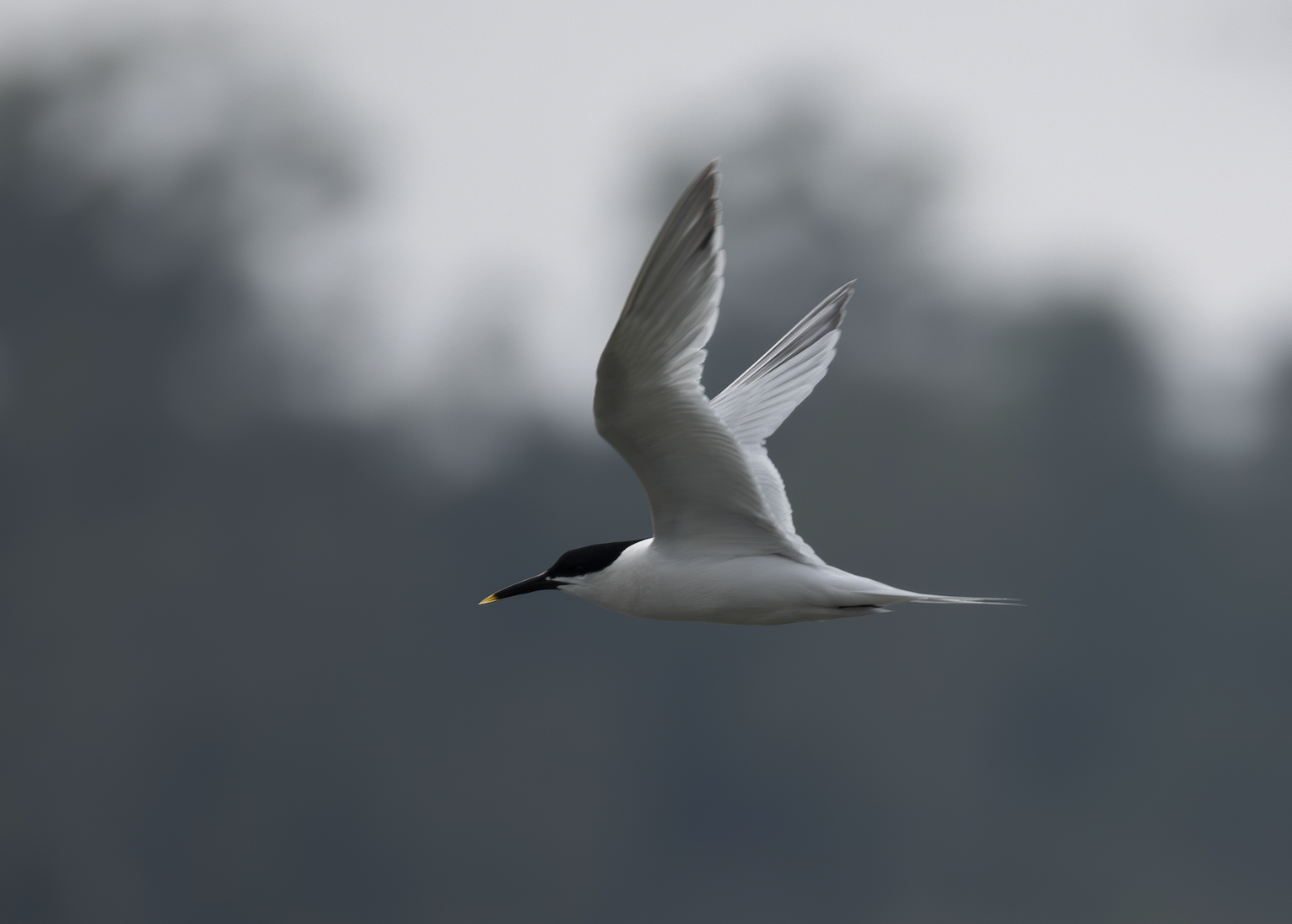
Sandwich Tern
LCThalasseus sandvicensis
The sandwich tern is the largest common tern in Britain, breeding in noisy colonies on sand and shingle beaches.
Scarce Blue-tailed Damselfly
NTIschnura pumilio
The scarce blue-tailed damselfly is similar to the common blue-tailed but has an orange tail tip when immature. It prefers shallow, seeping, disturbed wetland habitats.
Scarlet Elf Cup
LCSarcoscypha austriaca
A brilliant red cup fungus emerging in late winter and early spring on rotting wood and debris in damp woodland. One of the most vivid colours in the winter landscape, it was reportedly used to dress wounds by Native Americans.
Scarlet Waxcap
LCHygrocybe coccinea
One of Britain's most striking grassland fungi, the scarlet waxcap's vivid red fruiting bodies appear in ancient, unimproved pasture in autumn. Waxcap grasslands are considered as important for fungal conservation as rainforests are for plants.
Scaup
LCAythya marila
The greater scaup is a scarce winter visitor from Iceland and Scandinavia, favouring coastal bays and large inland waters.
Scorpionfly
LCPanorpa communis
The scorpionfly is named for the male's upturned tail, resembling a scorpion's sting but quite harmless. It feeds on dead insects trapped in spiders' webs.
Scotch Argus
LCErebia aethiops
The Scotch argus is a butterfly of moorland grasses in Scotland and a single site in northern England, flying in August in warm, sheltered valleys.
Scots Pine
LCPinus sylvestris
Britain's only native pine and one of its most ancient trees. The native Caledonian pinewoods of Scotland are among the world's rarest ecosystems, supporting red squirrels, crested tits and Scottish crossbills.
Scottish Wildcat
CRFelis silvestris
Britain's only wild felid is critically endangered, with truly pure individuals now very rare due to hybridisation with domestic cats. Conservation breeding programmes and rewilding initiatives aim to restore it to Scottish glens.
Sedge Warbler
LCAcrocephalus schoenobaenus
The sedge warbler is a summer visitor to wetlands, delivering an exuberant churring and mimicking song from waterside vegetation.
Serotine
LCEptesicus serotinus
One of Britain's largest bats, restricted to southern England. It emerges late at dusk and flies slowly at rooftop height, hunting large cockchafers and moths. It almost always roosts in house roof spaces.
Sessile Oak
LCQuercus petraea
The dominant oak of western and upland Britain, particularly in Wales and Scotland, the sessile oak forms the canopy of ancient Atlantic rainforests draped in mosses and lichens. Its acorns lack stalks (peduncles) — the distinguishing feature from English oak.
Seven-spot Ladybird
LCCoccinella septempunctata
The seven-spot ladybird is one of Britain's most recognised insects, its red wing cases and seven black spots a universal symbol. It is a voracious predator of aphids.
Shag
NTGulosus aristotelis
The European shag is a smaller, glossy-green relative of the cormorant, restricted to rocky coasts and rarely seen inland.
Shaggy Ink Cap
LCCoprinus comatus
One of Britain's most distinctive mushrooms, the shaggy ink cap grows in lawns, roadsides and disturbed ground. The white, shaggy cap auto-digests into a black, inky liquid to disperse its spores. Edible when young and white.
Shelduck
LCTadorna tadorna
The common shelduck is a large, boldly patterned duck of UK estuaries and sandy coasts, often nesting in rabbit burrows.
Shore Lark
LCEremophila alpestris
The horned or shore lark is a scarce winter visitor to UK coastal fields and beaches, with striking yellow and black facial markings.
Short-eared Owl
LCAsio flammeus
The short-eared owl hunts in daylight over open moorland and coastal marshes, quartering the ground on long wings.
Short-haired Bumblebee
CRBombus subterraneus
The short-haired bumblebee was declared extinct in the UK in 2000 and is being reintroduced to Dungeness and Salisbury Plain using queens from Sweden.
Short-snouted Seahorse
VUHippocampus hippocampus
One of only two seahorse species in UK waters, found in sheltered bays and estuaries where seagrass or maerl beds provide anchorage. It is fully protected in UK waters. Males carry the eggs in a brood pouch.
Shoveler
LCSpatula clypeata
The northern shoveler has an unmistakable spatula-shaped bill used to filter food from water. It breeds and winters at UK wetlands.
Shrill Carder Bee
ENBombus sylvarum
The shrill carder bee is named for its high-pitched buzz and is one of the UK's rarest bumblebees, restricted to a handful of sites in south Wales and the Thames corridor.
Signal Crayfish
LCPacifastacus leniusculus
Introduced from North America for aquaculture, the signal crayfish has spread throughout most of England's river system. It carries crayfish plague, burrows destructively in riverbanks and is a serious invasive species.
Sika Deer
LCCervus nippon
Introduced from East Asia and now established in Scotland, Ireland and parts of England. Sika can hybridise with red deer, threatening genetic integrity of native populations.
Silver Birch
LCBetula pendula
One of Britain's most graceful trees, with distinctive white bark and pendulous branches. It is a pioneer species, rapidly colonising bare ground and heathland. It supports over 300 insect species and is important for woodland creation.
Silver-spotted Skipper
NTHesperia comma
The silver-spotted skipper is restricted to short-grazed chalk grassland in southern England. It has expanded its range following targeted conservation of its habitat.
Silver-studded Blue
NTPlebejus argus
The silver-studded blue is a heathland specialist, named for the metallic studs on its underwing. It has a remarkable relationship with ants that tend its larvae.
Silver-washed Fritillary
LCArgynnis paphia
The silver-washed fritillary is the largest of Britain's fritillaries, a spectacular sight gliding through oak woodland glades in high summer.
Silver Y
LCAutographa gamma
The silver Y is one of Britain's most abundant moths and a significant migrant, named for the Y-shaped silver mark on each forewing. Millions arrive from Europe each year.
Siskin
LCSpinus spinus
The Eurasian siskin is a small, agile finch that breeds in conifer woodland and visits garden feeders in winter in increasing numbers.
Six-spot Burnet
LCZygaena filipendulae
The six-spot burnet is a day-flying moth of chalk grassland and coastal cliffs, its metallic black wings marked with six vivid red spots. It is highly unpalatable to predators.
Skylark
LCAlauda arvensis
The Eurasian skylark delivers its famous continuous, complex song in sustained hovering flight above farmland, now declining due to agricultural change.
Slavonian Grebe
VUPodiceps auritus
The Slavonian grebe is a rare breeding bird in Scotland and a winter visitor to sheltered coasts, with striking golden ear tufts in breeding plumage.
Slow Worm
LCAnguis fragilis
Not a worm but a legless lizard, the slow worm is the UK's most common and widespread reptile. It can shed its tail to escape predators and may live for over 30 years. A familiar inhabitant of garden compost heaps.
Small Blue
NTCupido minimus
Britain's smallest butterfly, the small blue is a localised species of chalk and limestone grassland where kidney vetch grows. Colonies are small and vulnerable.
Small Elephant Hawk-moth
LCDeilephila porcellus
The small elephant hawk-moth is a more localised relative of the elephant hawk-moth, found on chalk and limestone grassland where bedstraws grow.
Small Heath
LCCoenonympha pamphilus
The small heath is Britain's smallest brown butterfly, found in open grassland and heathland, always settling with wings closed to show the mottled underside.
Small-leaved Lime
LCTilia cordata
A native lime tree and one of Britain's most ancient woodland species, dominant in the so-called lime-wood zone stretching across the East Midlands. It is a magnificent insect tree, with fragrant flowers that attract bees in abundance in summer.
Small Pearl-bordered Fritillary
NTBoloria selene
The small pearl-bordered fritillary is very similar to the pearl-bordered but slightly smaller and with a more complete ring of pearls on its underwing.
Small Red Damselfly
NTCeriagrion tenellum
The small red damselfly is one of Britain's rarest damselflies, restricted to boggy heathland in southern England and south Wales where sphagnum moss grows.
Small Skipper
LCThymelicus sylvestris
The small skipper is a golden-orange butterfly of rough grassland, darting rapidly from flower to flower. Its antennae tips are orange beneath, distinguishing it from the Essex skipper.
Small Tortoiseshell
LCAglais urticae
Once one of Britain's commonest butterflies, the small tortoiseshell has declined significantly and the reasons are poorly understood, possibly linked to a parasitoid fly.
Small White
LCPieris rapae
The small white is found throughout Britain, often in gardens. It resembles the large white but is noticeably smaller and causes less damage to brassicas.
Smooth Newt
LCLissotriton vulgaris
Britain's most widespread newt, found in ponds across the UK including gardens. In the breeding season the male develops a continuous wavy crest and spotted orange belly. It is the only newt species in Ireland.
Smooth Snake
VUCoronella austriaca
Britain's rarest snake, restricted to dry heathlands of Dorset, Hampshire and Surrey. A constrictor that feeds on lizards and slow worms, it is highly secretive and very rarely seen even in good habitat.
Snakelocks Anemone
LCAnemonia viridis
A beautiful anemone of clear, sunlit pools in south and west Britain, with long flowing tentacles that are often vivid green or grey with purple tips. It harbours photosynthetic algae in its tentacles and cannot fully retract them.
Snipe
LCGallinago gallinago
The common snipe is a cryptically patterned wading bird of boggy ground, famous for its 'drumming' display and zigzag flight when flushed.
Snow Bunting
LCPlectrophenax nivalis
The snow bunting breeds on Scotland's highest mountaintops and winters on UK coastal beaches, the male with stunning white and black plumage.
Snowy Owl
VUBubo scandiacus
The snowy owl is a rare winter visitor to Scotland's Northern Isles from the Arctic; it bred briefly on Fetlar, Shetland in the 1960s–70s.
Soldier Beetle
LCRhagonycha fulva
The soldier beetle, or bloodsucker beetle, is common on summer flowers, particularly hogweed and ragwort. Despite the name it is harmless; pairs are often seen mating.
Song Thrush
LCTurdus philomelos
The song thrush is famous for its rich, repetitive song and for using a stone as an anvil to smash open snail shells.
Soprano Pipistrelle
LCPipistrellus pygmaeus
Virtually identical to the common pipistrelle but echolocating at a higher frequency (55 kHz). It favours riparian habitats and wetland edges for foraging and often forms very large maternity colonies.
Southern Hawker
LCAeshna cyanea
The southern hawker is the inquisitive dragonfly that will approach and hover in front of observers. It is common at ponds and gardens in southern Britain.
Sparrowhawk
LCAccipiter nisus
The Eurasian sparrowhawk is a small, agile woodland hawk that hunts small birds in fast, twisting pursuits through cover.
Speckled Bush-cricket
LCLeptophyes punctatissima
The speckled bush-cricket is a small, bright-green cricket with reddish-brown speckles. It lives in shrubs and nettles, its song too high-pitched for many adult ears.
Speckled Wood
LCPararge aegeria
The speckled wood is a butterfly of woodland rides and edges, often seen perching in a sunlit spot, defending its territory against rival males.
Speckled Yellow
LCPseudopanthera macularia
The speckled yellow is an attractive day-flying moth of woodland rides in southern Britain, its yellow wings dappled with dark brown spots.
Sperm Whale
VUPhyseter macrocephalus
The largest toothed predator on Earth, diving to over 1,000 metres to hunt giant squid. Groups of males are regularly recorded off north-west Scotland in deep Atlantic waters, and stranded individuals occasionally appear on UK beaches.
Spider Crab
LCMaja brachydactyla
Britain's largest native crab, with a spiny carapace and long, spindly legs. Spider crabs aggregate in spectacular mass aggregations in summer before moulting, forming piles in shallow bays that can number thousands of individuals.
Spined Loach
LCCobitis taenia
A very local fish found only in a handful of English rivers, the spined loach has a small erectile spine below each eye. It lives in slow-flowing, muddy rivers and is fully protected under UK law.
Spiny Starfish
LCMarthasterias glacialis
Britain's largest starfish, reaching 70 cm across and bearing prominent spines on its five arms. Found on rocky reefs in the south-west and Scotland, it is a major predator of scallops, mussels and other shellfish.
Spoonbill
LCPlatalea leucorodia
The spoonbill is a distinctive white wading bird with a spatula-shaped bill, now a regular visitor and scarce breeder in southern England.
Spotted Crake
LCPorzana porzana
The spotted crake is a scarce and secretive passage migrant and very rare breeder at UK reedbeds.
Spotted Flycatcher
LCMuscicapa striata
The spotted flycatcher is a late-arriving summer visitor, sallying from a perch to catch insects in the air and returning to the same spot.
Spotted Redshank
LCTringa erythropus
The spotted redshank passes through the UK in spring and autumn; in breeding plumage it is a stunning sooty-black wader.
Spurdog
VUSqualus acanthias
A small, schooling shark that was once the most abundant shark in UK seas. Heavily overfished and now recovering slowly following protective measures. It has a venomous spine in front of each dorsal fin.
Stag Beetle
NTLucanus cervus
The stag beetle is Britain's largest beetle and one of its most iconic insects. Males have enormously enlarged mandibles used in wrestling contests. Larvae take up to seven years to develop in rotting wood.
Starling
LCSturnus vulgaris
The common starling is famous for its murmurations — vast, swirling flocks that create aerial acrobatics over UK roost sites each winter.
Stinkhorn
LCPhallus impudicus
The stinkhorn emerges from a white egg and extends its phallic fruiting body rapidly, reaching full size overnight. The dark, fetid, olive-green cap attracts flies which disperse the spores. The smell is detectable from 30 metres away.
St Mark's Fly
LCBibio marci
St Mark's flies emerge around St Mark's Day (25 April) in large numbers, dangling their legs as they fly slowly over vegetation. Males swarm to attract females.
Stoat
LCMustela erminea
A fast, agile predator that turns white (ermine) in winter in northern Britain. It can tackle prey much larger than itself and famously performs a frenetic 'dance' that hypnotises rabbits before striking.
Stock Dove
LCColumba oenas
The stock dove is a smaller, more compact relative of the woodpigeon, nesting in tree holes and cliff cavities across rural Britain.
Stonechat
LCSaxicola rubicola
The European stonechat perches on gorse and heather, flicking its wings; both sexes have an alarm call like two stones being knocked together.
Stone Curlew
LCBurhinus oedicnemus
The stone curlew is a mysterious bird of chalk downland and sandy heaths, more active at night and extraordinarily well camouflaged by day.
Stonefly
LCPerla bipunctata
Stoneflies are ancient insects whose larvae require clean, well-oxygenated water, making them excellent bioindicators of river health. Adults are short-lived and rarely eat.
Stone Loach
LCBarbatula barbatula
A small, eel-like fish of clean, gravelly streams with six sensory barbels around its mouth. The stone loach hides under stones and emerges at night to feed, often overlooked due to its cryptic colouring and secretive habits.
Storm Petrel
LCHydrobates pelagicus
Europe's smallest seabird, the storm petrel breeds on remote islands around Britain and spends its non-breeding life far out at sea.
Stripe-winged Grasshopper
NTStenobothrus lineatus
The stripe-winged grasshopper is a localised species of short chalk and limestone grassland in southern England, declining with the loss of traditional downland management.
Sulphur Tuft
LCHypholoma fasciculare
One of Britain's most abundant woodland fungi, the sulphur tuft grows in dense, overlapping clusters on rotting stumps and logs. Its bitter taste makes it unpalatable and it can cause poisoning if consumed. The yellow-green gills are distinctive.
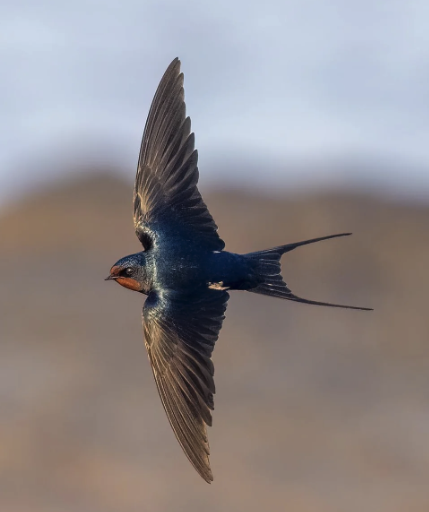
Swallow
LCHirundo rustica
The barn swallow is a migratory bird that arrives in the UK in spring and is one of the most celebrated signs of summer.
Swallowtail
ENPapilio machaon
Britain's largest butterfly, the swallowtail is now restricted to the Norfolk Broads where its sole foodplant milk parsley grows. The distinctive subspecies britannicus is entirely endemic.
Sweet Chestnut
LCCastanea sativa
Introduced by the Romans as a food source, the sweet chestnut produces large, edible nuts in spiny cases and can live for over 500 years. Ancient coppiced sweet chestnut woodlands in Kent and East Sussex are important habitats for wildlife.
Swift
VUApus apus
The common swift is perhaps the most aerial of all birds, spending almost its entire life in the air.
Tansy Beetle
ENChrysolina graminis
The tansy beetle is one of Britain's rarest beetles, restricted to a short stretch of the River Ouse near York. Its brilliant metallic green is extraordinary.
Tawny Mining Bee
LCAndrena fulva
The tawny mining bee is a common spring solitary bee, the female a rich fox-red colour. It nests in lawns and paths, creating small volcano-like mounds of soil.
Tawny Owl
LCStrix aluco
The tawny owl is Britain's most common owl, responsible for the classic twit-twoo — actually a combination of two calls from male and female.
Teal
LCAnas crecca
The Eurasian teal is Britain's smallest dabbling duck, breeding on moorland bogs and wintering in huge flocks on estuaries.
Tench
LCTinca tinca
The 'doctor fish', the tench was once believed to have healing properties. A deep-bodied, bronze-green fish of weedy ponds and lakes, it stirs up bottom mud when feeding and can survive low oxygen levels that defeat other species.
Thornback Ray
NTRaja clavata
The most common ray in UK coastal waters, the thornback has a mosaic of brown patterns and rows of spines on its back. It lies on sandy or muddy seabeds and is commonly caught by inshore anglers and in trawls.
Three-spined Stickleback
LCGasterosteus aculeatus
One of Britain's most familiar freshwater fish, found in streams, ponds and even brackish water. In spring the male turns brilliant red, builds a nest from plant material and fans oxygen over the eggs with his fins.
Tope
VUGaleorhinus galeus
A slender, migratory shark that visits UK inshore waters in summer. The tope gives birth to live young and is popular with shore and boat anglers. Females form separate shoals and travel to shallow nursery areas to pup.
Tree Bumblebee
LCBombus hypnorum
The tree bumblebee colonised Britain naturally in 2001 and has since spread rapidly across the country. It readily nests in bird boxes and has a distinctive ginger-thorax and white tail.
Treecreeper
LCCerthia familiaris
The Eurasian treecreeper spirals mouse-like up tree trunks, probing bark crevices with its curved bill for insects.
Tree Pipit
LCAnthus trivialis
The tree pipit is a summer visitor to open woodland and heathland, parachuting down from its song-flight to a tree top.
Tree Sparrow
LCPasser montanus
The Eurasian tree sparrow is a smaller relative of the house sparrow, now scarce in Britain but recovering from major population crashes.
Tree Wasp
LCDolichovespula sylvestris
The tree wasp builds small, egg-shaped papery nests suspended from branches and in hedgerows. It is smaller and less aggressive than the common wasp.
Tufted Duck
LCAythya fuligula
The tufted duck is Britain's most numerous diving duck, with the male's black and white plumage and drooping tuft unmistakeable.
Turnstone
LCArenaria interpres
The ruddy turnstone flips over pebbles and seaweed in search of food on UK rocky shores, a colourful visitor that rarely breeds here.
Turtle Dove
VUStreptopelia turtur
The turtle dove is Britain's fastest declining bird, a summer visitor whose purring song has all but disappeared from the countryside.
Twite
LCLinaria flavirostris
The twite is a moorland finch, breeding in upland Britain and wintering on coastal saltmarshes; it has declined significantly.
Two-spot Ladybird
NTAdalia bipunctata
The two-spot ladybird has declined significantly, partly through competition from the invasive harlequin ladybird. It shows remarkable variation, with a black-and-red form common in industrial areas.
Variable Damselfly
NTCoenagrion pulchellum
The variable damselfly is similar to the azure damselfly but rarer, found at well-vegetated fen ditches and broads in England and Ireland.
Velvet Scoter
VUMelanitta fusca
The velvet scoter is a large seaduck, a scarce winter visitor to UK coasts, usually found mixed in with common scoter flocks.
Velvet Shank
LCFlammulina velutipes
The wild ancestor of the Japanese enoki mushroom, velvet shank appears in winter on dead and dying elm and ash, often fruiting in snow. The orange-yellow caps and dark velvety stems are distinctive. An edible species best harvested young.
Vendace
ENCoregonus albula
Britain's rarest freshwater fish, surviving in just two Scottish lochs and Bassenthwaite Lake in Cumbria as an ice age relic. It is threatened by warming water temperatures, introduced species and nutrient enrichment.
Violet Ground Beetle
LCCarabus violaceus
The violet ground beetle has beautiful iridescent violet edges to its wing cases and is a fast-running nocturnal predator of gardens, farmland and woodland.
Wall Brown
NTLasiommata megera
The wall brown has declined dramatically inland but remains common on coastal cliffs. It basks conspicuously on warm surfaces to regulate body temperature.
Wall Lizard
LCPodarcis muralis
Originally from southern Europe, the wall lizard has established thriving feral colonies across southern England, particularly on old walls and railway cuttings. Very fast and wary, it baskes conspicuously on warm masonry.
Wasp Beetle
LCClytus arietis
The wasp beetle is a longhorn beetle that mimics the common wasp remarkably well in both pattern and jerky movements, deterring would-be predators.
Wasp Spider
LCArgiope bruennichi
A spectacular spider that has recently colonised south-east England and is spreading northwards. The female's yellow and black banding mimics a wasp. She builds a large orb web in low grassland with a distinctive zigzag silk band (stabilimentum).
Water Boatman
LCNotonecta glauca
The common backswimmer or water boatman swims on its back using its hindlegs as oars. It is a voracious predator that can give a painful bite and colonises new ponds rapidly.
Water Pipit
LCAnthus spinoletta
The water pipit is a scarce winter visitor to watercress beds and wet fields in southern Britain, breeding in Alpine and southern European mountains.
Water Rail
LCRallus aquaticus
The water rail is a shy reedbed bird, heard far more often than it is seen; its piglet-like squealing call is unmistakeable.
Water Scorpion
LCNepa cinerea
The water scorpion is a remarkable aquatic bug with grasping forelegs for catching prey and a long breathing tube that extends from the rear of its abdomen.
Water Shrew
LCNeomys fodiens
Britain's largest shrew, semi-aquatic and bearing a venomous bite used to immobilise aquatic invertebrates. Distinctive in its black and white colouring, it swims and dives with ease in clean streams.
Water Spider
LCArgyroneta aquatica
The world's only truly aquatic spider, constructing a silken diving bell filled with air bubbles in which it lives and breeds. Found in ponds and slow rivers, it is a fierce predator of aquatic invertebrates and small fish.
Water Stick Insect
LCRanatra linearis
The water stick insect is an extraordinarily slender aquatic bug that ambushes prey in well-vegetated ponds. It has a long breathing tube like the water scorpion.
Water Vole
NTArvicola amphibius
The 'Ratty' of Wind in the Willows is Britain's fastest declining wild mammal, reduced by 90% since the 1970s due to habitat loss and American mink predation. Reintroductions are underway across many river catchments.
Water Vole Flea
LCCtenophthalmus nobilis
A specialist flea found on the water vole, its fortunes closely tied to that of its endangered host.
Waxwing
LCBombycilla garrulus
The Bohemian waxwing is an irruptive winter visitor from Scandinavia, arriving in large flocks to strip rowan and berry trees.
Weasel
LCMustela nivalis
Britain's smallest carnivore, a fierce and relentless hunter of voles and mice. So slender it can follow prey down their burrows, it has an exceptionally fast metabolism and must eat frequently to survive.
Wheatear
LCOenanthe oenanthe
The northern wheatear is one of the first summer migrants to arrive in Britain, bounding across moorland and flashing a white rump.
Whimbrel
LCNumenius phaeopus
The whimbrel is smaller than the curlew with a striped crown; it breeds in Shetland and Orkney and is a common spring and autumn passage bird.
Whinchat
LCSaxicola rubetra
The whinchat is a declining summer visitor to upland grassland and bracken slopes, with a distinctive white supercilium.
Whiskered Bat
LCMyotis mystacinus
A small, dark bat found across the UK, often roosting in the roofline of buildings. It forages along woodland edges and over water, catching small flies and other insects close to vegetation.
White Admiral
LCLimenitis camilla
The white admiral glides elegantly through dappled woodland shade, its black and white wings contrasting with the dark woodland interior.
White-beaked Dolphin
LCLagenorhynchus albirostris
Primarily a North Sea species and the most commonly recorded dolphin in Scottish waters. An energetic species that frequently bow-rides, leaps and often appears in association with feeding gannets.
White-clawed Crayfish
ENAustropotamobius pallipes
Britain's only native crayfish, now endangered following the arrival of the American signal crayfish which carries crayfish plague fatal to it. Surviving populations are found in limestone streams and rivers in England and Wales.
White-faced Darter
VULeucorrhinia dubia
The white-faced darter is one of Britain's rarest dragonflies, restricted to sphagnum bogs in Scotland and a few reintroduction sites in England.
White-fronted Goose
LCAnser albifrons
The white-fronted goose is a winter visitor to Britain, with the Greenlandic race favouring western Ireland and Wales.
White-legged Damselfly
LCPlatycnemis pennipes
The white-legged damselfly is found along slow rivers and canals in England, the male pale blue with distinctive white paddle-shaped legs held open in display.
White-letter Hairstreak
VUSatyrium w-album
The white-letter hairstreak is named for the W-shaped white streak on its underwing. It declined dramatically following Dutch elm disease but is recovering on wych elm.
White-lipped Snail
LCCepaea hortensis
A familiar hedgerow and grassland snail with highly variable shell banding. The extraordinary variety of colour and banding patterns — from plain yellow to dark-banded brown — has made it a classic subject for population genetics research.
White-tailed Bumblebee
LCBombus lucorum
The white-tailed bumblebee is very similar to the buff-tailed but with a clean white tail. It is one of the first bumblebees to emerge in spring and is found throughout Britain.
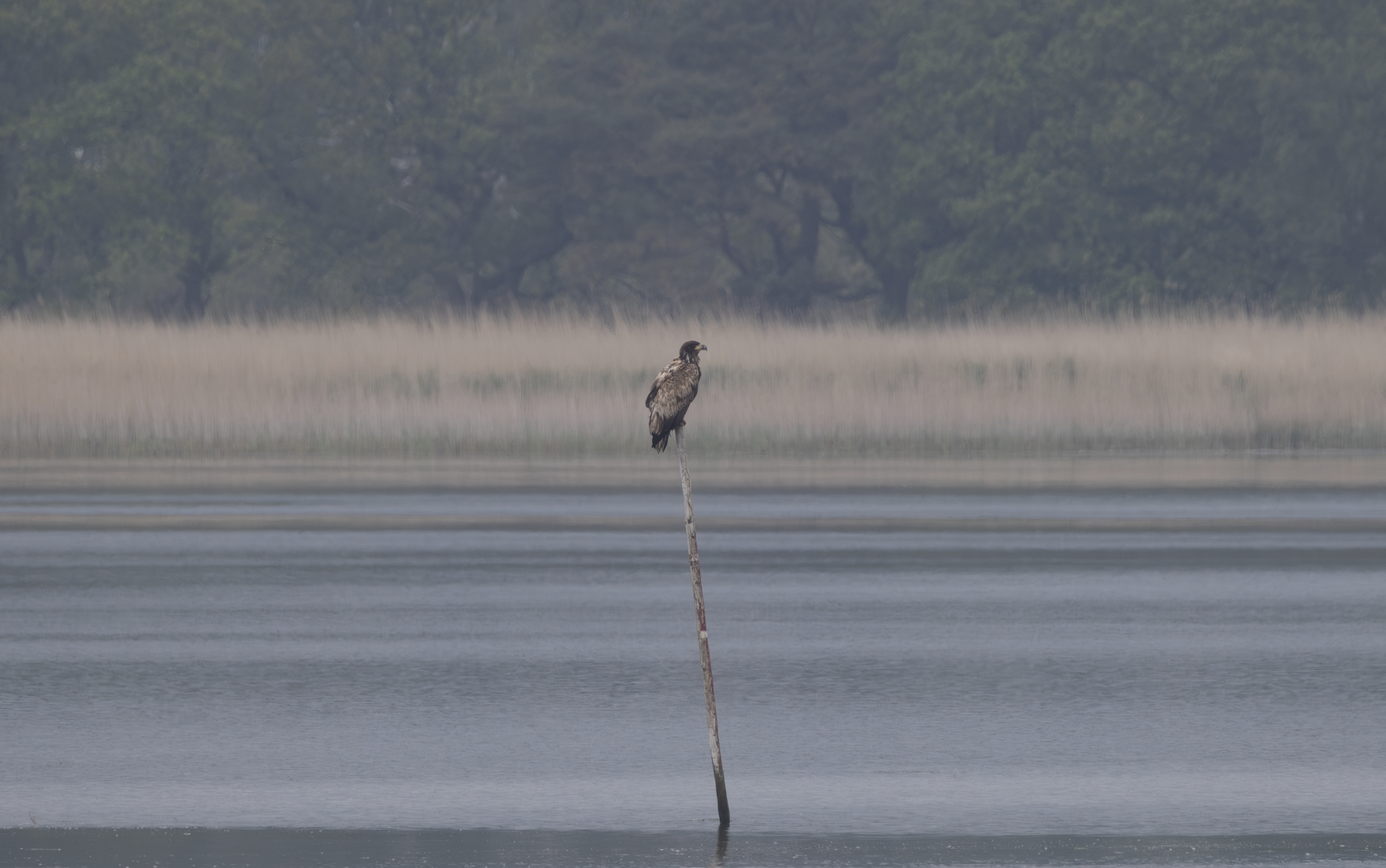
White-tailed Eagle
LCHaliaeetus albicilla
Britain's largest bird of prey with a wingspan up to 2.4 metres, reintroduced to England after 240 years.
Whitethroat
LCCurruca communis
The common whitethroat is a summer visitor to scrubby habitats across Britain, with a scratchy but vigorous song delivered from the top of brambles.
White Water-lily
LCNymphaea alba
Britain's most spectacular aquatic plant, with large white flowers floating on pond and lake surfaces in summer. The floating leaves provide shelter for fish and amphibians and platforms for basking invertebrates and reed warblers.
White Willow
LCSalix alba
A tall, graceful tree of riverbanks and floodplains, its leaves shimmering silver in a breeze. Cricket bats are traditionally made from a cultivated variety. White willow is an important early nectar source and nesting habitat for birds.
Whiting
LCMerlangius merlangus
A common inshore member of the cod family found throughout UK coastal waters. Whiting are important prey for seabirds and marine mammals. They hunt sand eels, sprats and invertebrates in sandy-bottomed bays and estuaries.
Whooper Swan
LCCygnus cygnus
The whooper swan is a large winter visitor from Iceland to UK wetlands, distinguished by its yellow and black bill.
Wigeon
LCMareca penelope
The Eurasian wigeon is a striking duck; large flocks winter on UK estuaries and coastal grasslands, often feeding at night.
Wild Cherry
LCPrunus avium
A beautiful native tree with spectacular white blossom in April and small, bitter cherries in summer. The ancestor of cultivated cherries, it has valuable, attractive timber and in autumn the leaves turn brilliant red and gold.
Wildebeest
LCConnochaetes taurinus
The blue wildebeest undertakes the greatest wildlife migration on Earth — up to 1.5 million animals crossing the Serengeti each year.
Wild Garlic
LCAllium ursinum
Forming dense, aromatic carpets in damp, ancient woodland in spring, the smell of wild garlic is one of the most evocative woodland scents. The white flowers attract early insects and all parts are edible, increasingly popular in foraging.
Wild Thyme
LCThymus polytrichus
A prostrate, aromatic plant of chalk downland, limestone and sandy heathland, forming dense mats of tiny pink flowers beloved by bees and butterflies. The larval food plant of the rare large blue butterfly and an important nesting material for mining bees.
Willow Tit
LCPoecile montanus
The willow tit is very similar to the marsh tit but prefers damper woodland habitats; it is one of Britain's most rapidly declining birds.
Willow Warbler
LCPhylloscopus trochilus
The willow warbler is Britain's most numerous summer migrant, its cascading, melodic song heard in woodland and scrub throughout the country.
Wood Anemone
LCAnemone nemorosa
A delicate woodland flower that carpets ancient woodland floors in spring before the canopy closes. Its presence is a reliable indicator of ancient woodland. It spreads slowly by rhizome rather than by seed and cannot colonise new sites quickly.
Woodcock
LCScolopax rusticola
The Eurasian woodcock is a plump, camouflaged wader of woodland; males perform 'roding' display flights at dusk in spring.
Woodlark
LCLullula arborea
The woodlark is a heathland and woodland-edge lark with a beautiful, liquid, looping song, which breeds in southern England.
Wood Mouse
LCApodemus sylvaticus
Britain's most widespread and numerous rodent, found in almost every terrestrial habitat. It caches seeds for winter and is a key prey species for owls, foxes, stoats and weasels throughout the year.
Woodpigeon
LCColumba palumbus
The common woodpigeon is the UK's most abundant bird, a large, plump dove of woodlands, farmland and gardens with a cooing call.
Wood Sandpiper
LCTringa glareola
The wood sandpiper is a delicate, graceful wader that passes through the UK in spring and autumn, occasionally breeding in Scotland.
Wood Warbler
LCPhylloscopus sibilatrix
The wood warbler breeds in western oak woods with sparse understorey, producing a shivering trill as it flutters among the canopy.
Wool Carder Bee
LCAnthidium manicatum
The wool carder bee is named for the female's habit of scraping plant fibres to line her nest cells. Males are unusually large and aggressively defend flower patches.
Wren
LCTroglodytes troglodytes
The Eurasian wren is Britain's most abundant bird species, a tiny yet remarkably loud singer found in virtually every habitat.
Wryneck
LCJynx torquilla
The wryneck is a peculiar relative of woodpeckers, now only a scarce passage migrant in Britain, once a regular breeding bird.
Wych Elm
NTUlmus glabra
Britain's only definitely native elm, most common in upland and northern Britain. Like all elms, it has been devastated by Dutch elm disease, though wych elm shows slightly more resistance and is recovering in some areas.
Yellow Brain
LCTremella mesenterica
A vivid orange-yellow, gelatinous bracket fungus that appears in winter on dead gorse and hardwood twigs. Despite appearances, it is a parasite on the mycelium of crust fungi in the wood, not on the wood itself. Shrivels in dry weather and reconstitutes in rain.
Yellow-browed Warbler
LCPhylloscopus inornatus
The yellow-browed warbler is an increasingly regular autumn vagrant from Siberia, now seen in hundreds at coastal headlands each year.
Yellow Flag Iris
LCIris pseudacorus
The British native iris, found in wet habitats throughout the UK. Its bold yellow flowers in June are a classic wetland sight and provide landing platforms for large bumblebees. The seed pods are attractive throughout winter.
Yellowhammer
LCEmberiza citrinella
The yellowhammer is a bright-yellow farmland bunting whose song is traditionally remembered as 'a-little-bit-of-bread-and-no-cheese'.
Yellow Meadow Ant
LCLasius flavus
The yellow meadow ant lives underground and is rarely seen, but its dome-shaped anthills are a characteristic feature of old, undisturbed grassland throughout Britain.
Yellow-necked Mouse
LCApodemus flavicollis
Larger and more aggressive than the wood mouse, restricted to ancient woodland and old orchards in southern England and Wales. It regularly invades houses in autumn and has a distinctive yellow chest band.
Yellow Rattle
LCRhinanthus minor
A semi-parasitic plant that attaches to grass roots and weakens them, reducing grass vigour and allowing wildflowers to establish. It is the key species in meadow restoration and has been called the meadow-maker for this reason.
Yellow Wagtail
LCMotacilla flava
The yellow wagtail is a vividly coloured summer visitor to wet meadows and arable fields, declining in Britain as habitats are lost.
Yellow Water-lily
LCNuphar lutea
A robust aquatic plant of rivers, lakes and ponds, with large floating leaves and small, brandy-bottle shaped yellow flowers. The fruiting capsule resembles a brandy bottle, giving rise to its folk name. Provides dense underwater habitat for fish fry.
Zander
LCSander lucioperca
Introduced from continental Europe and now established in the Fens and some midland rivers and canals. A powerful, pike-like predator with excellent night vision, it has impacted native fish populations in some areas.