Species Database
Wildlife of Britain & Beyond
Browse species profiles, conservation statuses, and seasonal information. Spot something not in the database? Submit a new species for review.
61 species in Mammals
Submit a new speciesAmerican Mink
LCNeogale vison
Escaped from fur farms across the UK, the American mink is now naturalised nationwide. It has had devastating impacts on water vole populations and ground-nesting birds on riverbanks and coastal islands.
Bank Vole
LCClethrionomys glareolus
A small, chestnut-furred rodent of hedgerows, woodland edges and bramble patches. It caches food for winter and is an important prey species for tawny owls, kestrels and weasels year-round.
Barbastelle
VUBarbastella barbastellus
One of Europe's rarest bats, with a restricted distribution in southern England and Wales. It roosts behind loose bark of ancient veteran trees and has specialised echolocation that some moths may be unable to detect.
Bechstein's Bat
ENMyotis bechsteinii
Among Europe's rarest bats, Bechstein's bat in Britain is mainly confined to ancient broadleaved woodland in southern England. It relies almost entirely on trees for all roost types and is a priority species for woodland conservation.
Bottlenose Dolphin
LCTursiops truncatus
One of the most commonly seen cetaceans in UK waters, with resident populations in Cardigan Bay and the Moray Firth that are among the best-studied dolphin communities in the world.
Brown Hare
LCLepus europaeus
Famous for its 'mad March' boxing displays where females rebuff over-eager males, the brown hare can reach 70 km/h. It has declined significantly since the 1960s due to agricultural change and increased predation.
Brown Long-eared Bat
LCPlecotus auritus
Has enormous ears almost as long as its body, used to detect resting moths and other insects from their sounds on foliage. It often hunts by gleaning — silently plucking prey from leaves — and is a regular attic roosting bat.
Brown Rat
LCRattus norvegicus
Arriving in Britain in the early 18th century, the brown rat is now one of the most widespread mammals, found wherever humans live. An intelligent, resourceful omnivore capable of swimming, climbing and burrowing.
Chinese Water Deer
VUHydropotes inermis
Unlike other deer, the Chinese water deer has no antlers; males carry prominent tusks instead. Britain holds a significant proportion of the world population following escapes from Woburn Abbey.
Common Dolphin
LCDelphinus delphis
The most abundant cetacean in UK waters off the south-west and west coasts. Large groups of hundreds regularly bow-ride vessels in the Celtic Sea and are frequently seen on whale-watching trips off Cornwall and west Wales.
Common Pipistrelle
LCPipistrellus pipistrellus
Britain's most abundant bat at just 3-8g. A single individual can eat 3,000 midges in a night, foraging along hedgerows and woodland edges from dusk. It roosts in houses and is the bat most likely to be seen in gardens.
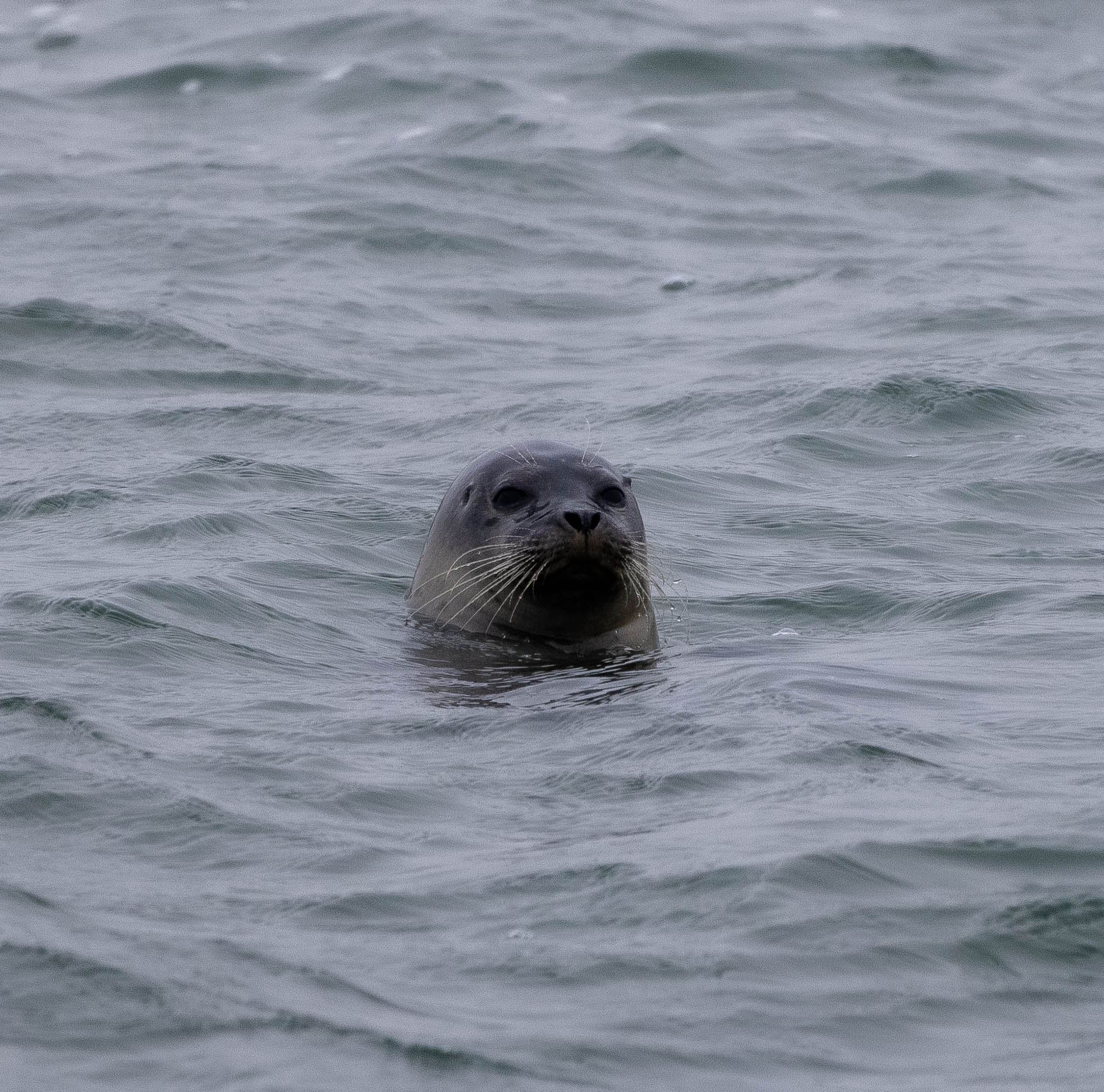
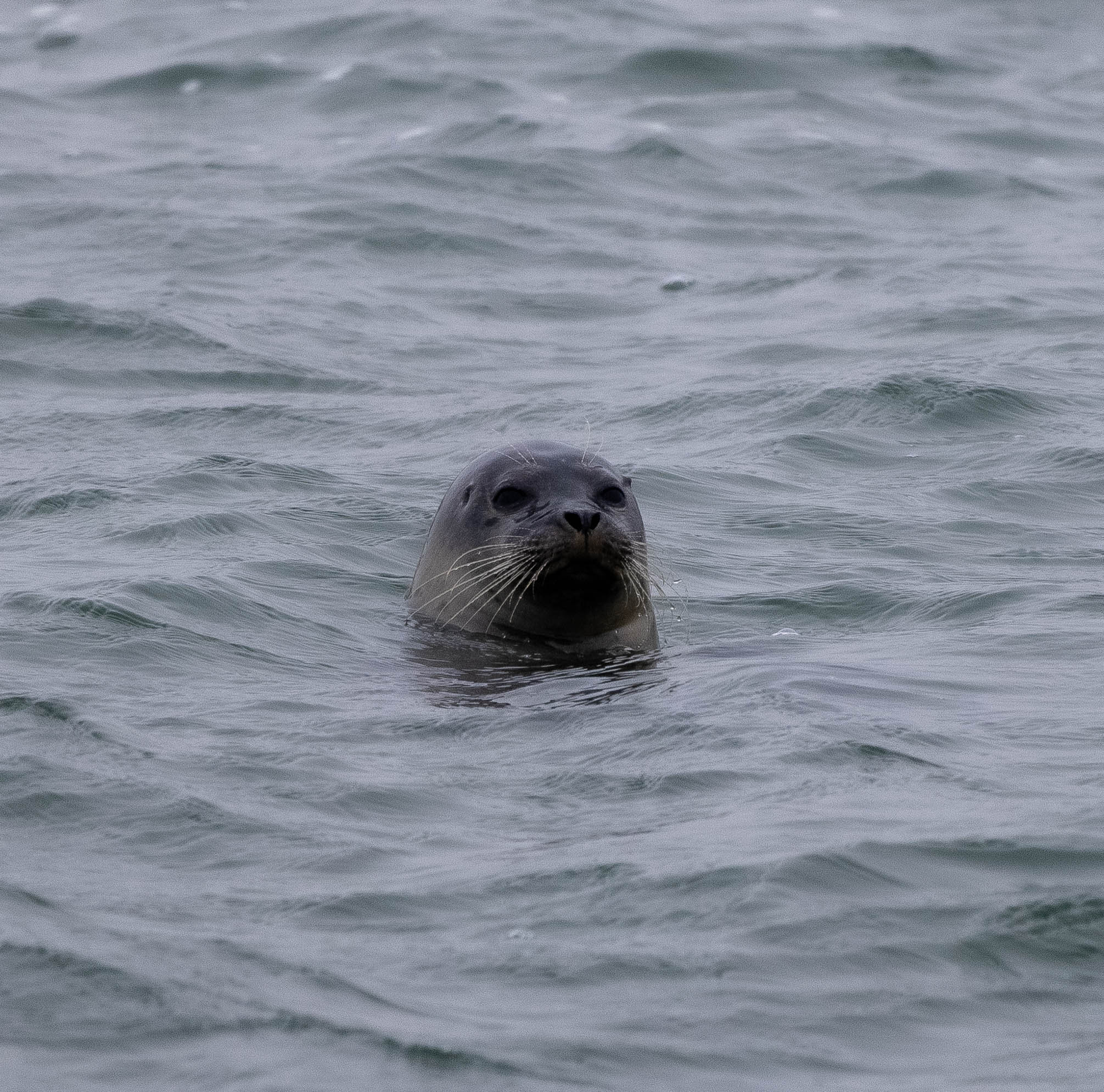
Common Seal
LCPhoca vitulina
The harbour seal has a rounded, dog-like head and can be seen hauled out on sandbanks and rocks around UK coasts. Unlike grey seals, pups can swim from birth. Populations have declined significantly in Scotland and Orkney.
Common Shrew
LCSorex araneus
A tiny, voracious insectivore with a distinctively pointed snout. It must eat its own bodyweight daily to survive, communicates with high-pitched squeaks, and lives for little more than a year.
Daubenton's Bat
LCMyotis daubentonii
Specialises in hunting insects low over still or slow-moving water, sometimes scooping them from the surface with its large feet or tail membrane. Widespread across the UK wherever clean water is found.
Edible Dormouse
LCGlis glis
Introduced to Britain in 1902 and established around the Chilterns. Much larger than the hazel dormouse, it emerges noisily at night and hibernates deeply in winter, potentially living up to 13 years.
Eurasian Otter
NTLutra lutra
A semi-aquatic mustelid that returned to UK waterways after near extinction in the 1970s. Now found on most British river systems, it remains elusive and mainly nocturnal — spraints on rocks are the most frequent sign.
European Badger
LCMeles meles
A stocky, social mustelid living in underground sett systems that may be used for generations. Badger-watching at dusk is one of Britain's finest wildlife experiences, as families emerge to groom and play.
European Hedgehog
VUErinaceus europaeus
Britain's only spiny mammal, declining rapidly due to habitat loss, road casualties and agricultural intensification. It hibernates from November to March and is one of Britain's most loved garden visitors.
European Mole
LCTalpa europaea
The mole spends almost its entire life underground, creating extensive tunnel systems to trap earthworms. It detects prey with extraordinarily sensitive nasal receptors and can consume its own bodyweight in worms daily.
European Rabbit
NTOryctolagus cuniculus
Introduced by the Normans, the rabbit transformed British landscapes; its warrens create habitat for many other species. Populations have crashed due to repeated myxomatosis epidemics and rabbit haemorrhagic disease.
Fallow Deer
LCDama dama
Introduced by the Normans, the fallow deer is the most numerous deer in England. Bucks have distinctive palmate antlers and gather in rutting stands each autumn, groaning loudly to attract does.
Field Vole
LCMicrotus agrestis
Probably Britain's most numerous mammal, with populations cycling every 3-4 years in dramatic boom-bust patterns. It creates runways through grass and is the primary food source for barn owls, short-eared owls and kestrels.
Fin Whale
VUBalaenoptera physalus
The world's second largest animal at up to 27 metres. Regularly recorded in the deep waters off the Hebrides and south-west approaches, and showing encouraging signs of recovery since the moratorium on commercial whaling.
Greater Horseshoe Bat
VURhinolophus ferrumequinum
One of Britain's rarest bats, restricted to Wales and south-west England. It hangs free-hanging like a cocoon in hibernation caves, wrapping its wings around itself, and requires large areas of insect-rich pastoral countryside.
Grey Seal
LCHalichoerus grypus
Britain's largest native land mammal, with the UK holding around 40% of the world population. Breeding colonies gather on remote beaches in autumn; white-coated pups are born in October and November.
Grey Squirrel
LCSciurus carolinensis
Introduced from North America in the 1870s and now ubiquitous across Britain. It outcompetes the native red squirrel and causes significant damage to forestry through bark-stripping of broadleaved trees.
Harbour Porpoise
LCPhocoena phocoena
Britain's smallest and most common cetacean. Shy and rarely leaping, it can often be seen as a brief rolling motion near headlands and in sheltered bays, especially around the Pembrokeshire and Scottish coasts.
Harvest Mouse
LCMicromys minutus
Britain's smallest rodent at under 6g, it weaves a ball-shaped nest of woven grass stems above the ground. It uses its prehensile tail to climb and is declining with the loss of rough grassland and cereal margins.
Hazel Dormouse
VUMuscardinus avellanarius
A tiny, nocturnal mammal that hibernates for up to six months in a nest of woven grass. It depends on connected, species-rich woodland and coppice; populations have declined by over 70% since 2000.
Humpback Whale
LCMegaptera novaeangliae
An increasingly regular sight off UK coasts following global recovery from commercial whaling. Famous for complex songs, spectacular breaching and tail-slapping, humpbacks are recorded annually around Scotland and the south-west.
Killer Whale
LCOrcinus orca
The world's largest dolphin and the UK's most powerful predator. The west coast of Scotland pod (West Coast Community) numbers only eight individuals and is functionally extinct due to PCB contamination preventing reproduction.
Leisler's Bat
LCNyctalus leisleri
A fast, high-flying bat resembling a smaller noctule. Much more common in Ireland than in Britain, where it is a scarce species of woodland and parkland, often roosting in mature trees and bat boxes.
Lesser Horseshoe Bat
NTRhinolophus hipposideros
A small bat of old stone buildings and caves in Wales, south-west England and western Ireland. It is strongly associated with grazed pastoral landscapes for foraging on flies, moths and spiders in summer.
Minke Whale
LCBalaenoptera acutorostrata
The smallest and most commonly seen baleen whale in UK waters, regularly observed from cliff-top headlands and on whale-watching trips off Scotland, Wales, Cornwall and the Hebrides throughout summer.
Mountain Hare
LCLepus timidus
Britain's native hare, turning white in winter for camouflage in snow. Found on Scottish moorland and in a small Peak District population, it is heavily managed on grouse moors and threatened by climate change reducing snow cover.
Muntjac
LCMuntiacus reevesi
Reeves' muntjac, introduced from China, is now Britain's most common deer by number. It breeds year-round and has expanded rapidly across England since escaping from Woburn in the 1920s.
Nathusius' Pipistrelle
LCPipistrellus nathusii
A long-distance migrant arriving in Britain from mainland Europe in autumn. Breeding colonies have recently been confirmed in Northern Ireland and Scotland, and it regularly turns up at coastal migration watchpoints.
Natterer's Bat
LCMyotis nattereri
A slow-flying bat that gleans insects from vegetation in woodland and pasture. It uses a wide variety of roost sites including caves, buildings and trees, and has a distinctive fringe of hairs on its tail membrane.
Noctule
LCNyctalus noctula
One of Britain's largest bats, the noctule often emerges before sunset, flying high and fast to pursue large beetles and moths. It roosts in tree holes and is one of few British bats known to make seasonal migrations.
Pine Marten
LCMartes martes
An agile, tree-climbing mustelid recovering well in Scotland after severe persecution. Reintroductions are underway in Wales and England. Largely nocturnal and rarely seen — garden feeding stations attract them in Scotland.
Polecat
LCMustela putorius
Ancestor of the domestic ferret, the polecat was once widespread but heavily persecuted. Now recovering from a Welsh stronghold and recolonising England, though often confused with feral ferrets.
Pygmy Shrew
LCSorex minutus
Britain's smallest mammal by weight at just 4g, the pygmy shrew is found in most habitats from sea level to mountain top. It is the only shrew species present in Ireland, where it was likely introduced by the Vikings.
Red Deer
LCCervus elaphus
Britain's largest land mammal. The stag's antlered rut in October is one of nature's great spectacles, with males bellowing and clashing across the moors and glens.
Red Fox
LCVulpes vulpes
Britain's most familiar wild carnivore, equally at home in town and countryside. Highly adaptable and intelligent, it has successfully colonised urban areas across the UK, often heard screaming on winter nights.
Red Squirrel
VUSciurus vulgaris
Britain's native squirrel, now largely restricted to Scotland, Northumberland and a few islands. Largely displaced by the introduced grey squirrel, which carries squirrelpox fatal to reds but to which it is immune.
Risso's Dolphin
LCGrampus griseus
A large, robust dolphin distinguished by its heavily scarred, pale grey body — scars accumulate from the teeth of other Risso's. It feeds primarily on squid in deep water off western Scotland and around Bardsey Island.
Roe Deer
LCCapreolus capreolus
Britain's most widespread native deer, a small elegant animal most active at dawn and dusk along woodland edges. Bucks mark territories with scent and bark loudly when alarmed.
Scottish Wildcat
CRFelis silvestris
Britain's only wild felid is critically endangered, with truly pure individuals now very rare due to hybridisation with domestic cats. Conservation breeding programmes and rewilding initiatives aim to restore it to Scottish glens.
Serotine
LCEptesicus serotinus
One of Britain's largest bats, restricted to southern England. It emerges late at dusk and flies slowly at rooftop height, hunting large cockchafers and moths. It almost always roosts in house roof spaces.
Sika Deer
LCCervus nippon
Introduced from East Asia and now established in Scotland, Ireland and parts of England. Sika can hybridise with red deer, threatening genetic integrity of native populations.
Soprano Pipistrelle
LCPipistrellus pygmaeus
Virtually identical to the common pipistrelle but echolocating at a higher frequency (55 kHz). It favours riparian habitats and wetland edges for foraging and often forms very large maternity colonies.
Sperm Whale
VUPhyseter macrocephalus
The largest toothed predator on Earth, diving to over 1,000 metres to hunt giant squid. Groups of males are regularly recorded off north-west Scotland in deep Atlantic waters, and stranded individuals occasionally appear on UK beaches.
Stoat
LCMustela erminea
A fast, agile predator that turns white (ermine) in winter in northern Britain. It can tackle prey much larger than itself and famously performs a frenetic 'dance' that hypnotises rabbits before striking.
Water Shrew
LCNeomys fodiens
Britain's largest shrew, semi-aquatic and bearing a venomous bite used to immobilise aquatic invertebrates. Distinctive in its black and white colouring, it swims and dives with ease in clean streams.
Water Vole
NTArvicola amphibius
The 'Ratty' of Wind in the Willows is Britain's fastest declining wild mammal, reduced by 90% since the 1970s due to habitat loss and American mink predation. Reintroductions are underway across many river catchments.
Weasel
LCMustela nivalis
Britain's smallest carnivore, a fierce and relentless hunter of voles and mice. So slender it can follow prey down their burrows, it has an exceptionally fast metabolism and must eat frequently to survive.
Whiskered Bat
LCMyotis mystacinus
A small, dark bat found across the UK, often roosting in the roofline of buildings. It forages along woodland edges and over water, catching small flies and other insects close to vegetation.
White-beaked Dolphin
LCLagenorhynchus albirostris
Primarily a North Sea species and the most commonly recorded dolphin in Scottish waters. An energetic species that frequently bow-rides, leaps and often appears in association with feeding gannets.
Wildebeest
LCConnochaetes taurinus
The blue wildebeest undertakes the greatest wildlife migration on Earth — up to 1.5 million animals crossing the Serengeti each year.
Wood Mouse
LCApodemus sylvaticus
Britain's most widespread and numerous rodent, found in almost every terrestrial habitat. It caches seeds for winter and is a key prey species for owls, foxes, stoats and weasels throughout the year.
Yellow-necked Mouse
LCApodemus flavicollis
Larger and more aggressive than the wood mouse, restricted to ancient woodland and old orchards in southern England and Wales. It regularly invades houses in autumn and has a distinctive yellow chest band.